
Store PET preforms in their approved protective packaging in a clean, dry area away from direct sunlight, heat, chemicals, and physical damage. Inspect incoming lots for identity, packaging condition, dimensions, appearance, and the properties specified by the supplier. Keep traceability through loading and use the supplier’s storage limits instead of assuming a universal shelf life.
What Should Be Agreed With the Preform Supplier?
Obtain the approved preform drawing, material specification, neck finish, nominal weight, packaging method, and lot-identification system. Request written storage conditions and any time limits or conditioning requirements. These instructions should cover the actual material and package supplied to your factory.
Ask what changes require notification before shipment. Resin grade, recycled-content specification, additives, color, geometry, and manufacturing location can affect processing or the finished package. A familiar part number should not conceal an unreviewed material or design change.
Define the incoming inspection plan with purchasing, quality, and production. Decide which documents accompany each lot and which characteristics your team measures. A certificate can support release, but it does not replace inspection of damaged packaging or an unexpected physical condition.
How Should the Storage Area Be Organized?
Choose an indoor area protected from weather, direct sun, and nearby heat sources. Keep preforms away from chemicals, strong odors, grinding dust, and other contamination sources. The storage arrangement should preserve the supplier’s protective packaging until material is needed.
Use sound pallets or suitable shelving and follow the packaging supplier’s stacking limits. Excessive stacking or rough handling can deform cartons and transfer loads to the preforms. Keep aisles and inspection access clear so damage can be noticed before material reaches the hopper.
Separate released, quarantined, and rejected material through a clear physical or controlled inventory system. Make lot labels readable without repeatedly opening packages. Put the approved part identifier and lot status where the loading operator can read them directly before moving a carton into production.
Do not set a generic temperature or humidity limit from an unrelated product. Use the supplier’s requirements and assess the conditions actually experienced in the warehouse. Record excursions and obtain a disposition for affected lots before normal use resumes.
How Should Stock Rotation Work?
Use first-in, first-out rotation when it matches the supplier’s instructions, or first-expiry, first-out when lots carry different approved use dates. Link the stock system to the supplier lot and receipt date. Prevent a partial carton from losing its identity when it returns from production.
Review slow-moving stock before scheduling a new production run. A package that has been opened, moved repeatedly, or stored outside approved conditions needs an appropriate assessment. Age alone does not describe every risk, and a clean-looking surface does not prove that storage history was acceptable.
Where the supplier permits extended storage, retain the evidence supporting that decision. Any extra inspection or trial should be defined by the responsible quality team. Do not reset a date label simply because the original use period is inconvenient for the schedule.

What Should Be Checked at Receiving?
| Check | Purpose |
| Part and Lot Identity | Confirm the approved design and preserve traceability |
| Packaging Integrity | Find tears, wet cartons, crushed loads, or broken protection |
| Visual Condition | Look for contamination, damage, unusual color, and visible defects |
| Weight and Dimensions | Verify agreed characteristics using the approved sampling plan |
| Documents and History | Confirm specification, supplier release, and any storage exceptions |
Photograph damaged shipments and identify the affected packages before they are mixed with normal inventory. Keep the delivery and lot information with the inspection record. If there is uncertainty about contamination or material identity, quarantine the lot while the responsible team investigates.
Sample across the delivery according to the agreed plan. Taking a few preforms only from the most accessible carton may miss variation elsewhere in the load. Preserve the relationship between each sample and its original package when a defect investigation is underway.
Which Preform Features Deserve Close Inspection?
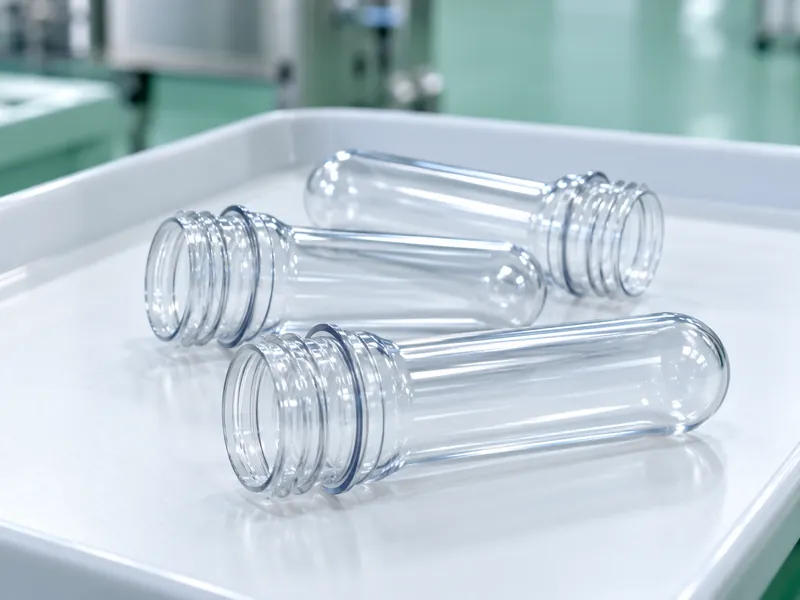
Inspect the neck sealing surface, threads, support ring, body, and gate region for the defects defined in the specification. Look for damage that could affect feeding, sealing, stretching, or bottle appearance. Use approved reference samples or photographs to make visual judgments consistent between inspectors.
Measure weight and the dimensions needed to confirm machine and package compatibility. Where required, assess wall distribution or concentricity using a suitable method. A correct total weight does not establish that material is evenly positioned around the preform.
Check unusual haze, color, black specks, bubbles, or other inclusions against the supplier’s acceptance criteria. Use the visual finding to open an investigation, then confirm its origin with suitable measurements and the supplier’s assessment. Preserve samples and work with the supplier when a new or unexplained defect pattern appears.
For a new lot that behaves differently in blowing, compare it with retained approved material under controlled conditions. Record the recipe, incoming temperature, and resulting bottle properties. Comparing both lots on the same documented setup gives the investigation stronger evidence than comparing bottles made on different days with unknown machine adjustments.
How Should Preforms Be Prepared for Production?
Move the required quantity into a clean staging area and keep it protected until loading. Where a large temperature difference exists between storage and production, follow an approved acclimatization procedure. Avoid exposing cold material to warm humid air in a way that creates condensation on the preforms.
Do not introduce a drying step merely because PET resin is dried before injection molding. Finished preforms are a different process input, and any conditioning or drying treatment must be supported by the preform and equipment suppliers. Uncontrolled heating can damage geometry or change subsequent processing behavior.
Confirm the correct preform and neck finish before filling the hopper. Match the lot to the production order and machine recipe. The configuration review for a PET bottle blowing machine should include the preform feeding and handling arrangement, not only bottle capacity.
How Can Handling Damage Be Reduced?
Keep loading equipment, hoppers, and transfer paths clean and suitable for the preform. Prevent contact with sharp edges or damaged surfaces that can scratch or chip material. Follow the machine supplier’s guidance on loading height, feed settings, and intervention during jams.
Do not return dropped or suspect preforms to normal production without the approved disposition procedure. Separate them promptly so they are not mistaken for released stock. The correct response depends on contamination and damage risk rather than the value of the individual part.
When changing lots or formats, manage residual material in the hopper and feed path. Record any approved mixed-lot period and retain traceability to the resulting bottles. A partially emptied hopper can otherwise connect several supplier lots to production without a usable record.
What Should Happen After an Incoming Failure?
Contain the affected material and identify whether any of it has already entered production. Review the associated bottle checks and determine whether additional finished-goods assessment is needed. Keep purchasing, quality, and production aligned on the lot’s status.
Send the supplier a concise description supported by sample identification, photographs, measurements, and storage history. Agree whether the lot will be returned, sorted, trialed under controlled conditions, or rejected. Avoid changing the blower recipe to hide an unresolved incoming defect.
Which Records Make the Process Repeatable?
Retain supplier lot data, receiving checks, storage exceptions, release decisions, and the production orders that consumed the material. Link bottle performance back to those records. This allows a later filling-line problem to be investigated without guessing which preforms were used.
Review recurring defects and handling losses as part of the bottling line cost assessment. Better storage and inspection can reduce scrap and interruptions, but the effect should be measured. Keep the procedure practical enough that warehouse and production teams can follow it consistently.