
3,500 BPH Juice & Bottled Water Filling Line for a Mexico–U.S. Project
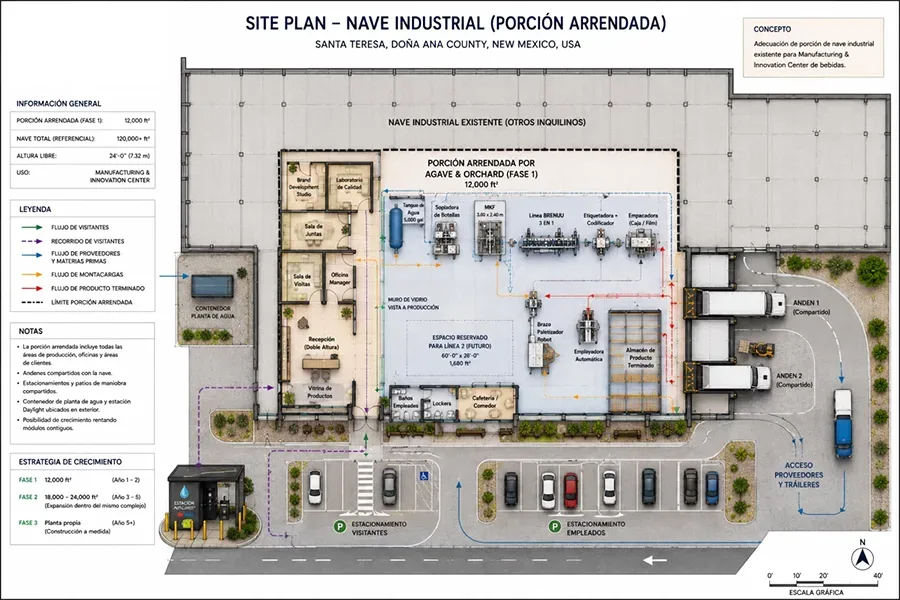
A Company planned a new beverage project for the New Mexico market, requiring a complete line from water treatment to filling, labeling, and commissioning.
Originally designed for cold-filled juice, the project later shifted to bottled water while retaining pulp-juice compatibility, requiring flexibility, maintainability, and reliable long-term operation in North America.
Project Overview
The customer’s initial requirement was a complete cold-fill juice production line with a target capacity of approximately 2,000 bottles per hour.
The proposed system covered the main production stages, including:
- Designed for 3,500 BPH
- Handles 300–1,000 mL PET bottles
- Uses a 3-in-1 filling monoblock
- Piston filling with ±0.5% accuracy
- Includes water treatment and CIP
- Equipped with a nitrogen generator
- Automatic bottle unscrambling and conveying
- Integrated automatic labeling
- PLC and HMI control
- Supports water and juice filling
- Requires 3–4 operators
The project shifted mainly to bottled water while retaining pulp-juice capability. Capacity increased to about 3,500-4000BPH, with piston-based filling adopted for product flexibility.
Project Challenge
The project required balancing product flexibility, North American compliance, spare-parts availability, local maintenance capability, and reliable commissioning to ensure stable long-term production.
Challenge 1: One Filling System Had to Handle Water and Juice
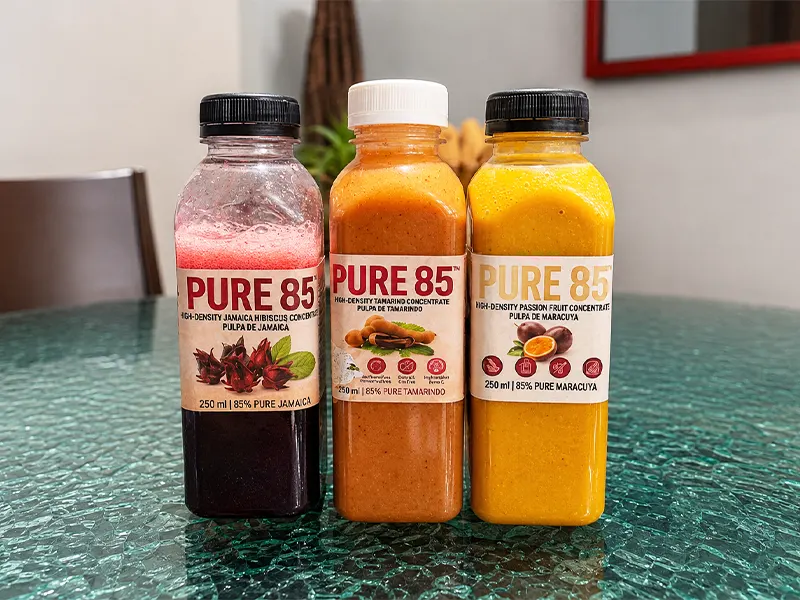
Water and pulp-containing juice require different filling conditions. Water flows easily, while juice with particles needs larger passages, controlled dosing, and more demanding cleaning.
Using separate machines would increase investment, floor space, maintenance, and operating complexity, so the customer needed one filling system for both products.
Our Solution: Flexible Piston Filling Configuration
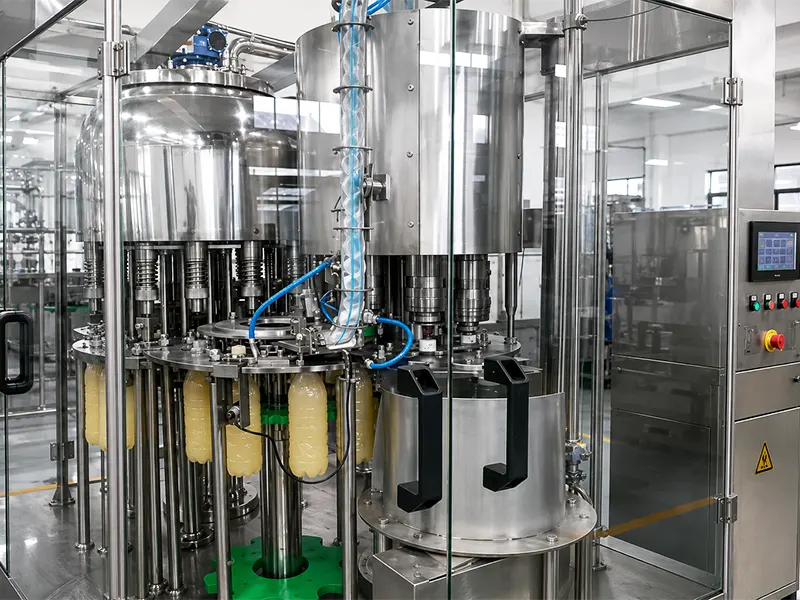
BRENU selected a piston filling system for accurate dosing and flexible handling of products with different viscosities, including water and pulp-containing juice. The system was configured around:
- Adjustable operating parameters through the PLC and HMI
- Convenient cleaning and product changeover
- Compatibility with several PET bottle formats
- Servo-controlled volumetric dosing
- Product passages suitable for juice containing small pulp particles
- Controlled filling cycles for different product characteristics
Filling parameters can be optimized for water or adjusted for juice viscosity, pulp, foaming, and volume, providing product flexibility without replacing the complete filling line.
Challenge 2: Downtime in North America Can Become Expensive
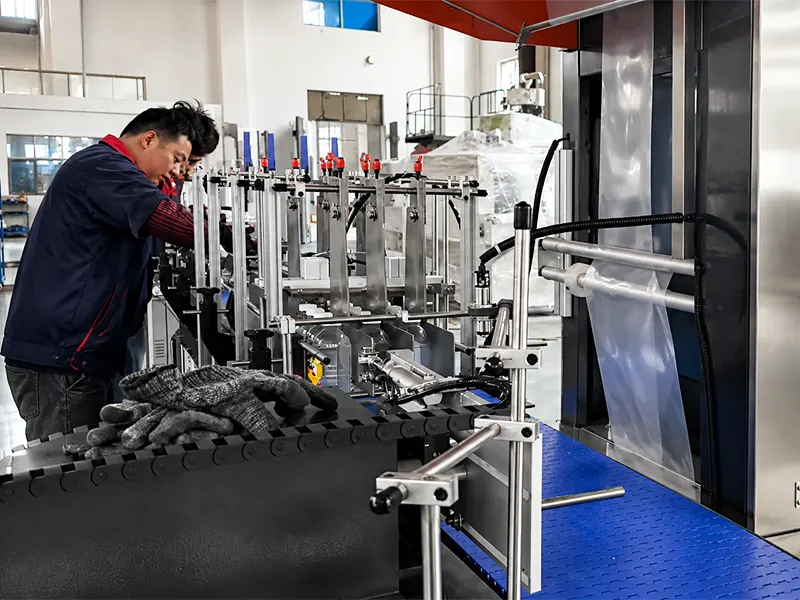
Critical filling-machine parts are rarely stocked locally in North America, making even minor component failures a potential cause of extended downtime.
Shipping replacements from China can involve customs delays and lost production, while sending overseas engineers for every issue is costly and impractical.
Our Solution: Prepare for Maintenance Before Shipment
BRENU planned maintenance before shipment and included a first-year spare-parts package with the production line. Typical components included:
- Sensors
- Photoelectric switches
- Sealing rings
- Bearings
- Filling valve wear parts
- Frequently replaced mechanical components
- Selected electrical spare parts
Critical spare parts were selected by wear and replacement frequency, enabling local repairs and reducing the risk of prolonged downtime caused by minor component failures.
Challenge 3: Equipment Delivery Is Not the Same as Successful Production
After delivery, water treatment, bottle handling, filling, capping, labeling, conveyors, controls, utilities, and cleaning must operate reliably as one system.
Small installation or parameter issues can disrupt the line, while U.S. food safety, workplace, water-quality, and sanitary compliance also require time.
Our Solution: FAT Before Shipment and Staged Acceptance
Before shipment, BRENU conducted FAT with water-based trial runs on the complete line rather than testing individual machines only, verifying:
- Filling operation
- Bottle transfer
- Rinsing and capping
- Conveyor coordination
- Sensor response
- PLC logic
- Emergency functions
- Production line synchronization
Integrated testing helped identify installation and operating issues before shipment. We also divided project acceptance into clear stages:
Factory Testing → Arrival Inspection → Installation → Individual Machine Testing → Complete Line Testing → Trial Production → Compliance Verification → Production Acceptance
Challenge 4: Local Maintenance Capability Had to Be Built During Commissioning
Experienced beverage-line technicians are not equally available across regions, making local maintenance capability an important challenge for long-term operation.
Relying entirely on the original manufacturer for routine adjustments and troubleshooting can increase costs, delays, and production downtime.
Our Solution: English Training and Long-Term Technical Support
During commissioning, BRENU delivered English classroom and hands-on training covering:
- Startup and shutdown
- HMI and parameter adjustment
- Bottle changeover
- Filling and cleaning
- Daily maintenance
- Alarm diagnosis and troubleshooting
- Wear-part replacement
Complete English operation and maintenance manuals were also provided. For complex issues, BRENU provides remote video support for troubleshooting and repairs, with periodic on-site maintenance available when required.
The Result:From 3,500 BPH Design Capacity to Approximately 4,000 BPH
The line reached approximately 4,000 BPH, exceeding the 3,500 BPH target, while requiring only four operators for normal production.
The piston filling system supports bottled water production while maintaining flexibility for future juice products with different filling requirements.
BRENU combined local maintainability, spare-parts support, training, testing, and remote service to provide reliable long-term production in North America.