
One PET blow molding machine can produce multiple bottle designs when each design fits the machine’s mechanical limits, heating capability, process configuration, and handling system. Usually, changing the bottle body requires a different mold and a validated recipe. A shared neck finish can simplify changeover, but it does not guarantee compatibility or equal production speed.
Which Compatibility Checks Come Before a Mold Order?
Prepare a format list covering every bottle you intend to run, including future designs that are sufficiently defined. For each format, provide the drawing, nominal volume, maximum dimensions, neck specification, preform, filling application, and required accepted output. A collection of sample bottles helps discussion but cannot replace controlled drawings.
Ask the machine supplier to evaluate the complete list against the actual machine configuration. Bottle height, body diameter, mold envelope, cavity spacing, opening stroke, and transfer clearance can impose different limits. Being inside the advertised volume range does not establish that a wide or unusually shaped bottle will fit.
Record the conclusion for each format separately. The useful answer identifies required tooling, change parts, software or process options, utility requirements, and achievable production conditions. Avoid accepting a general statement that the machine is suitable for many bottle sizes without a documented format assessment.
What Changes When the Bottle Body Changes?
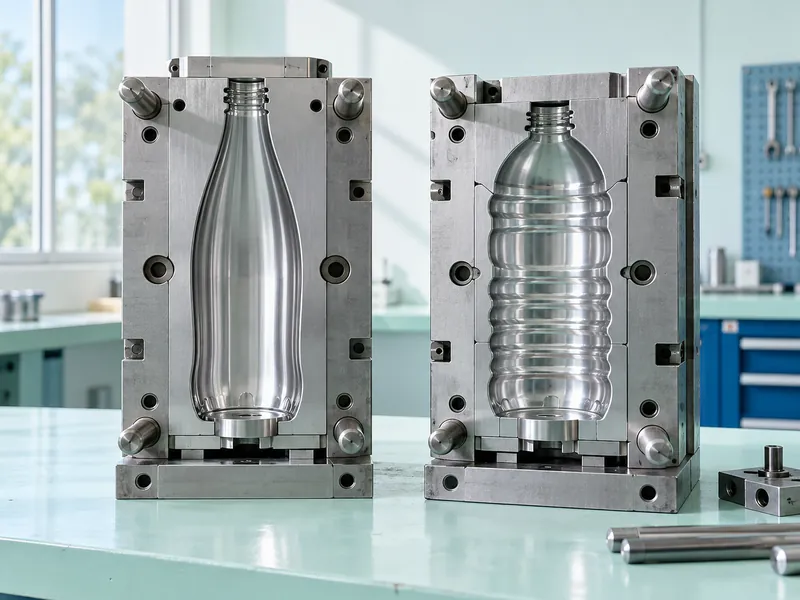
The mold defines the external body shape, and its base components must suit the intended bottle. A new design may require complete tooling rather than a small insert change. Ask whether any existing carriers or mounting components can be reused and have that compatibility confirmed before purchasing.
The preform may also need to change because material must reach different parts of the new bottle. A tall narrow shape and a short wide shape can impose different stretching requirements despite having similar capacity. Preform selection therefore belongs in the format review rather than being postponed until the mold arrives.
After a change, heating and blowing settings must be established for that package. Store the approved recipe with the correct mold and preform identifiers. A copied recipe is a starting point for a trial, not proof that the resulting bottle satisfies the specification.
Does a Common Neck Finish Make Changeover Easier?
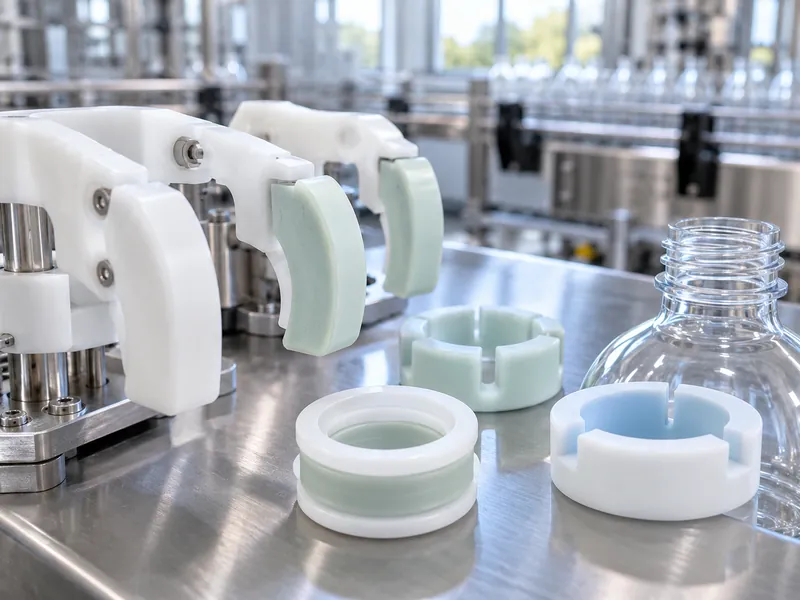
Using one approved neck finish across a family of bottles may reduce changes to preform feeding, neck supports, transfer grippers, and downstream neck handling. It can also simplify closure purchasing. Confirm the complete finish and support-ring geometry rather than comparing only the nominal cap diameter.
Different finishes may require new handling components, blow-nozzle interfaces, or other machine-specific parts. The extent depends on the equipment architecture and the existing configuration. Obtain a parts list that identifies which items change and which remain installed.
A common neck does not eliminate body-related adjustments at the filler, labeler, conveyors, and packer. The practical guidance on lightweight bottle handling through a filling line shows why transfer behavior must be considered alongside the bottle drawing. Check the entire route to finished packaging before declaring a format ready.
Can the Same Machine Handle Round and Oval Bottles?
Some non-round containers require controlled heating around the preform circumference to achieve the desired material distribution. A standard configuration that produces round bottles successfully may not provide the necessary capability for a demanding oval design. Have the supplier assess the shape and specify any required preferential-heating equipment or orientation control.
Even when specialized heating is unnecessary, non-round bottles may require orientation through transfer, filling, labeling, or packing. Confirm how orientation is created and retained. A bottle that can be blown but cannot move reliably through the line is not a complete production solution.
Trial the most challenging geometry in the proposed family rather than demonstrating only the easiest round container. Evaluate thickness distribution, dimensions, appearance, and application-specific performance. Include the parts of the bottle most likely to receive too little material.
Can Water and Hot-Fill Bottles Share the Same Setup?
Filling applications can require fundamentally different bottle properties and blowing processes. Hot-fill packaging may require heat-resistant bottle design and a suitable heat-setting configuration. A new mold alone does not convert every cold-fill blower into a machine qualified for hot-fill production.
Carbonated beverage bottles also need a package qualified for the intended pressure and distribution conditions. Evaluate the preform, base geometry, material distribution, neck, closure, and shelf-life requirements together. Do not infer suitability from a bottle’s appearance or from another format with similar volume.
For a proposed multi-format PET blowing machine, state all filling applications at the quotation stage. Require the supplier to distinguish standard capability from optional equipment or unsupported applications. This prevents a later tooling purchase from becoming an unexpected machine replacement project.
What Should a Changeover List Contain?
| Changeover Area | Items to Confirm |
| Tooling | Mold halves, base tooling, carriers, and mounting interfaces |
| Preform Handling | Feed settings, neck supports, grippers, and required change parts |
| Process | Approved heating, stretching, blowing, and cooling settings |
| Bottle Discharge | Transfer clearance, guide positions, and orientation |
| Quality Release | First-off measurements, sampling, and authorization to run |
Give each tooling set and change part a clear identifier. Store parts where they are protected from damage and can be found before the line stops. Missing hardware and uncertain part identity often extend a changeover beyond the mechanical work itself.
Use the manufacturer’s isolation and handling procedures for tooling changes. Confirm mold weight, lifting provisions, fastener requirements, and cooling-connection checks. Operator training should include inspection of sealing surfaces and verification that tools and loose items have been removed before restart.
How Should Changeover Time Be Measured?
Measure from the last accepted bottle of the outgoing format to the first sustained accepted production of the incoming format. State whether cleaning, cooling, preform replacement, recipe loading, and quality approval are included. A demonstration of mold removal alone is not the production interruption that the planner needs.
Build the changeover schedule around two stages: tasks that the team can safely finish before the last outgoing bottle, and tasks that must wait until the equipment has been stopped and isolated. Pre-staging parts, checking the new preform lot, and preparing inspection equipment can reduce the interruption without changing the machine. Keep the same measurement definition when comparing suppliers or improvement projects.
Include the effect of frequent changes on usable capacity. For example, a line with many short batches may lose more output to repeated startup and approval than a line making one design for several days. Model the actual weekly schedule before choosing a machine based on peak speed.
How Do You Qualify a Bottle Family?
Create a qualification record for every approved combination of machine configuration, mold, preform, and recipe. Test all cavities and verify the package through its intended filling and distribution conditions. Define which changes require another trial, including material or tooling changes that could affect performance.
Maintain separate output expectations for each format. A larger, heavier, or more demanding bottle may need a longer cycle or different utilities. Planning every format at the speed demonstrated by the smallest bottle can create persistent production shortfalls.
During acceptance, demonstrate a representative change between two formats and then confirm stable output after restart. Include the operators who will perform routine changes. Their ability to repeat the approved procedure matters as much as the supplier’s best demonstration time.
When Is a Dedicated Machine More Practical?
A shared machine can be economical when formats are compatible and batch sizes leave sufficient production time. A dedicated installation may be preferable when one format consumes most available hours, frequent changes disrupt supply, or applications require substantially different configurations. Compare scheduling flexibility with the extra capital and maintenance burden.
The final decision should follow a written format matrix, a realistic production calendar, and demonstrated package performance. Select flexibility that the factory will actually use. Keep unsupported future designs outside the committed capacity calculation until their compatibility has been verified.