
Buy empty PET bottles when reliable local supply, modest demand, or limited factory resources make outsourcing practical. Consider in-house blowing when recurring volume, transport costs, storage pressure, and packaging requirements justify operating the complete blowing system. Compare cost per accepted bottle delivered to the filler, including downtime and working capital, before committing to either route.
What Is the Factory Actually Buying?
An empty-bottle quotation purchases more than a shaped piece of plastic. It may include the supplier’s tooling, process knowledge, quality checks, storage, packing, and delivery capacity. Determine which services are included and which become extra charges when forecasts or bottle designs change.
In-house blowing replaces those services with your own equipment, people, utilities, procedures, and production risk. The preform remains an externally supplied component unless the factory also has a separate injection-molding operation. Producing bottles from purchased preforms is therefore a different investment from manufacturing preforms from resin.
Start with a monthly demand profile by bottle design and filling application. Include peak weeks, promotional packs, trial products, and seasonal shutdowns. Average annual consumption can hide the weeks that create the most expensive shortages or unused capacity.
When Does Buying Empty Bottles Make Sense?
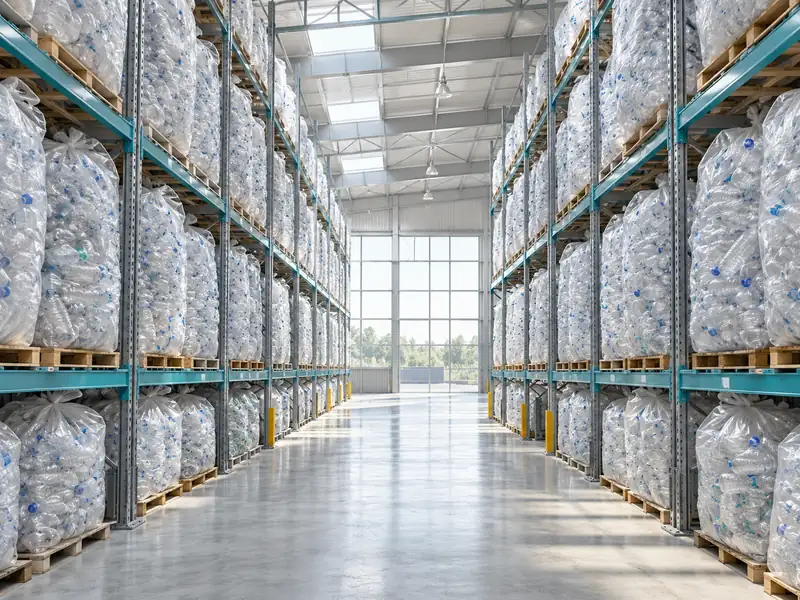
Purchased bottles can suit a new product whose sales are uncertain, a plant with restricted technical staffing, or a factory near a dependable bottle producer. They also avoid adding high-pressure air and blowing equipment to an already crowded site. These advantages matter even when the quoted unit price exceeds the price of a preform.
The arrangement becomes less attractive when bottles travel long distances, delivery schedules are unreliable, or storage space is expensive. Empty bottles occupy substantial space relative to their material weight. Compare the supplier’s actual pack density and truck loading rather than assuming a universal freight penalty.
Review minimum order quantities and the cost of holding slow-moving bottle designs. A low unit price can produce an expensive inventory position when artwork changes, a product is discontinued, or a filling schedule moves. Ask who owns unused stock and whether scheduled deliveries can be changed without a penalty.
Which Costs Belong in the In-House Calculation?
The blower purchase price is only one part of the installed investment. Include molds, preform feeding, bottle transfer, the compressor package, air treatment, receivers, cooling equipment, electrical work, commissioning, and necessary building modifications. Establish whether installation and training are included in the quotation.
Operating costs include purchased preforms, electricity for the entire blowing system, labor, maintenance parts, cooling resources, inspection, and losses. Count rejected preforms and bottles at the point they are discarded. A rejected bottle has consumed material and some production resources even though it never reaches filling.
| Cost Area | Purchased Bottles | In-House Blowing |
| Material Supply | Delivered accepted-bottle price | Preform price and incoming losses |
| Handling and Storage | Bulky empty-bottle inventory | Preforms plus any bottle buffer |
| Production Resources | Supplier capacity and delivery service | People, utilities, maintenance, and tooling |
| Disruption Exposure | Late deliveries and supplier interruptions | Blower or utility downtime |
| Financial Commitment | Stock and purchasing obligations | Installed capital and operating cash |
Include the cost of finance and the expected useful life of the investment in the economic comparison. Keep depreciation, cash outlay, and loan repayments distinct so they are not counted twice. The assumptions used in a water bottling line return-on-investment calculation should agree with the assumptions used for the blower.
How Can You Estimate a Break-Even Volume?
For an initial operating comparison, divide annual fixed in-house costs by the difference between the delivered purchased-bottle cost and the variable in-house cost per accepted bottle. Use one currency and a consistent tax and freight basis. The result is meaningful only when the difference is positive and the assumed costs remain valid over the volume range.
For example, suppose the delivered purchased bottle costs 0.060 currency units and the variable in-house cost is 0.044. If annual fixed costs attributable to blowing are 48,000, the simple operating break-even point is 3 million accepted bottles: 48,000 divided by 0.016. These are illustrative inputs, not current market prices or an investment recommendation.
A capital payback model requires the initial investment and the timing of cash savings as well. Do not use the operating break-even calculation as a substitute for that cash-flow assessment. Test lower sales, higher electricity costs, extra maintenance, and a slower production ramp before relying on the result.
Can the Site Support Dependable Blowing?
Before selecting equipment, confirm electrical capacity, ventilation, cooling, compressed-air quality, drainage requirements, and service access. The proposed installation must fit both the building and the operating team. A utility system that is technically adequate on paper can still be difficult to maintain in a cramped room.
Request a layout that shows preform receiving, loading, bottle discharge, maintenance clearances, and the route to the filler. Consider how operators will move parts and remove equipment for repair. A short transfer distance is useful only if it preserves access and controlled handling.
Ask the supplier of the PET bottle blowing machine to state the accepted output for your specific bottle and preform. Confirm the operating conditions behind that commitment, including ambient conditions and utility supply. An advertised maximum speed cannot establish the quantity available to your filler throughout a shift.
How Does Bottle Quality Affect the Choice?
Both sourcing routes need an approved bottle drawing and application-specific acceptance criteria. Specify dimensions, closure compatibility, appearance, material distribution, and the tests required for filling and distribution. Establish how samples are taken and how a disputed delivery or production lot is handled.
With purchased bottles, evaluate the supplier’s traceability and change-control process. Require notice before changes to the preform, resin, mold, or production location that could affect the package. Retain approved reference samples and connect deliveries to supplier batch records.
With in-house production, assign responsibility for process approval and routine checks. Operators need a defined response when dimensions drift or a particular cavity produces defects. Ownership of the machine does not eliminate the need for packaging expertise or documented release decisions.
What Happens When Bottle Supply Stops?
Calculate the consequence of a supply interruption at the filling line, including idle labor, rescheduling, and any product loss. Purchased bottles expose the plant to supplier and transport interruptions; internal blowing exposes it to its own equipment and utility failures. Compare recovery time and available alternatives for each case.
A hybrid arrangement may provide a practical transition. A plant can blow its stable high-volume formats while buying occasional or specialist bottles, provided the filler can handle both sources under approved specifications. It can also retain an approved external supplier for planned maintenance or unexpected disruption.
Do not assume an emergency supplier can deliver immediately. Confirm tooling availability, bottle compatibility, order lead time, and an achievable reserve arrangement before counting that supplier as backup. Stored emergency bottles also need protection, inspection, and stock rotation.
What Evidence Should Decide the Purchase?
Build a comparison using delivered quotations, site utility costs, a realistic staffing plan, and observed production results for the intended package. Separate fixed costs from volume-dependent costs and state the annual operating hours. Show how the conclusion changes when sales or accepted yield differs from the forecast.
Choose external supply when it provides the required quality and continuity with a lower overall burden on the plant. Choose internal blowing when the documented savings and operational benefits justify the capital and responsibility. Revisit the decision when the bottle range, delivery distance, or production schedule changes materially.