
Reduce industrial labeling machine changeover time by preparing materials before the stop, separating repeatable settings from trial-and-error adjustments, and defining exactly when good production has resumed. Measure the complete transition between acceptable products, including startup rejects. A faster mechanical adjustment is useful only if the next batch starts reliably.
For plants running several bottle sizes or artworks, changeover performance can matter as much as rated speed. Frequent small batches expose weaknesses in material identification, tooling availability, and setup records. The improvement opportunity is often a combination of machine features and a better operating method.
Where Should the Changeover Clock Start and Stop?
Start with a consistent measurement boundary: the last acceptable unit of the outgoing job to the first acceptable unit of a sustained, agreed run for the incoming job. Define “sustained” in your own acceptance procedure. Counting the first bottle alone can hide repeated adjustments immediately afterward.
Record preparation work separately when it happens while the previous batch is still producing. This shows which tasks can move outside the stopped period without disappearing from the labor calculation. Also record the people involved, because a shorter stop achieved by adding several operators may have a different cost.
As an illustrative example, a 24-minute transition could contain six minutes finding materials, eight minutes changing guides, and ten minutes reaching acceptable placement. Buying quicker guide adjustments would address only one part of that delay. The record directs attention to the largest controllable losses.
What Can Be Prepared Before Production Stops?
Prepare the approved incoming materials, tools, format parts, and instructions in a designated area. Verify the job identity against the production order before opening materials at the machine. This preparation is especially important when two label designs look similar from a distance.
Use a pre-changeover check covering:
- Correct container, artwork revision, and label construction.
- Roll orientation, core format, and usable label quantity.
- Required guide parts, spacers, and approved adjustment tools.
- Current setup sheet or recipe for the incoming format.
- Reference samples and the first-off inspection method.
- Removal and identification of outgoing materials.
Keep preparation compatible with the site’s operating and safety procedures. Tasks near moving equipment remain subject to the machine’s safeguards and authorized work methods. Convenience is not a reason to perform a stopped-machine task during operation.
Which Machine Features Make Repeatable Setup Easier?
Useful features make the correct setting easy to identify, reproduce, and verify. These may include readable position indicators, accessible adjustment points, saved settings, and clearly identified format parts. Check those features against the adjustments required by your own bottle and label combinations before assigning them value.
When reviewing BRENU’s industrial labeling machine range, ask which adjustments are manual, stored, or supported by dedicated parts on the proposed configuration. A saved electronic recipe does not necessarily reposition every guide or applicator. Request a demonstration of the complete transition between two of your packages.
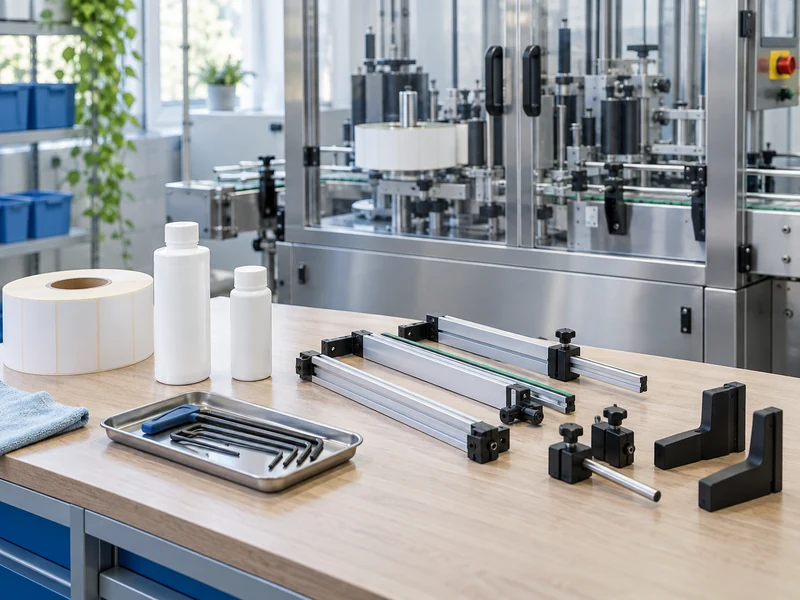
Create a format sheet that links each setting to an unambiguous reference. “Move the guide slightly left” is not repeatable; an identified scale position or documented measurement is more useful. Include photographs only where they clarify orientation or part identity.
How Should You Separate Routine Setup From Servicing?
Classify each task using the machine instructions and your site procedures. Routine operation, adjustment, cleaning, and servicing can require different controls depending on exposure and the equipment design. Operators should not decide the energy-control method from time pressure alone.
The OSHA hazardous-energy overview identifies unexpected startup and stored-energy release as servicing hazards that require appropriate controls. For a U.S. installation, the responsible safety team should determine the applicable requirements and procedures. Other locations need their own applicable framework and machine-specific assessment.
Build those controls into the measured changeover method. A time target that excludes necessary safe isolation creates a misleading production expectation. Ask suppliers to show how normal format access and the required safeguards fit together.
Why Does First-Off Approval Deserve Its Own Step?
First-off approval verifies that the incoming package is correct before routine output accumulates. Check label identity, placement, condition, and any required code or date information. Confirm both sides when a machine applies separate front and back labels.
Use the same acceptance references that production and quality agreed before the changeover. If operators and inspectors judge appearance differently, repeated adjustments may continue without a clear stopping point. Retain an approved first-off sample where your system permits it.
An illustrative sequence is to verify setup with a controlled initial group, correct any defects, and then confirm a sustained acceptable run at the agreed operating rate. Define the sample quantities locally according to risk and process capability. Do not present one sample size as sufficient for every package.
Can Production Scheduling Reduce Adjustment Work?
Scheduling can reduce avoidable changes when it groups compatible jobs without creating other business problems. Compare transitions by container geometry, label format, tooling, and material requirements. A sequence based only on bottle volume may miss the feature that actually drives setup time.
| Transition | Likely Setup Focus | Planning Question |
| Same bottle, different artwork | Material identity, roll change, and inspection | Can approved rolls be prepared together? |
| Same label process, different bottle geometry | Guides, stabilization, and applicator position | Can compatible shapes run in sequence? |
| Different label dimensions | Dispensing and placement settings | Which adjustments need a fresh trial? |
| New or unqualified format | Engineering review and acceptance work | Should qualification be scheduled separately? |
Coordinate the labeler schedule with the rest of the line. The water bottling process provides a useful process map for that conversation. Saving time at one station has limited value if the filler or packer requires a different production sequence.
Where Do Labeling Transitions Meet Filling and Packing?
Agree on how the last units of one batch and the first units of the next will be identified and managed. Containers remaining on conveyors or accumulation tables can complicate line clearance. Assign responsibility for checking those locations rather than assuming the adjacent operator will do it.
For a line with a monoblock filling machine, compare filler, capper, and labeler transition requirements together. The total line stop depends on how tasks overlap and on which station finishes last. Report both individual station times and the overall production interruption.
Secondary packaging may need its own material change and identity check. BRENU’s guide to shrink wrapping versus carton packing outlines those alternative formats. Include the selected route in the line-clearance and restart plan.

Which Metrics Show Real Improvement?
Track elapsed changeover time, labor minutes, startup rejects, and time to stable output. Compare similar transitions and identify unusual events separately. A median and a range across repeated observations can be more informative than celebrating the fastest recorded attempt.
For example, suppose a recurring transition falls from 30 to 20 minutes while startup rejects rise from 20 to 150 bottles. The shorter stop may still be beneficial, but the reject increase must enter the evaluation. Investigate whether a skipped verification step simply moved the loss into production.
Use the investment logic in bottling-line ROI calculations when assessing tooling or automation. Estimate how many relevant transitions occur annually and whether recovered time produces saleable output or only additional idle time. Keep labor savings separate from capacity benefits unless both can actually be realized.
How Can You Keep Improvements From Depending on One Operator?
Turn the proven method into a short, usable setup standard and check it with more than one trained operator. If a step works only because one person remembers an undocumented adjustment, the method is not yet fully transferable. Record the reference and decision that make that adjustment repeatable.
Observe a later transition without coaching every action. Note where the operator pauses, searches for a part, or interprets an unclear instruction. Those observations reveal documentation problems that a demonstration by the most experienced technician may conceal.
Assign responsibility for updating format sheets when an approved setting changes. Keep obsolete versions out of the normal work area so that operators do not choose between conflicting instructions. Review unusual changeovers separately; a damaged roll or a new unqualified bottle should not silently redefine the standard time for a routine transition.
What Should You Ask BRENU to Demonstrate?
Ask for a changeover trial between representative production formats using the proposed machine configuration. Agree on the starting state, tools, operator count, safety procedure, first-off checks, and completion boundary. Record any engineering assistance needed during the demonstration.
Request the setup documentation produced by the trial, including format-part identification and settings that remain manual. Confirm what training and spare format components are included in the quotation. A repeatable method becomes more valuable when ordinary trained operators can follow it consistently.
Use the trial as the baseline for your own commissioning measurements. Review the first production transitions and update unclear instructions while the experience is fresh. The objective is a dependable transition that preserves package quality every time the schedule changes.