Clean RO membranes when normalized performance trends meet the installed membrane manual’s cleaning criteria. Replace them when approved cleaning cannot restore acceptable performance or integrity—not simply because of age.
First verify readings and exclude operating changes or pretreatment faults, which can mimic membrane decline and prompt unnecessary maintenance or replacement.
Establish the Commissioned Performance Baseline
For an overview of how reverse osmosis fits into a complete production system, see Brenu’s water bottling line solutions.
Reverse osmosis (RO) membranes separate dissolved salts and other constituents from feed water to produce permeate. Over time, fouling, scaling, operating changes, or membrane damage can affect productivity and separation performance.
However, a decline in production does not automatically mean the membranes need cleaning. Engineers first need a reliable reference for determining whether the system has changed under comparable operating conditions.
The most useful reference is the commissioned performance baseline established when the RO system was operating correctly.
It should include normalized permeate flow, normalized salt passage or rejection, and differential pressure across the relevant membrane stages.
These indicators describe different aspects of performance. Permeate flow reflects productivity, salt passage or rejection reflects separation performance, and differential pressure helps identify increasing hydraulic resistance.
When reviewing the baseline, consider the following information:
-
Normalized permeate flow: The corrected permeate production rate used to compare performance under different operating conditions.
-
Normalized salt passage or rejection: A measure of separation performance evaluated using the applicable normalization method.
-
Differential pressure: The pressure difference across a membrane stage or other defined section of the RO system.
-
Operating context: Relevant feed-water conditions, temperature, pressure, recovery, and operating configuration.
-
Maintenance history: Previous cleaning, membrane replacement, pretreatment adjustments, and significant operating disturbances.
Normalization matters because raw measurements can change even when membrane condition remains relatively stable. Temperature, feed pressure, feed-water composition, and recovery can influence observed performance.
Use the normalization method specified for the installed membrane system. Compare measurements calculated on the same basis, rather than treating raw readings collected under different conditions as directly equivalent.
If membranes have been replaced or the system configuration has changed, establish whether the original baseline remains applicable. An outdated or mismatched reference can lead to an incorrect cleaning decision.
Rule Out Other Causes Before Diagnosing Membrane Fouling
Before authorizing cleaning, determine whether the observed deterioration originates in the membranes or elsewhere in the treatment system. This step helps avoid maintenance that adds downtime without correcting the underlying problem.
Verify Instrumentation and Calculations
Flow meters, pressure gauges, conductivity instruments, and temperature sensors can produce inaccurate or inconsistent readings. A faulty measurement may resemble a membrane performance problem, particularly when several indicators depend on the same inputs.
Check instrument condition, calibration status, measurement units, sensor placement, and data consistency. Also verify that the normalization calculations use the correct operating inputs and reference conditions.
Where readings appear inconsistent, confirm them through appropriate independent measurements before deciding on maintenance. A single unexplained value should not outweigh a reliable trend supported by multiple observations.
Review Operating Conditions
Feed pressure, water temperature, recovery, and feed-water characteristics influence RO performance. Changes in these conditions can reduce permeate production or alter observed salt passage without necessarily indicating permanent membrane deterioration.
Compare current operating data with the commissioned baseline and the system’s intended operating range. Review recent changes to production demand, operating settings, feed-water sources, and other relevant process conditions.
If operating conditions have shifted, determine whether the change explains the observed performance. Correcting an operating problem may be more appropriate than cleaning the membranes.
Inspect Pretreatment Performance
Pretreatment protects RO membranes from suspended solids, scaling precursors, organic material, and other potential contaminants. Deteriorating pretreatment can increase membrane fouling and accelerate performance decline.
Review filtration performance, relevant feed-water quality indicators, chemical dosing, and any available evidence of oxidant breakthrough. Check whether upstream equipment is functioning as intended and whether feed-water characteristics have changed.
Also consider whether a pressure increase or decline originates upstream, within the membrane stages, or downstream. Locating the actual source makes the subsequent maintenance decision more reliable.
Interpret the Three Key Membrane Performance Indicators
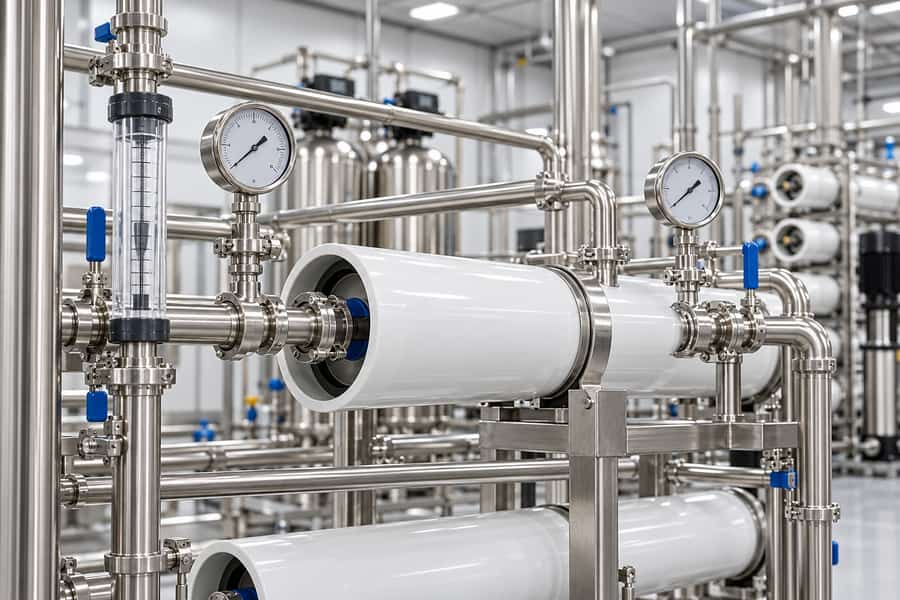
Once measurement errors and obvious operating or pretreatment problems have been investigated, evaluate the three principal indicators together. Their combined trends provide stronger diagnostic evidence than any isolated reading.
Normalized Permeate Flow
Normalized permeate flow indicates how much product water the membranes produce after relevant operating effects have been accounted for.
A sustained decline relative to the commissioned baseline can indicate fouling, scaling, or other restrictions affecting water transport.
However, reduced flow is not proof of membrane fouling. Incorrect normalization inputs, changes in feed-water conditions, or other system restrictions can create similar symptoms.
Assess the pattern across multiple measurements over time instead of drawing conclusions from an isolated low result.
If normalized flow continues to deteriorate after measurement and operating issues have been excluded, investigate whether the membrane manufacturer’s cleaning criteria have been met.
Normalized Salt Passage and Rejection
Salt passage describes the proportion of feed-side dissolved salts that pass through the membrane, while salt rejection describes the proportion retained by the membrane.
Increasing normalized salt passage or declining rejection can indicate deterioration in separation performance.
Possible causes include membrane damage, sealing problems, and changes in operating conditions. These possibilities require different responses, so a decline in rejection should not automatically trigger cleaning.
Normalized salt passage is not the same as absolute permeate conductivity or a percentage-point change in salt rejection.
It is a corrected performance measure that must be interpreted using the applicable normalization method and reference conditions.
Review permeate quality measurements alongside normalized trends and other integrity evidence. Conductivity alone cannot establish whether water meets every applicable quality or safety requirement.
Pressure Drop Across the Membrane Stage
This indicator measures the difference between inlet and outlet pressures across a specified section of the RO system. A sustained increase may indicate growing hydraulic resistance caused by deposits, fouling, or flow restrictions.
Interpret the measurement using consistent pressure locations and comparable operating conditions. Changes in feed flow, pressure measurement accuracy, or upstream restrictions can also affect the result.
A rising differential pressure combined with declining normalized permeate flow provides stronger evidence of a hydraulic problem than either indicator alone. Nevertheless, the specific cause must be investigated before selecting a maintenance action.
How to Interpret Performance Trends
| Performance indicator | Potential warning sign | What engineers should investigate |
| Normalized permeate flow | Sustained decline from baseline | Fouling, scaling, restrictions, and normalization accuracy |
| Normalized salt passage or rejection | Salt passage increases or rejection declines | Membrane condition, sealing integrity, feed-water changes, and measurement reliability |
| Differential pressure | Sustained increase across a defined stage | Hydraulic resistance, deposits, flow restrictions, and operating conditions |
These patterns are diagnostic clues, not universal cleaning thresholds. The installed membrane manual and system-specific operating criteria determine when a deviation warrants cleaning or further investigation.
When Is RO Membrane Cleaning Justified?
Membrane cleaning is justified when reliable performance trends indicate a membrane-related problem and the applicable cleaning criteria in the installed membrane manufacturer’s manual have been met.
The decision should account for the nature of the deterioration, its persistence, its operational impact, and the evidence available from the three indicators.
Cleaning should address an identified problem rather than serve as an automatic response to every production fluctuation. Consider the following decision points:
-
Sustained performance decline: Normalized permeate flow deteriorates consistently relative to the commissioned baseline after operating and measurement issues have been excluded.
-
Increasing hydraulic resistance: Differential pressure rises persistently and investigation indicates a membrane-related restriction.
-
Deteriorating separation performance: Normalized salt passage increases or rejection declines, prompting further investigation into the cause and the applicable maintenance criteria.
-
Multiple supporting indicators: Changes in flow and differential pressure, or other consistent findings, support a membrane-related diagnosis.
-
Manufacturer-defined trigger: The observed condition meets the installed membrane manual’s applicable cleaning requirements.
No single pattern automatically establishes that cleaning is the correct response.
For example, rising salt passage may require an integrity investigation rather than immediate cleaning, while reduced flow can result from causes unrelated to the membrane surface.
A plant should not adopt a universal cleaning interval or numerical trigger without supporting primary documentation for its installed membranes. Different membrane types, feed-water characteristics, system configurations, and operating conditions can produce different maintenance requirements.
Calendar-based maintenance may help organize inspections, but it should not replace performance monitoring or manufacturer-defined criteria.
Cleaning too early can create avoidable downtime and chemical exposure, while delaying necessary maintenance can allow a correctable problem to worsen.
The practical objective is to identify the earliest defensible cleaning point using reliable evidence—not to clean as frequently as possible or wait until production becomes severely restricted.
Once cleaning is indicated, the next decision is whether the suspected problem is removable fouling or a condition that requires a different corrective action.
That distinction determines the appropriate cleaning approach and whether continued membrane operation remains viable.
Select an Approved Cleaning Procedure
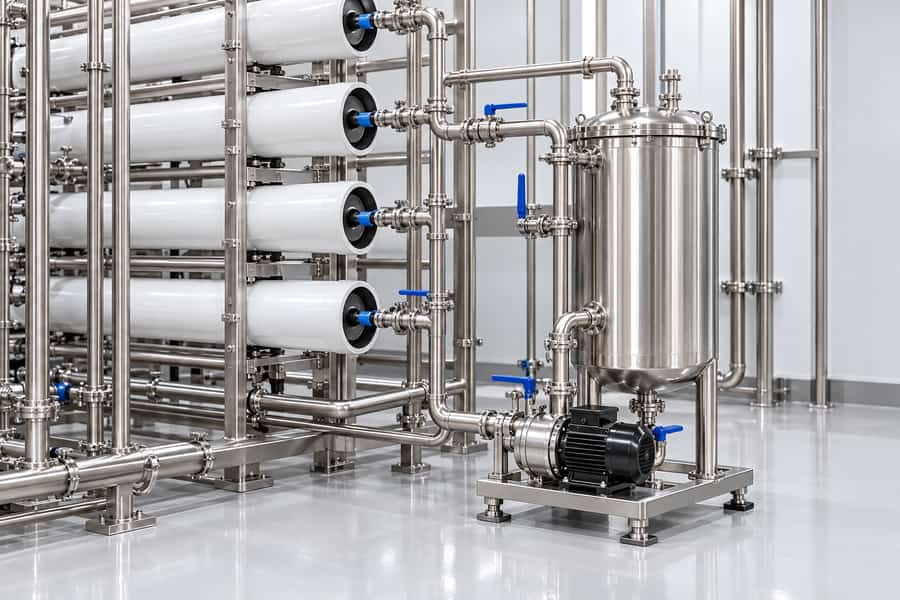
Once cleaning is justified, identify the likely foulant and confirm the procedure is permitted for the installed membrane model. Unsuitable chemicals can damage membranes rather than restore performance.
Follow the membrane manufacturer’s instructions and the plant’s approved procedure for cleaning chemistry, concentration, pH, temperature, contact time, circulation conditions, and pressure limits.
Do not transfer a recipe from another membrane type or improvise a mixture.
Before cleaning, safely isolate the system and confirm compatibility of cleaning equipment, hoses, tanks, and wetted components. Follow site requirements for protective equipment, chemical handling, containment, and disposal.
Record initial performance and operating conditions for comparison. Follow the specified preparation, circulation, rinsing, and restart sequence; required steps depend on the membrane and system design.
Distinguish Fouling From Seal Failure or Permanent Damage
Cleanable Fouling
Scaling, colloidal deposits, organic fouling, and biofouling can restrict water transport or increase hydraulic resistance. Potential clues include feed-water conditions, operating history, differential-pressure trends, and normalized flow decline.
Cleaning may improve performance when deposits are removable and the membrane has not suffered lasting damage. Recovery varies, and partial improvement does not prove that the underlying cause has been eliminated.
After cleaning, check whether normalized indicators move toward baseline. If deterioration recurs, investigate feed water, pretreatment, and operating conditions instead of repeatedly cleaning without diagnosis.
Seal Failures and Integrity Problems
Damaged O-rings, interconnector seals, adapters, or other components may allow feed water to bypass the intended separation path. This can increase salt passage even when the membrane material remains serviceable.
A seal problem requires inspection and repair or replacement according to the applicable procedure.
Cleaning will not correct a failed seal, and replacing a whole element may be unnecessary if checks confirm that the membrane remains intact.
Use appropriate integrity checks and compare results with system design and OEM criteria. Conductivity can indicate a performance issue, but it does not independently locate the fault.
Irreversible Oxidation or Physical Damage
Excessive oxidant exposure, mechanical damage, or other material deterioration can permanently impair separation performance. Persistent salt passage or rejection problems that do not resolve after appropriate cleaning may warrant an integrity investigation.
Review chemical exposure records, operating incidents, installation history, and available test results. Where evidence indicates irreversible damage, further cleaning may add downtime without restoring acceptable performance.
Decide Whether to Clean, Repair, or Replace
Base replacement on persistent performance failure, membrane integrity, water-quality requirements, and the economics of continued operation—not age alone. Confirm reliable measurements and address correctable operating, pretreatment, or sealing problems first.
| Evidence or condition | Practical response | Decision basis |
| Suspected removable deposits and OEM cleaning criteria met | Clean with an approved, compatible procedure | Diagnosis and membrane instructions support cleaning |
| Abnormal readings linked to instruments or operating conditions | Correct the issue, then reassess | Membrane deterioration has not been established |
| Failed seal or replaceable component | Inspect and repair or replace the component | A localized fault may explain poor separation |
| Persistent failure after appropriate cleaning and checks | Evaluate membrane replacement | Required performance or quality remains unmet |
| Confirmed irreversible damage or integrity failure | Replace affected membranes or elements as indicated by the OEM assessment | Cleaning cannot reliably reverse structural damage |
| Repeated cleaning with poor recovery or recurring failure | Compare continued maintenance with replacement | Downtime, cleaning burden, production losses, and quality risks affect the decision |
Acceptance criteria should reflect system design, membrane documentation, and plant water-quality requirements. Recovery targets, service-life expectations, and cost thresholds must come from the installed system documentation and the plant’s own operating evidence.
Verify Performance and Sanitary Release Before Production
Check Hydraulic Recovery
After cleaning or replacement, follow the approved flushing, startup, and stabilization procedure. Check for leaks, abnormal pressure behavior, and correct flow before assessing performance.
Measure normalized permeate flow, normalized salt passage or rejection, and differential pressure using the same definitions and calculation method as the baseline.
Compare results with commissioning data and applicable OEM criteria under the required operating conditions.
If performance remains unacceptable, do not assume another cleaning cycle is automatically appropriate. Review the diagnosis, cleaning records, seals, installation, and system conditions to determine whether further troubleshooting or replacement is warranted.
Verify Water Quality and Sanitary Readiness
Assess permeate against the plant’s defined water-quality specifications using required analytical checks. Conductivity helps assess dissolved-ion passage, but does not establish microbiological safety or prove that all water-quality requirements have been met.
Complete required flushing, sanitization, and other approved hygiene steps for affected equipment and the downstream water path.
Confirm that cleaning residues have been removed according to the applicable procedure and that required results have been reviewed.
Where purified water is stored before bottling, include the tank, breather, distribution loop, and connected equipment in sanitary controls.
Release the system only after designated personnel confirm that hydraulic, water-quality, and sanitary acceptance criteria are satisfied.
Final RO Maintenance Records Checklist
Keep records that connect the original symptom to the maintenance decision and verify the outcome. Include:
- Membrane identification, system configuration, and applicable OEM instructions.
- Commissioned baseline and pre-maintenance normalized flow, normalized salt passage or rejection, and differential pressure.
- Operating conditions, instrument checks, feed-water findings, and pretreatment observations.
- Diagnosis and the reason for cleaning, repair, or replacement.
- Approved cleaning procedure and documented chemicals, pH, temperature, contact time, and operating conditions required by the OEM.
- Inspection findings, seal repairs, replacement details, and integrity-test results where applicable.
- Post-maintenance hydraulic measurements compared with the baseline and acceptance criteria.
- Water-quality results, flushing and sanitization records, and production-release approval.
- Follow-up observations and review criteria specified by the maintenance plan.
These records help engineers identify recurring causes, evaluate cleaning effectiveness, and support replacement when cleaning or repair no longer restores required performance.