
Specify bottle rinsing and drainage as a complete treatment sequence: incoming bottle condition, rinse medium, nozzle action, treatment time, drain time, and the acceptable condition before filling. The specification must cover every bottle format at its intended speed. A quoted rinser capacity alone does not establish particle removal, low residual liquid, or hygienic transfer into the filler.
Begin by defining what the rinse must accomplish. Removing loose dust from a new bottle is different from sanitizing a container or cleaning a returned bottle with established soil. Confirm that the selected process can address the actual contamination challenge before choosing nozzle numbers or utility connections.
What Bottle and Product Information Is Needed?
Provide bottle drawings and representative samples for the smallest opening, deepest shoulder, and most difficult internal shape. Include bottle material, allowable temperature, neck dimensions, and manufacturing tolerances. Describe how bottles are stored, transported, and delivered to the rinser.
List the intended products and their sensitivity to added rinse liquid. Residual water may dilute the first product entering a bottle, while residual treatment chemicals require their own acceptance criteria. Define the allowable carryover with the product and quality teams rather than relying on an informal visual check.
- Identify expected particles, handling debris, or other incoming contamination.
- Specify whether bottles arrive from a blower, warehouse, or external supplier.
- Provide output requirements for each format.
- Describe the filling temperature and relevant product properties.
- State the required inspection and sampling method after rinsing.
Use this information to select the rinsing section of the monoblock filler. Confirm which treatment steps are included in the quoted machine and which depend on separate upstream equipment.
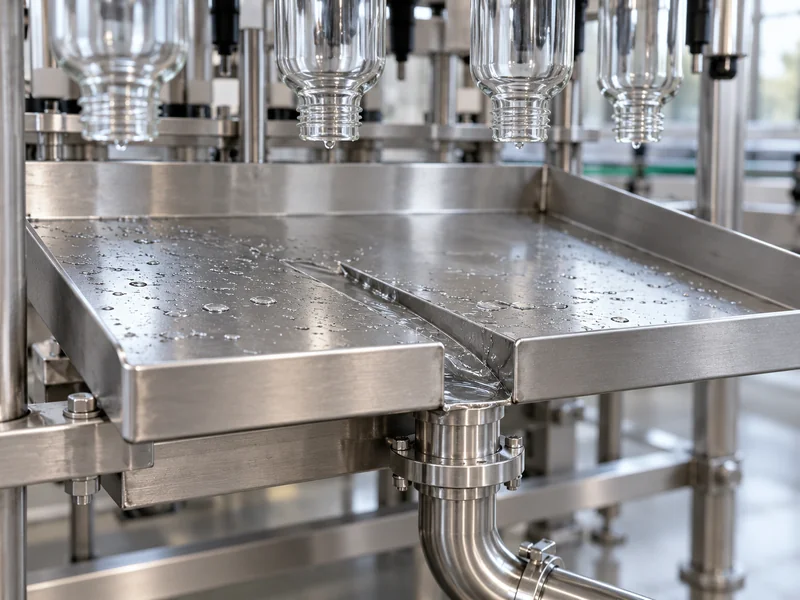
How Do You Choose the Rinsing Medium?
Match the treatment medium to the incoming contamination and the permitted exposure of the package. Evaluate water, conditioned air, or a specified chemical process against that particular objective. Approve a change of medium only after confirming that the revised treatment achieves the required bottle condition.
Krones lists multiple media and nozzle arrangements for its configurable Moduljet rinser, including water and ionized-air options. This illustrates why the purchaser must specify the intended treatment instead of assuming that every rotary rinser performs the same process. The proposed Brenu configuration needs its own documented capability.
What Must Be Defined for a Water Rinse?
State the water quality at the machine connection and how that quality will be maintained through local piping and nozzles. Include the required supply range, filtration arrangement, temperature where relevant, and sampling points. Clarify whether water is single-pass or reused in a controlled circuit.
If reuse is proposed, review collection, treatment, monitoring, replacement, and the route of the final rinse. A return tank by itself does not establish acceptable water quality. Specify which party supplies and maintains each part of that system.
What Must Be Defined for an Air Treatment?
For an air process, establish the delivered air quality, treatment method, and means of removing dislodged material from the bottle area. A jet can move particles without ensuring they leave the process. Verify the complete arrangement using the intended contamination challenge and the supplier’s approved procedure.
Include pressure and flow requirements at the machine while other plant users are operating. A compressor rating measured elsewhere does not describe the condition available at the rinser nozzle. Keep compressed-air treatment and monitoring requirements in the utility schedule.
How Should Nozzle Coverage Be Checked?
The nozzle must be aligned with the mouth and reach the intended internal surfaces without contacting the bottle improperly. Fixed and entering nozzles have different clearance and motion requirements. Check the arrangement with tolerances and actual gripper positioning included.
Ask how the supplier detects a missing or ineffective jet where that function is required. A pump running signal does not demonstrate delivery through every nozzle. Define the inspection or monitoring method and the response when treatment is unavailable.
Use representative bottle samples to assess difficult shoulders, bases, and internal features. Select a suitable test method for the removal objective with the quality team. A wet interior shows exposure to liquid but does not by itself prove that the specified contamination has been removed.
How Do Speed and Treatment Time Interact?
On a rotary process, the active treatment arc and rotational speed determine the time available for rinsing and draining. Increasing throughput can shorten these intervals unless the design provides another means of control. Ask for actual treatment and drain times at each agreed production rate.
Separate rinse-on time from the total time a bottle remains inverted. The bottle may spend part of that period entering position, receiving medium, and draining. A single combined residence figure can hide insufficient drainage at maximum output.
| Specification Item | Question to Resolve | Acceptance Evidence |
| Rinse medium | Does it suit the removal objective? | Defined quality and compatibility checks |
| Nozzle action | Does treatment reach the intended interior? | Representative bottle trial |
| Treatment interval | What is available at each speed? | Recorded sequence and operating rate |
| Drain interval | How much liquid remains? | Agreed residual-liquid measurement |
| Transfer to filling | Can the bottle be recontaminated? | Layout and operating inspection |
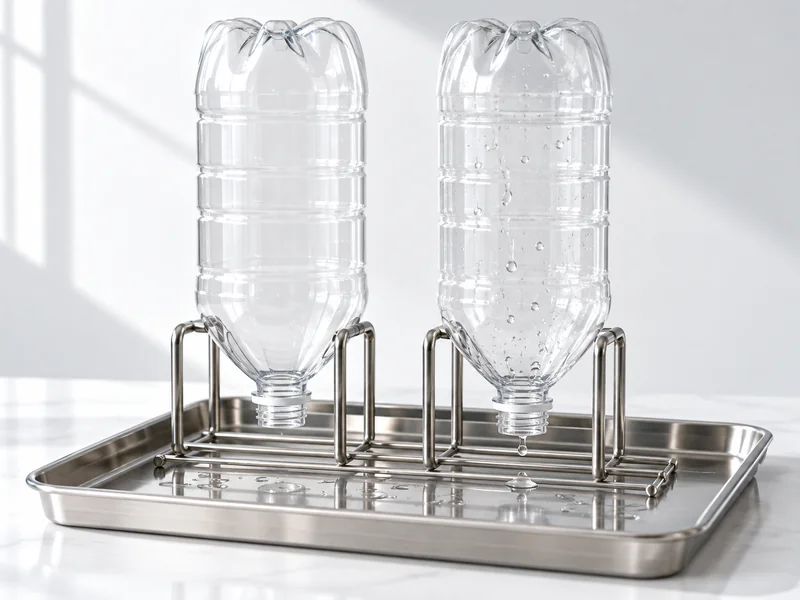
How Should Residual Liquid Be Measured?
Agree a method that measures the residue under normal operating conditions and at a defined point after the rinser. The sample must not receive extra manual drainage before measurement. Otherwise, the test no longer represents what reaches the filling station.
A gravimetric comparison may be suitable when the measurement uncertainty and bottle-mass variation are controlled. Other methods may be needed for chemical carryover or a specific product. Document sample identification, timing, calculation, and the equipment used.
Test the bottle formats most likely to retain liquid, including internal ledges or complex bases. Collect samples across relevant stations and operating conditions. Report variation and individual unacceptable results rather than only a reassuring average.
What Should the Drainage Layout Include?
Separate drainage from the bottles from drainage of the machine itself. Collection trays and outlets must carry the expected process discharge without backing up or splashing the clean bottle path. Include washdown flow and abnormal but foreseeable discharge in the review.
Show outlet positions, connection sizes, elevations, and the plant drain interface on the installation drawing. Confirm the drainage arrangement with the facility’s hygiene requirements. Avoid hose routing that creates unintended retention, obstructions, or difficult-to-clean areas.
Inspect access to trays, strainers, and removable collection components. Operators need a practical way to inspect and clean them under the approved isolation procedure. A hidden pool beneath a neatly enclosed rinser remains an operating problem.
What Happens During Stops and Restarts?
At a stop, identify the containers occupying each rinsing position and the treatment stage they had reached. Check elapsed exposure against the qualified process window before choosing the recovery action. The restart instructions should distinguish bottles eligible to continue from those requiring removal or a complete new treatment cycle.
Test loss of rinse supply, an interruption during treatment, and recovery after the agreed idle duration. Confirm that the machine does not resume normal filling on the assumption that every bottle completed the required sequence. Document any manual actions clearly in the operating instructions.
Which Documents Should Be Delivered?
Request a treatment sequence chart, utility schedule, nozzle list, and drainage drawing that refer to the same machine revision. The sequence chart should identify when valves open, when the bottle is inverted, and when the controls consider treatment complete. Keep the operating limits beside the recipe settings rather than in an unrelated sales brochure.
Include the maintenance tasks that preserve the original result. Nozzle wear, deposits, damaged gripper pads, and changed supply filters can affect performance without changing the nominal speed setting. Define inspection points and replacement criteria with the equipment supplier.
For every unresolved site interface, identify a responsible party and a verification date. Typical examples include final water sampling, drain capacity confirmation, and the response to a plant utility interruption. Close those items during commissioning before accepting routine production.
How Should the Process Be Accepted?
Write a test matrix covering bottle formats, speeds, media conditions, and the defined contamination or residue checks. Record the supplied utility condition and the actual operating sequence. List any site-dependent tests that cannot be completed at the supplier’s factory.
Keep treatment qualification separate from unsupported claims of sterility. The required hygienic outcome must be demonstrated by the appropriate process and test evidence. A basic bottle rinse should not be presented as a validated sterilization process.
To finalize the scope, share the bottle samples and rinse requirements with Brenu. Request a proposal that connects the chosen medium, nozzle arrangement, drainage design, and acceptance method to your product and operating range.