
Designing a beer bottling line is not simply about selecting a filling machine and connecting a few conveyors. A reliable bottling system needs to coordinate multiple processes, including bottle handling, cleaning, filling, sealing, inspection, labeling, and packaging.
For breweries, especially those expanding from manual operations or upgrading existing facilities, the biggest challenge is not achieving a certain production speed. The real challenge is creating a balanced system where every stage works together without causing quality loss, unnecessary downtime, or excessive product waste.
Start with Production Requirements Before Selecting Equipment
The first step in designing a beer bottling line is defining the actual production requirements.
Many breweries make the mistake of choosing equipment based only on filling speed. However, the filling capacity is only one part of the complete system. The upstream and downstream equipment must also match the filling section.
For example, a brewery requiring 6,000 bottles per hour cannot only install a 6,000 BPH filling machine. The bottle supply, labeling machine, packaging system, and conveyor layout must also support the same production level.
Important factors include:
| Factor | Consideration |
| Production capacity | Bottles per hour, daily output, future expansion |
| Bottle type | Glass bottle, PET bottle, bottle size, neck design |
| Beer type | Lager, craft beer, flavored beer, specialty beer |
| Packaging format | Carton, shrink film, tray, pallet |
| Factory space | Equipment layout and material flow |
| Automation level | Manual, semi-automatic, fully automatic |
A complete design starts with understanding the brewery’s current needs and future development plans.
Understand the Complete Beer Bottling Process
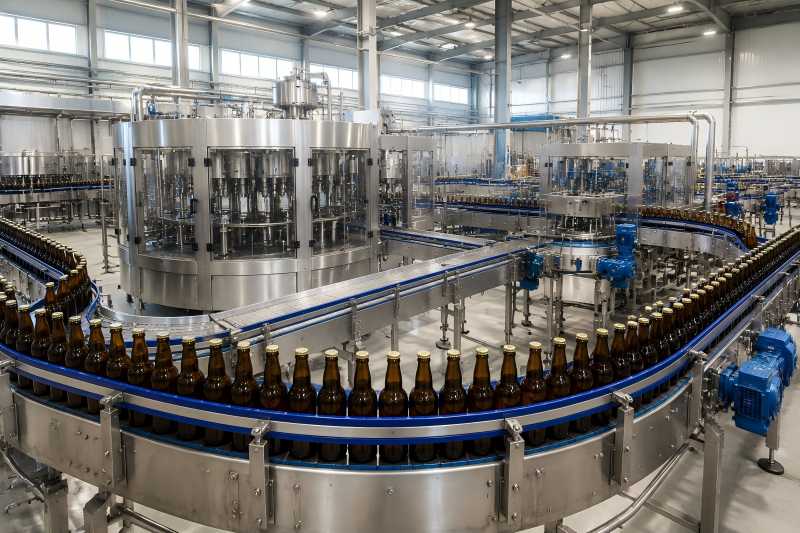
A complete beer bottling line usually includes the following stages:
Empty Bottle Feeding → Bottle Rinsing → Beer Filling → Capping → Inspection → Labeling → Date Coding → Packaging → Palletizing
Each stage has a specific role, and problems in one section can influence the entire production line.
For example:
- Poor bottle cleaning may affect beer hygiene.
- Unstable filling may cause volume differences.
- Poor capping may lead to leakage or CO₂ loss.
- Incorrect packaging may damage bottles during transportation.
The goal of line design is to create a continuous and stable production flow.
Bottle Preparation and Feeding System
Before entering the filling section, empty bottles need to be properly supplied to the production line.
For returnable glass bottles, bottle preparation becomes even more important because bottles may contain dust, residual liquid, or contaminants from previous use.
The bottle feeding system usually includes:
- Bottle loading area
- Depalletizer (for large-scale production)
- Bottle conveyor
- Bottle sorting system
The conveyor design should consider:
Smooth Bottle Transfer
Sudden acceleration or unstable guiding structures can cause:
- Bottle falling
- Glass collision
- Production interruption
Therefore, bottle conveyors should maintain a stable speed transition between different machines.
Bottle Compatibility
A flexible bottling line should handle different bottle sizes.
For example:
| Bottle Size | Typical Application |
| 330 ml | Craft beer, premium beer |
| 500 ml | Standard commercial beer |
| 650 ml | Family or regional market |
| 750 ml | Specialty packaging |
Adjustable guides and changeover systems help breweries switch products more efficiently.
The Role of 3-in-1 Beer Filling Machine
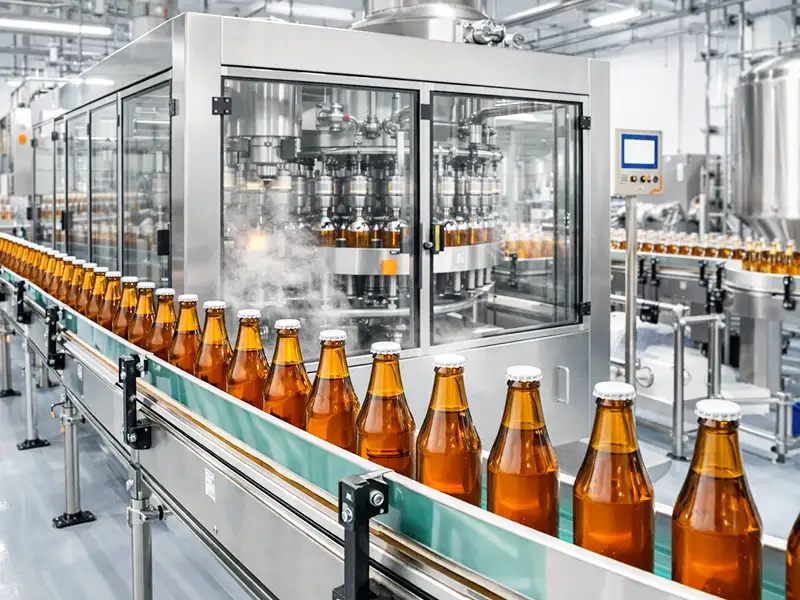
The core equipment in a modern beer bottling line is usually a 3-in-1 filling machine, which integrates:
- Rinsing
- Filling
- Capping
Combining these three processes into one machine reduces bottle transfer distance, improves hygiene, and simplifies production management.
1. Bottle Rinsing System
The first stage of the 3-in-1 machine is bottle rinsing.
Before filling beer, bottles need to be cleaned to remove possible dust or particles.
A proper rinsing system helps:
- Improve packaging hygiene
- Reduce contamination risk
- Prepare bottles for stable filling
Different breweries may choose different rinsing methods depending on bottle conditions.
For new bottles:
- Air rinsing may be sufficient.
For recycled bottles:
- Water rinsing or sterilization methods may be required.
The rinsing process should balance cleaning performance and water consumption.
2. Beer Filling System
Beer filling is the most technically sensitive process because beer quality can easily be affected by oxygen exposure and pressure changes.
Unlike ordinary beverage filling, beer requires special filling control because it contains dissolved CO₂.
A well-designed beer filling system should consider:
CO₂ Protection
During filling, excessive pressure differences can cause:
- Foaming
- CO₂ loss
- Flavor changes
A stable filling process maintains pressure balance between the beer tank and bottle.
Filling Accuracy
Inconsistent filling levels may cause:
- Customer complaints
- Packaging appearance problems
- Product waste
Typical filling accuracy depends on:
- Filling valve design
- Product temperature
- Pressure stability
- Machine control system
Low Oxygen Pickup
Oxygen is one of the biggest concerns in beer packaging.
Excess oxygen exposure can influence:
- Freshness
- Aroma
- Shelf life
Therefore, modern beer filling machines are designed to reduce oxygen contact during filling.
3. Capping System
After filling, bottles immediately enter the capping section.
The capping process needs to provide:
- Stable sealing
- Correct cap positioning
- Consistent pressure
Poor capping performance may lead to:
- Leakage
- CO₂ escaping
- Reduced shelf life
For different bottle types, the capping system may require different configurations.
Examples:
| Bottle Type | Common Closure |
| Glass beer bottle | Crown cap |
| Specialty bottle | Customized cap |
| Premium packaging | Decorative closure |
A reliable capping system ensures that every bottle leaves the machine properly sealed.
Conveyor System Design After Filling
After the 3-in-1 filling machine, bottles continue through inspection and packaging.
The conveyor system should not only transport bottles but also maintain production balance.
Poor conveyor design may create:
- Bottle accumulation
- Machine waiting time
- Production interruption
Important considerations include:
Buffer Space
A buffer area between machines allows temporary speed differences.
For example:
If the labeling machine stops for a short period, bottles should not immediately stop the filling machine.
Material Selection
Beer production environments require materials with:
- Corrosion resistance
- Easy cleaning
- Long service life
Stainless steel structures are commonly selected for wet production areas.
Bottle Inspection and Quality Control
Quality inspection is an important part of modern beer bottling lines.
Common inspection points include:
1. Empty Bottle Inspection
Before filling:
- Bottle cracks
- Foreign materials
- Incorrect bottle position
2. Filling Inspection
After filling:
- Liquid level
- Foam condition
- Filling consistency
3. Cap Inspection
After capping:
- Missing caps
- Incorrect sealing
- Cap position
Automated inspection systems help reduce dependence on manual checking and improve production reliability.
Labeling and Coding System
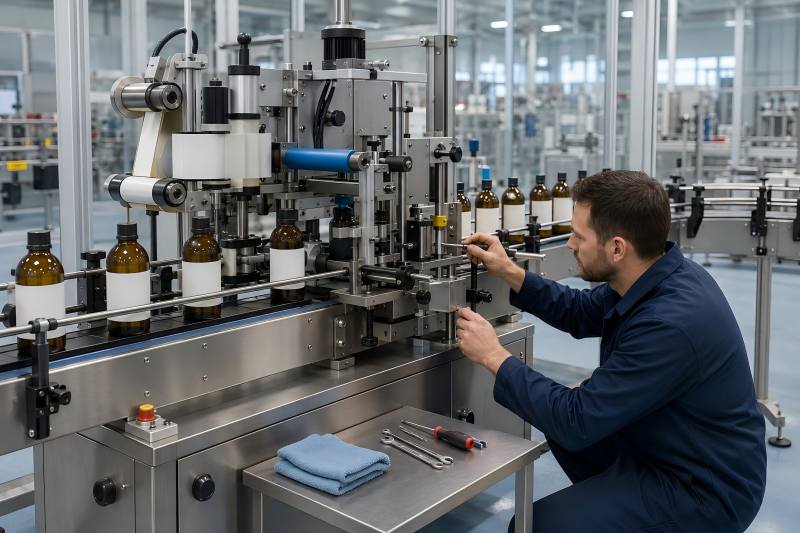
After filling and sealing, bottles enter the labeling section.
The labeling system depends on bottle design and marketing requirements.
Common options include:
- Wrap-around labels
- Self-adhesive labels
- Neck labels
- Front and back labels
The labeling machine should match:
- Bottle diameter
- Label material
- Production speed
Date coding is also integrated into this stage.
Important information may include:
- Production date
- Batch number
- Expiry information
Accurate coding helps breweries manage inventory and trace products.
Packaging System Design
Packaging is the final stage before transportation.
The right packaging solution depends on the brewery’s sales channels.
Common packaging methods include:
| Packaging Method | Application |
| Carton packing | Premium beer, retail markets |
| Shrink film packing | Large-volume commercial beer |
| Tray + film | Supermarkets and distribution |
| Palletizing | Large-scale logistics |
A complete packaging system may include:
- Bottle grouping machine
- Carton erector
- Carton sealing machine
- Shrink wrapper
- Palletizer
The packaging capacity should match the filling capacity to avoid bottlenecks.
Production Capacity Matching
One of the most important principles in bottling line design is capacity balance.
A typical production balance may look like this:
| Equipment | Designed Capacity |
| 3-in-1 Filling Machine | 6,000 BPH |
| Labeling Machine | 6,500 BPH |
| Packaging Machine | 6,500 BPH |
| Conveyor System | 7,000 BPH |
The downstream equipment usually needs slightly higher capacity to prevent accumulation.
If packaging speed is lower than filling speed, bottles will accumulate and reduce overall efficiency.
Hygiene and CIP Considerations
Beer production requires strict hygiene control.
A well-designed bottling line should consider cleaning from the beginning.
Important design points include:
- Smooth product contact surfaces
- Easy-access components
- Reduced dead corners
- Sanitary piping design
CIP (Cleaning in Place) systems are often integrated with beer production systems to clean:
- Beer pipelines
- Filling valves
- Product tanks
Effective cleaning helps maintain consistent beer quality and reduces contamination risks.
Layout Planning for the Brewery
The physical arrangement of equipment directly affects operation efficiency.
A good layout should provide:
1. Straight Material Flow
The production path should follow:
Bottle Entry → Filling → Inspection → Labeling → Packaging → Storage
Avoid unnecessary transportation distances.
2. Maintenance Space
Machines require enough space for:
- Operator access
- Cleaning
- Spare parts replacement
- Technical inspection
3. Future Expansion
A brewery may increase capacity later.
Therefore, the layout should reserve space for:
- Additional conveyors
- Larger filling equipment
- Extra packaging systems
Common Design Mistakes to Avoid
Choosing Capacity Only Based on Current Demand
A brewery may grow faster than expected.
A slightly expandable system is usually more practical.
Ignoring Beer Characteristics
Beer is different from water or juice.
The filling system must consider:
- CO₂ retention
- Foam control
- Oxygen protection
Overlooking Packaging Efficiency
A fast filling machine cannot improve production if packaging becomes the bottleneck.
Poor Maintenance Planning
Poorly designed equipment can make cleaning and maintenance harder, leading to higher operating costs over time.
How to Build an Efficient Beer Bottling Line
A successful beer bottling line combines:
- Suitable filling technology
- Stable bottle handling
- Reliable capping performance
- Efficient inspection
- Flexible packaging solutions
The 3-in-1 beer filling machine plays a central role by integrating rinsing, filling, and capping into one compact system. This design reduces transfer steps, improves production stability, and helps breweries maintain consistent product quality.
However, the best bottling line is not always the fastest one. It is the system that matches the brewery’s product characteristics, production goals, factory conditions, and future expansion plans.
A carefully designed beer bottling line can help breweries reduce waste, improve efficiency, protect beer quality, and create a more reliable production process from filling to final packaging.