
The cost of a juice filling line is influenced by many factors, including capacity, automation, filling technology, packaging type, material selection, and customization requirements.
Lower equipment costs do not always mean better investment returns. A properly designed filling line should balance initial investment, production efficiency, maintenance cost, and future expansion needs.
Price Ranges for Different Production Needs
The cost of a juice filling line is usually determined by production capacity, automation level, filling technology, bottle type, and additional processing equipment.
As a general reference, the investment range can be divided into several levels:
| Juice Filling Line Type | Typical Capacity | Approximate Price Range | Suitable Application |
| Semi-automatic juice filling system | 500–2,000 bottles/hour | $10,000–$50,000 | Small beverage producers |
| Automatic linear juice filling line | 2,000–8,000 bottles/hour | $50,000–$150,000 | Medium-scale factories |
| Rotary automatic juice filling line | 8,000–40,000 bottles/hour | $150,000–$500,000+ | Large beverage plants |
| Complete juice production line | 10,000–60,000 bottles/hour | $300,000–1,000,000+ | Industrial beverage production |
These numbers are only a reference range. The final quotation depends on the specific configuration, materials, automation requirements, and factory conditions.
A common mistake among buyers is comparing only the filling machine price. In reality, a complete juice production system includes many connected machines, and each part affects the final investment.
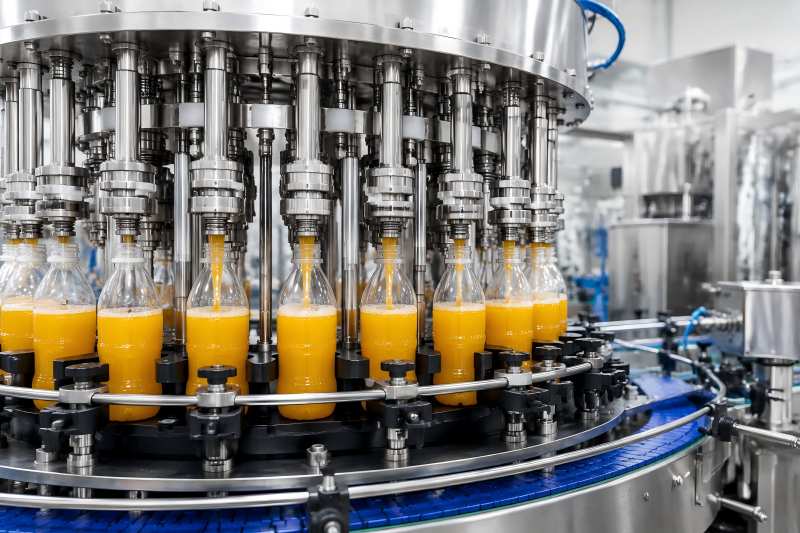
Main Factors That Affect Juice Filling Line Price
1. Production Capacity and Output Requirements
Production capacity is usually the biggest factor affecting the price of a juice filling line.
A machine designed for 2,000 bottles per hour requires fewer filling valves, smaller conveyors, and simpler control systems compared with a high-speed line producing 30,000 bottles per hour.
For example:
| Production Capacity | Filling System Features | Cost Impact |
| 1,000–3,000 BPH | Basic filling and capping | Lower investment |
| 5,000–15,000 BPH | Automatic filling, capping, conveying | Medium investment |
| 20,000+ BPH | High-speed rotary system, advanced control | Higher investment |
Before purchasing, buyers should calculate not only current production demand but also future growth. Small equipment may limit output when production requirements increase.
However, selecting an oversized filling line can also increase unnecessary costs because the equipment investment, maintenance requirements, and energy consumption will be higher.
2. Level of Automation
A basic juice filling machine may require manual bottle feeding, manual adjustment, and operator monitoring. A fully automatic filling line can integrate bottle loading, washing, filling, capping, labeling, and packaging with minimal human operation.
The main differences include:
| Automation Level | Features | Price Influence |
| Semi-automatic | Manual loading and operation assistance | Lower |
| Automatic | Automatic conveying, filling, and capping | Medium |
| Fully automatic | Complete production management and control | Higher |
For factories with high labor costs or continuous production requirements, investing in automation usually provides better long-term value.
A higher initial investment can reduce labor dependency, improve filling consistency, and decrease product waste.
3. Filling Technology Selection
Different juice products require different filling technologies, and this affects equipment design and price.
Hot Filling System
Hot filling is commonly used for many fruit juices because the product is filled at elevated temperatures before cooling.
Advantages include:
- Suitable for many acidic beverages
- Helps improve product stability
- Simple production management
However, it requires temperature-resistant components and a compatible filling design.
Aseptic Filling System
Aseptic filling requires stricter sterilization control for products with higher quality requirements.
It usually involves:
- Sterile product handling
- Advanced control systems
- More complex cleaning processes
Because of the additional technology involved, aseptic filling lines generally have higher investment costs.
| Filling Method | Equipment Complexity | Investment Level |
| Normal cold filling | Low | Lower |
| Hot filling | Medium | Medium |
| Aseptic filling | High | Higher |
The right choice depends on juice formulation, shelf-life requirements, packaging type, and market positioning.
4. Bottle Type and Packaging Format
The container used for juice production also affects filling line costs.
Common packaging options include:
- PET bottles
- Glass bottles
- Aluminum cans
- Cartons
Each packaging type requires different handling systems.
For example, PET bottle production may require:
- Bottle blowing connection
- Air conveyor system
- Rotary filling machine
Glass bottle lines often need:
- Bottle washing systems
- More careful transportation
- Stronger handling structures
A factory producing multiple bottle sizes also needs additional changeover components, which increases the equipment cost.
5. Equipment Configuration of the Complete Line
A juice filling line is not only a filling machine. A complete system may include:
- Water treatment system
- Juice blending tank
- Homogenizer
- Pasteurizer
- Filling machine
- Capping machine
- Labeling machine
- Packaging machine
- Conveyor system
The more complete the production process, the higher the investment.
For example:
| Configuration | Included Equipment | Cost Level |
| Filling only | Filling and capping equipment | Lower |
| Filling + packaging | Filling, capping, labeling, packing | Medium |
| Complete juice processing line | Processing, filling, packaging | Higher |
Many beverage manufacturers prefer a complete solution because matching equipment from different suppliers may create compatibility problems.
6. Material and Machine Construction
The materials used in the filling line also influence the final price.
Juice production requires good hygiene control because the product directly contacts the machine components.
Common materials include:
| Material | Application | Characteristics |
| SUS304 Stainless Steel | Standard food contact parts | Good corrosion resistance |
| SUS316L Stainless Steel | Higher hygiene requirements | Better chemical resistance |
| Carbon Steel Frame | Supporting structures | Strong and economical |
For standard juice production, SUS304 is commonly used. For more demanding applications, such as acidic juice or premium beverage production, SUS316L components may be selected.
Using premium materials increases initial expenses while improving durability and reducing part replacement.
7. Control System and Smart Features
Modern juice filling lines increasingly use intelligent control systems.
Additional features may include:
- PLC control
- Touchscreen operation
- Automatic fault detection
- Remote monitoring
- Production data recording
These systems improve operation convenience and reduce human errors.
However, advanced control functions also increase equipment costs. Small factories may not need every smart feature, while large beverage producers often benefit from better production monitoring.
8. Customization Requirements
Every beverage factory has different production conditions.
Customization may include:
- Special bottle shapes
- Multiple filling volumes
- Different juice viscosities
- Limited factory space
- Integration with existing equipment
For example, juice containing pulp requires different filling considerations compared with clear juice because particles may affect filling accuracy.
Customized solutions usually cost more than standard machines, but they provide better production compatibility.
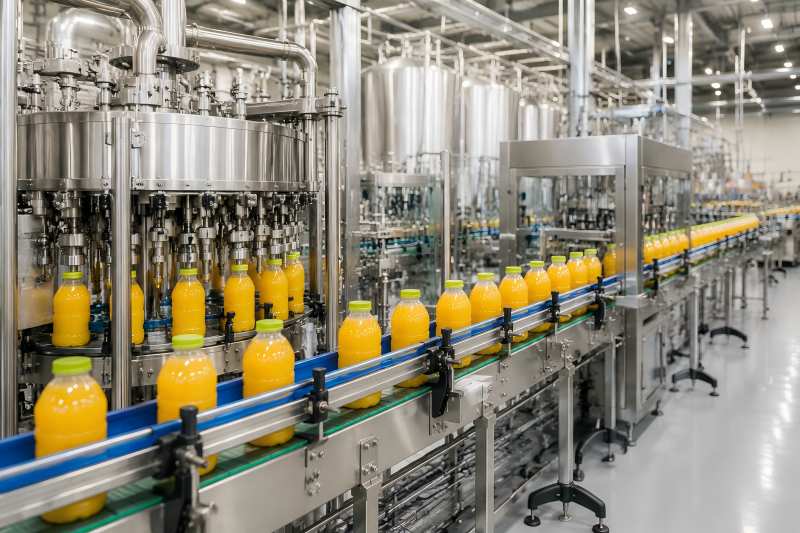
Factors That Influence the Total Investment Cost
The total investment goes beyond the equipment purchase cost. Buyers should also consider installation, transportation, and operation costs.
| Cost Item | Typical Consideration |
| Installation | Equipment setup and commissioning |
| Transportation | International shipping and packaging |
| Spare parts | Wear components and maintenance parts |
| Training | Operator operation and maintenance training |
| Utilities | Electricity, water, and compressed air requirements |
A well-planned budget should include these additional expenses from the beginning.
How to Reduce Juice Filling Line Investment Cost
Lower investment comes from proper planning, not cheaper machines. A better approach is selecting the right configuration.
Several methods can help control investment:
- Choose capacity based on realistic production demand
- Avoid unnecessary automation features
- Select suitable filling technology
- Standardize bottle sizes
- Plan future expansion requirements
For example, a medium-sized factory may not need a 30,000 bottles/hour rotary line at the beginning. A 5,000–10,000 bottles/hour automatic system may provide better investment efficiency.
A reliable juice filling line can help factories improve product consistency, reduce labor requirements, and achieve stable long-term production performance. A complete production solution should be evaluated, not just the initial filling machine investment.