A juice filling machine works through a series of coordinated processes, including bottle feeding, cleaning, juice filling, sealing, and packaging. Each system plays an important role in maintaining production efficiency and product quality.
For beverage manufacturers, selecting the right filling technology is not only about achieving higher speed. It also requires considering juice characteristics, hygiene requirements, packaging formats, and long-term production goals.
What Is a Juice Filling Machine?
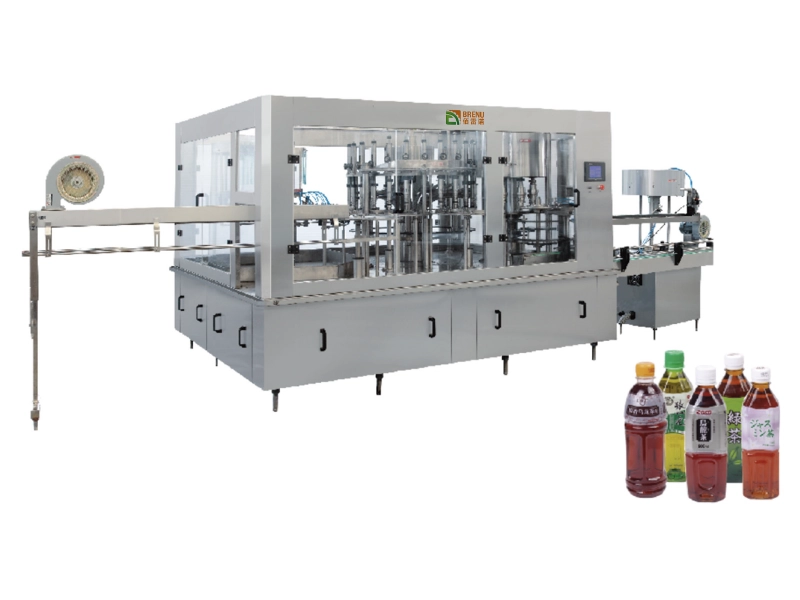
A juice filling machine is an automated device designed to fill prepared juice products into different types of containers, including PET bottles, glass bottles, and other beverage packaging formats.
The machine usually works together with other systems, such as bottle rinsers, capping machines, labeling machines, and sterilization equipment, to create a complete beverage packaging process.
The main purpose of a juice filling machine is to achieve:
| Function | Purpose |
| Accurate filling | Maintain consistent liquid volume in every bottle |
| Hygienic operation | Prevent contamination during filling |
| High-speed production | Increase factory output efficiency |
| Reduced product loss | Minimize dripping, overflow, and material waste |
| Stable quality | Ensure every finished product meets production requirements |
Unlike water filling systems, juice filling machines must consider additional factors such as viscosity, pulp content, temperature, and sterilization requirements.
Main Components of a Juice Filling Machine
A juice filling machine consists of multiple systems working together. Each component has a specific role in maintaining smooth production.
1. Bottle Feeding System
The bottle feeding system is the first stage of the filling process. Empty bottles enter the machine through a conveyor system and are positioned accurately before filling.
The feeding system usually includes:
- Conveyor chains
- Bottle positioning devices
- Bottle separation mechanisms
- Transfer wheels
The purpose is to ensure bottles arrive at the filling station at the correct speed and spacing. Poor bottle handling can directly affect filling accuracy and reduce production efficiency.
2. Rinsing and Cleaning System
Before juice enters the bottle, containers may require internal cleaning to remove dust or foreign particles.
Depending on production requirements, the rinsing system can use:
- Sterile water
- Filtered air
- Sanitizing solutions
For high-hygiene juice production, bottle cleaning is especially important because juice products often contain natural ingredients that are sensitive to contamination.
3. Juice Filling System
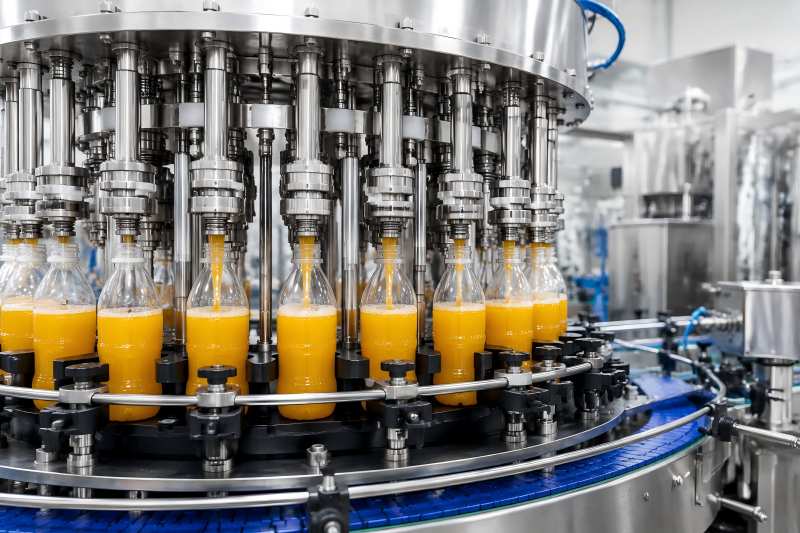
The filling system is the main functional section of the machine. It controls how juice flows from the storage tank into each bottle.
The working process usually includes:
- Bottles are positioned under filling valves.
- Filling valves open according to the programmed control system.
- Juice flows into bottles through gravity, pressure, or flow control.
- Valves close when the target filling level is reached.
Different juice products require different filling methods.
| Filling Method | Working Principle | Suitable Applications |
| Gravity filling | Uses liquid pressure difference to fill bottles | Low-viscosity juices |
| Flow meter filling | Measures exact liquid volume electronically | Premium juice products requiring high accuracy |
| Piston filling | Uses piston movement to control liquid quantity | Thick juices and pulp-containing drinks |
| Vacuum filling | Uses pressure difference for filling | Certain glass bottle applications |
The correct filling method depends on juice characteristics, packaging type, and production requirements.
Step-by-Step: How Does a Juice Filling Machine Work?
Step 1: Bottle Transfer and Positioning
Empty bottles are delivered into the machine via the conveyor system. A positioning mechanism separates bottles and places them under filling valves. The machine must maintain accurate bottle spacing because even a small positioning error can affect filling speed and stability.
For high-speed production lines, automatic bottle handling systems reduce manual adjustment and improve continuous operation.
Step 2: Juice Preparation and Supply
Before filling begins, the juice is transferred from the processing section into a product tank.
The juice supply system controls:
- Product temperature
- Flow stability
- Pressure balance
- Material level
For example, hot-filled juice requires controlled temperature management because the product must remain within a specific range during filling.
A stable juice supply prevents problems such as inconsistent filling volume or excessive foaming.
Step 3: Filling Valve Operation
Once bottles are correctly positioned, filling valves start the filling process.
The valve opening time, liquid flow speed, and filling level are controlled according to the machine design.
Modern filling systems may use sensors and PLC control to adjust operation automatically.
Important factors affecting filling performance include:
| Factor | Effect on Production |
| Filling speed | Determines overall output capacity |
| Valve design | Influences filling accuracy and cleaning efficiency |
| Juice viscosity | Affects filling time and flow stability |
| Temperature | Changes liquid flow characteristics |
Step 4: Bottle Level Control
Maintaining consistent filling volume is one of the most important functions of the machine.
Too much filling may cause product overflow during capping, while insufficient filling can create customer complaints and packaging issues.
A reliable juice filling machine controls:
- Filling volume
- Liquid level height
- Bottle positioning
- Filling time
For commercial beverage production, even small filling errors can create significant material losses over thousands of bottles.
Step 5: Capping Process
After filling, bottles move to the capping station.
The capping system automatically places caps onto bottles and applies controlled torque to ensure proper sealing.
A good capping process prevents:
- Leakage
- Product contamination
- Loose caps
- Packaging damage
The filling and capping processes must work together because an unstable filling operation can affect sealing performance.
Step 6: Final Packaging
After sealing, finished bottles continue through the packaging section.
The complete process may include:
- Labeling
- Date printing
- Inspection
- Carton packing
- Palletizing
At this stage, quality inspection systems can check bottle appearance, cap position, and filling level before products leave the production line.
Different Types of Juice Filling Machines
Juice filling machines can be classified based on automation level, filling method, and production scale.
| Type | Features | Suitable For |
| Semi-automatic filling machine | Requires manual bottle loading and adjustment | Small beverage producers |
| Automatic filling machine | Fully automated bottle feeding and filling | Medium production factories |
| Rotary filling machine | High-speed continuous operation | Large beverage plants |
| Monoblock filling machine | Combines multiple processes into one system | Space-saving production lines |
For companies planning long-term production expansion, fully automatic systems usually provide better efficiency and lower labor dependence.
How Does a Juice Filling Machine Maintain Product Quality?
Juice quality is affected by many factors during filling. A reliable machine must control both mechanical performance and hygiene conditions.
Hygiene Control
Juice contains nutrients that may support microbial growth if contamination occurs. Therefore, filling equipment requires:
- Food-grade contact materials
- Easy-clean structures
- Sealed product pathways
- CIP cleaning compatibility
Stainless steel construction is commonly selected because it provides corrosion resistance and easier maintenance.
Filling Accuracy
Accurate filling directly affects production cost.
For example, if a factory produces 20,000 bottles per hour, even a small overfilling amount can create noticeable material waste over time.
Stable filling accuracy helps manufacturers:
- Reduce raw material loss
- Maintain consistent product appearance
- Improve production profitability
Automation Control
Modern juice filling machines often use PLC systems, sensors, and touch-screen interfaces.
Automation helps operators monitor:
- Production speed
- Filling parameters
- Machine alarms
- Cleaning cycles
This reduces dependence on manual operation and improves production consistency.