
A beer filling machine is a precision system that does much more than simply transfer beer into containers. It controls pressure, protects carbonation, reduces oxygen exposure, manages foam, and ensures consistent packaging quality.
From container preparation and CO₂ purging to pressure-controlled filling and final sealing, every step influences the final product performance.
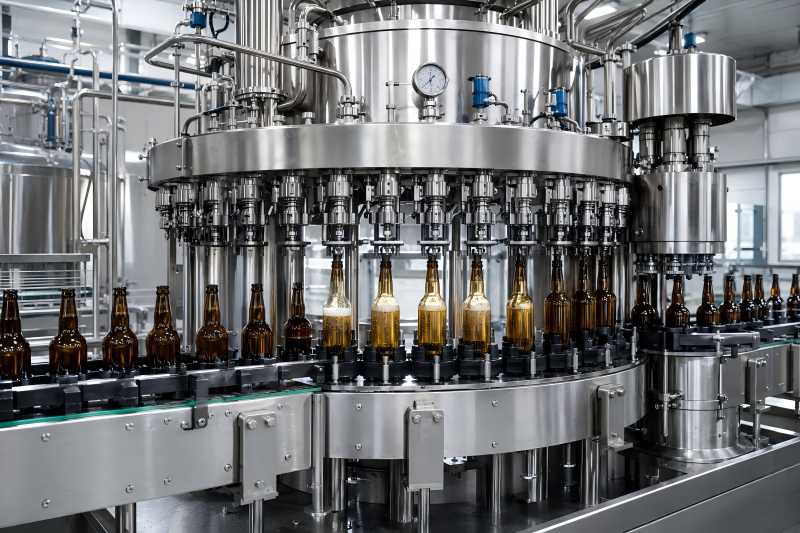
The Basic Principle of Beer Filling
The main purpose of a beer filling machine is to transfer beer from a supply tank into containers while maintaining the original characteristics of the beverage.
A typical beer filling process needs to achieve several goals:
| Objective | Why It Matters |
| Minimize oxygen contact | Protects beer flavor and shelf life |
| Maintain CO₂ pressure | Prevents carbonation loss |
| Control filling volume | Ensures consistent product quantity |
| Reduce foam formation | Improves filling efficiency |
| Maintain hygiene | Prevents contamination |
The biggest difference between beer filling and filling water or juice is that beer contains dissolved carbon dioxide. Rapid pressure drops release dissolved CO₂, causing excessive foaming during the filling process. Therefore, beer filling machines usually use pressure-controlled filling methods rather than simple gravity filling.
Main Steps of a Beer Filling Process
A complete beer filling cycle usually includes:
Container Preparation → CO₂ Purging → Pressure Equalization → Beer Filling → Pressure Release → Capping or Seaming
Each step has a specific function to maintain beer quality.
1. Container Preparation and Rinsing
Before filling begins, bottles or cans must be prepared to ensure cleanliness and stable production.
For bottle filling lines, empty bottles are usually transported through a rinsing system before entering the filling area. This step removes possible dust or particles inside the container.
The preparation stage focuses on:
- Removing foreign particles
- Ensuring clean packaging conditions
- Reducing contamination risks
- Preparing containers for stable filling
In high-speed breweries, this process is automated and synchronized with the filling machine speed.
For example, a 12,000 bottles per hour production line must continuously process containers without interruption. Any unstable bottle handling at this stage can affect the entire filling process.
2. CO₂ Purging to Reduce Oxygen
Oxygen is one of the biggest enemies of beer quality.
When beer contacts too much oxygen during packaging, oxidation reactions may occur, causing:
- Flavor changes
- Reduced freshness
- Shorter shelf life
- Unwanted aroma development
To reduce oxygen exposure, many beer filling machines use CO₂ purging before filling.
The basic principle is:
Remove air inside the container → Replace it with CO₂ → Fill beer under controlled conditions
Because carbon dioxide is heavier than air, it can help create a protective atmosphere inside the container.
The effectiveness of oxygen removal depends on:
- Purging time
- CO₂ pressure
- Container design
- Filling speed
For premium beers or export products with longer shelf requirements, oxygen control becomes even more important.
3. Pressure Equalization Before Filling
Pressure control is the core technology of beer filling.
If beer is directly transferred from a pressurized tank into an empty bottle with normal atmospheric pressure, the sudden pressure difference causes CO₂ to escape rapidly, resulting in heavy foaming.
To solve this problem, beer filling machines use a pressure equalization process.
The machine first increases the pressure inside the bottle or can until it is close to the pressure of the beer supply tank.
The process is:
- Container enters the filling valve
- CO₂ gas is introduced into the container
- Internal pressure rises
- Pressure becomes balanced with the beer tank
- Beer begins flowing smoothly
This controlled environment allows beer to enter the container with minimal turbulence.
4. Beer Filling Stage
After pressure balance is achieved, the filling valve opens and beer flows into the container.
Modern beer filling machines usually use counter pressure filling technology because it provides better control compared with traditional filling methods.
During filling:
- Beer flows through a sanitary filling valve
- The container remains under pressure
- CO₂ loss is minimized
- Filling speed is controlled
The filling valve design has a direct impact on performance.
A well-designed valve should provide:
- Smooth beer flow
- Reduced turbulence
- Easy cleaning
- Reliable sealing
For different beer types, filling parameters may also need adjustment.
For example:
| Beer Type | Filling Consideration |
| Lager | Requires stable carbonation control |
| Craft beer | Often requires stronger oxygen protection |
| High-carbonation beer | Needs slower pressure release |
| Flavored beer | Requires strict hygiene control |
5. Foam Control During Filling
Beer foam control is a major challenge during the packaging process. A certain amount of foam can be useful because it helps remove oxygen from the container headspace. However, excessive foam causes:
- Product loss
- Slow production speed
- Unstable filling volume
- Packaging problems
Several factors influence foam formation:
Beer Temperature
Warmer beer releases CO₂ more easily.
Most breweries maintain beer at a controlled low temperature before filling.
Pressure Difference
A sudden pressure drop causes dissolved CO₂ to escape quickly.
Filling Speed
Higher speed does not always mean better efficiency. Poorly controlled filling speed may increase foam and reduce overall productivity.
Filling Valve Design
The internal flow path determines how smoothly beer enters the container.
6. Final Pressure Release
After filling is completed, the pressure inside the container must be released carefully.
If pressure drops too quickly, beer may suddenly foam out of the container.
Therefore, filling machines use controlled decompression.
A typical process includes:
- Closing the beer valve
- Releasing internal pressure gradually
- Stabilizing the liquid surface
- Preparing for sealing
This step is especially important for high-speed production because even small pressure problems can affect thousands of bottles per hour.
7. Capping or Seaming
After filling, the container must be sealed immediately.
For bottles:
- A cap is positioned
- The capping head applies controlled pressure
- The bottle is sealed
For cans:
- The lid is placed
- The seaming system creates a secure seal
Fast sealing reduces:
- Oxygen exposure
- Carbonation loss
- Contamination risk
The filling and sealing processes are usually integrated into one production system to improve synchronization.
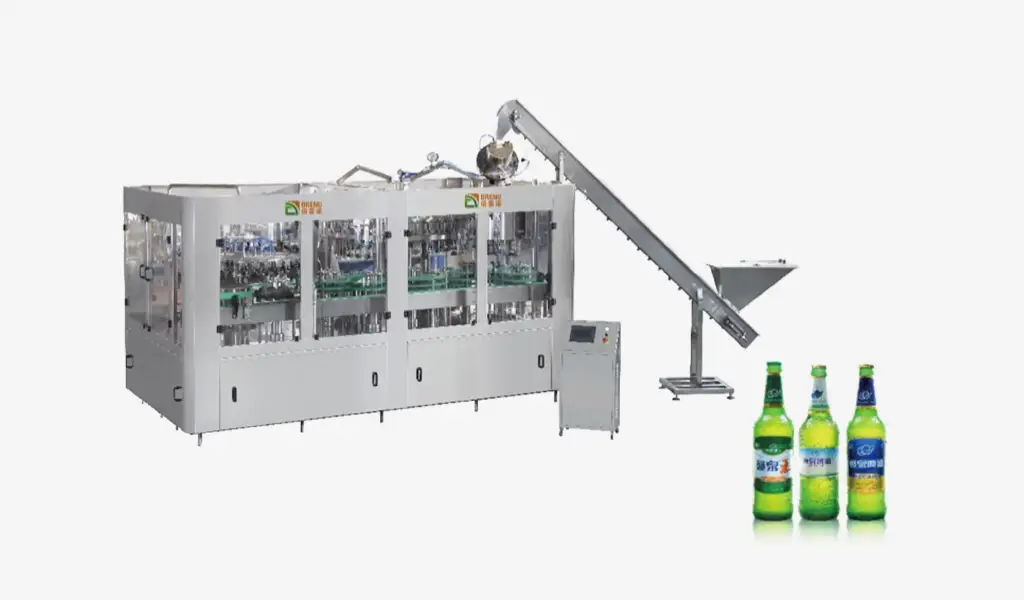
Key Components Inside a Beer Filling Machine
A complete beer filling machine contains several important components.
| Component | Function |
| Filling valves | Control beer flow into containers |
| CO₂ system | Maintains pressure and reduces oxygen |
| Product tank | Provides stable beer supply |
| Rotary table or conveyor | Transfers containers |
| Control system | Manages filling parameters |
| CIP system | Supports cleaning and hygiene |
Among these components, the filling valve and pressure control system usually have the greatest influence on final filling quality.
How Automation Improves Beer Filling Performance
Modern breweries increasingly use automated filling systems because they provide better consistency compared with manual operation.
Automation helps control:
- Filling volume
- Pressure settings
- Production speed
- Fault detection
- Cleaning procedures
A PLC-based control system can monitor operating conditions and quickly identify abnormal situations.
For example:
If filling pressure becomes unstable, the system can automatically adjust parameters or stop operation before causing large production losses.
Beer Filling Machine Maintenance Considerations
Because beer production requires strict hygiene standards, regular maintenance is essential.
Important maintenance areas include:
Filling Valves
Valve wear can cause:
- Leakage
- Uneven filling
- Foam problems
Sealing Components
Damaged seals may allow oxygen or contamination into the system.
Cleaning System
Beer residue can create hygiene problems if cleaning is insufficient.
Pressure System
Incorrect pressure control directly affects filling performance.
A preventive maintenance schedule helps breweries reduce unexpected downtime.
Choosing the Right Filling Machine for Beer Production
Different breweries have different requirements. Choosing a filling machine depends on several factors:
| Factor | Consideration |
| Production capacity | Bottles or cans per hour |
| Container type | Glass bottle, PET bottle, or can |
| Beer variety | Lager, craft beer, flavored beer |
| Packaging requirement | Shelf life and quality target |
| Automation level | Manual, semi-automatic, or fully automatic |
A small craft brewery may prioritize flexibility and easy operation, while a large commercial brewery may focus more on speed, stability, and energy efficiency.
For breweries looking to improve production efficiency and maintain consistent beer quality, selecting the right filling technology is a key investment. A well-designed beer filling system not only increases output but also helps preserve the taste, freshness, and stability that customers expect from every bottle or can of beer.