
An automatic water bottling line can reduce labor costs by replacing manual bottle handling, filling, labeling, packing, palletizing, and material transfer with integrated machine operation. The biggest savings usually come from high-labor sections such as filling, packing, and palletizing.
For growing bottled water factories, automation is not only a way to reduce salaries. It also improves production efficiency, lowers hidden costs, reduces human error, and increases output per worker. By calculating labor savings, payback period, and long-term production needs, investors can choose the right automation level for their business.
Why Labor Costs Are High in Water Bottling Production
In small or semi-automatic water bottling plants, labor is often used in almost every step. Workers may need to manually place empty bottles, move bottles between machines, check caps, attach labels, pack bottles into cartons, stack cartons on pallets, and transport finished goods.
These jobs may seem simple, but they create several cost problems:
- More workers are needed as capacity increases.
- Manual handling slows down production speed.
- Labor availability may become unstable during busy seasons.
- Human error can cause waste, rework, and product complaints.
- Supervisors need more time to manage training and workflow.
For factories that want to produce thousands of bottles per hour, manual operation is no longer efficient. Automation becomes a practical way to control long-term costs.
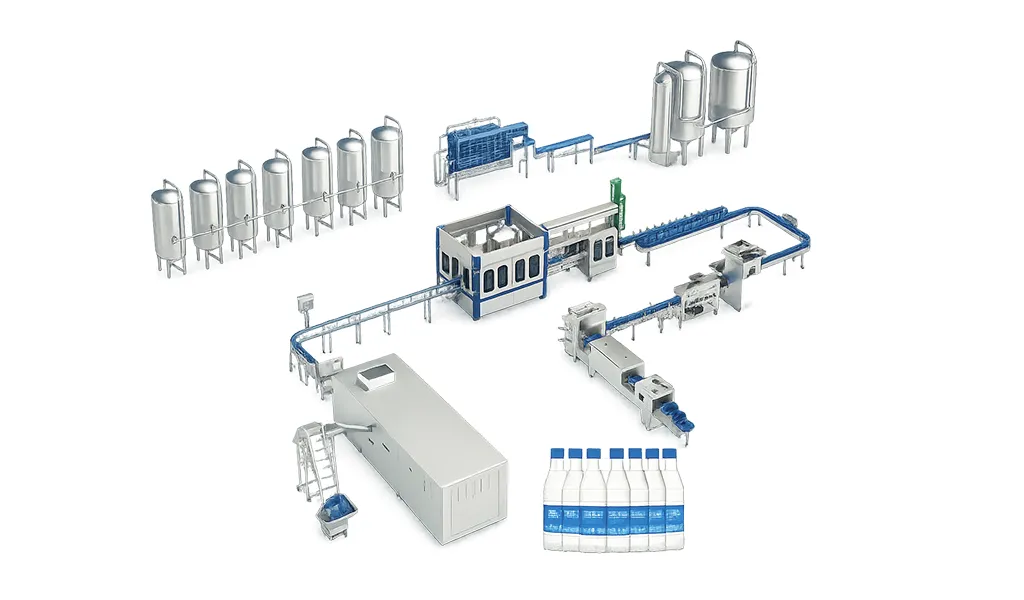
Main Labor-Saving Areas in an Automatic Water Bottling Line
A complete automatic water bottling line can reduce labor in several key sections.
Bottle Blowing and Bottle Feeding
For PET bottled water, the bottle blowing system produces bottles from preforms. In semi-automatic production, workers may manually load preforms or transfer bottles to the filling machine. With an automatic bottle blowing machine and air conveyor, bottles can move directly into the filling system.
This reduces the need for manual bottle collection, sorting, and feeding.
Washing, Filling, and Capping
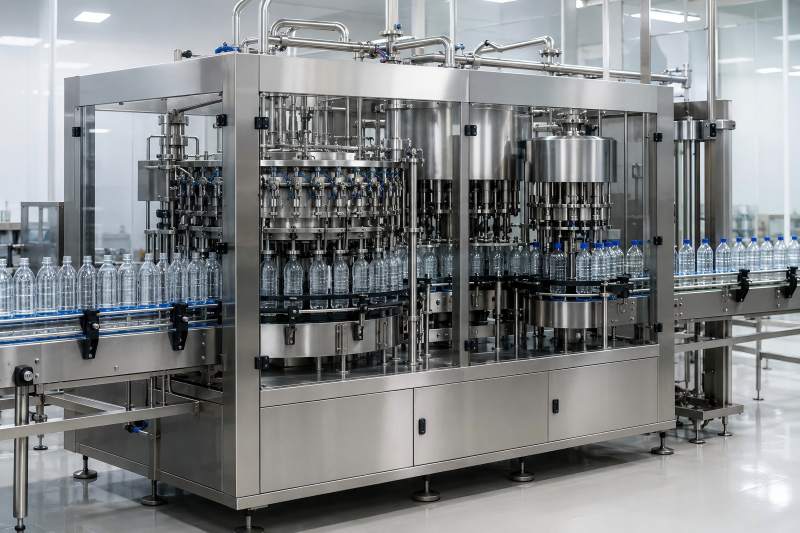
The 3-in-1 machine integrates rinsing, filling, and capping in one system. Bottles are automatically transferred by neck handling, cleaned, filled, capped, and discharged without manual contact.
This section usually provides strong labor savings because it replaces multiple manual operations with one continuous process.
Labeling and Date Coding
Automatic labeling machines apply sleeve labels, wrap-around labels, or adhesive labels at high speed. Date coding machines print production dates, batch numbers, and expiry information automatically.
This reduces manual labeling work and improves label accuracy.
Packing and Palletizing
End-of-line packaging often requires the most manual labor. Workers may need to pack bottles into cartons, shrink-wrap packs, stack cartons, and move pallets.
Automatic shrink wrapping machines, carton packing machines, palletizers, and conveyors can significantly reduce manual packing labor.
Example Staffing Comparison
The labor savings depend on factory layout, production capacity, bottle size, packaging type, and automation level. The table below gives a simple example for a medium-capacity bottled water plant.
| Production Section | Semi-Automatic Line Labor | Automatic Line Labor | Labor Reduction |
| Bottle feeding | 3 workers | 1 worker | 2 workers |
| Rinsing, filling, capping | 4 workers | 1–2 workers | 2–3 workers |
| Labeling | 2 workers | 1 worker | 1 worker |
| Packing | 6 workers | 2 workers | 4 workers |
| Palletizing | 4 workers | 1–2 workers | 2–3 workers |
| Quality inspection | 2 workers | 1 worker | 1 worker |
| Total per shift | 21 workers | 7–9 workers | 12–14 workers |
This example shows that automation may reduce direct line labor by more than half, especially in filling, packing, and palletizing.
Example Labor Cost Calculation
To understand the financial value of automation, factories can calculate labor savings by shift, month, and year.
Example assumptions:
| Item | Example Value |
| Working days per month | 26 days |
| Shifts per day | 2 shifts |
| Working hours per shift | 8 hours |
| Average labor cost per worker per month | $600 |
| Workers reduced per shift | 12 workers |
Based on these assumptions:
| Calculation Item | Formula | Result |
| Workers reduced per day | 12 workers × 2 shifts | 24 worker positions |
| Monthly labor savings | 24 × $600 | $14,400 |
| Annual labor savings | $14,400 × 12 | $172,800 |
This is only an example. In countries or regions with higher wages, the annual savings can be much larger. In lower-wage regions, automation can still reduce management pressure, improve output, and lower hidden costs such as waste, overtime, and rework.
How Automation Reduces Hidden Labor Costs
Labor cost is not only about monthly salaries. Manual production also creates hidden costs that are often ignored.
Lower Overtime Cost
When production depends heavily on manual work, factories may need overtime during peak seasons. Automatic equipment can run more continuously and maintain stable output, reducing the need for extra labor hours.
Less Rework
Manual filling, capping, packing, or labeling can create errors. Bottles may be underfilled, caps may be loose, labels may be crooked, or cartons may be packed incorrectly. Rework requires extra workers and additional production time.
Automation helps standardize the process and reduce repeated handling.
Lower Training Cost
Manual production needs constant training, especially when worker turnover is high. Automatic equipment still needs trained operators, but the number of workers is smaller and their roles are more focused.
Better Material Handling Efficiency
Conveyors, accumulation tables, palletizers, and warehouse transfer systems reduce the need for workers to carry or move products manually. This improves safety and lowers labor intensity.
Automation Level and Labor Savings
Automation needs vary by factory. A startup may begin with a smaller automatic filling line, while a large factory may invest in fully integrated production.
| Automation Level | Typical Equipment | Labor Saving Potential | Suitable Factory Type |
| Basic automation | Filling machine, labeling machine, simple conveyor | Medium | Small bottled water plants |
| Medium automation | Bottle blowing, 3-in-1 filling, labeling, shrink wrapping | High | Growing factories |
| High automation | Full line with packing, palletizing, inspection, warehouse connection | Very high | Large-scale production plants |
| Smart automation | PLC control, sensors, data monitoring, automated storage | Very high | Modern industrial plants |
The best choice depends on production goals, bottle size range, daily output, labor cost level, and investment budget.
Key Equipment That Helps Reduce Labor
Automatic Bottle Blowing Machine
This machine produces PET bottles from preforms automatically. When connected with an air conveyor, bottles can go directly to the filling system. It reduces manual bottle storage and transfer.
3-in-1 Water Filling Machine
Combines rinsing, filling, and capping in one machine. It is one of the most important machines for reducing labor because it replaces several manual steps with one automatic process.
Automatic Labeling Machine
The labeling machine applies labels at a consistent speed and position. It improves package appearance and reduces the need for manual label correction.
Shrink Wrapping or Carton Packing Machine
Packing is usually labor-heavy. Automatic packaging equipment can group bottles, wrap them with film, shrink the pack, or place bottles into cartons.
Palletizer
A palletizer stacks finished packs or cartons onto pallets. This reduces heavy manual lifting and improves warehouse efficiency.
Conveyor System
Conveyors connect machines smoothly and reduce manual transfer between production sections. A well-designed conveyor system can prevent bottlenecks and keep the line running efficiently.
Production Capacity and Labor Efficiency
Higher capacity does not always mean higher labor if the line is automated. In fact, automatic lines often improve labor efficiency as output increases.
| Line Capacity | Estimated Workers per Shift | Bottles per Worker per Hour |
| 2,000 BPH semi-automatic | 10 workers | 200 |
| 6,000 BPH automatic | 8 workers | 750 |
| 12,000 BPH automatic | 10 workers | 1,200 |
| 24,000 BPH automatic | 14 workers | 1,714 |
This table shows that automation can greatly increase output per worker. Even if a larger line needs more operators and technicians, the labor cost per bottle becomes much lower.
How to Calculate Payback Period
The payback period shows how long it takes for labor savings to recover the automation investment.
Basic formula:
Payback Period = Automation Investment ÷ Annual Labor Savings
Example:
| Item | Value |
| Additional automation investment | $250,000 |
| Annual labor savings | $172,800 |
| Estimated payback period | 1.45 years |
In this example, the factory may recover the added automation cost in about 17–18 months through labor savings alone. If the factory also gains higher output, lower waste, fewer complaints, and better delivery efficiency, the actual business value can be even stronger.
Practical Tips for Reducing Labor Costs Successfully
Choose the Right Capacity
Do not buy equipment only based on the lowest price. If the machine capacity is too small, the factory may still need extra workers to solve bottlenecks. Choose a line capacity that matches current demand and future growth.
Design a Smooth Layout
A poor layout increases manual handling. Machines should be arranged to reduce unnecessary bottle transfer, carton movement, and warehouse distance.
Automate the Most Labor-Heavy Sections First
For many factories, the biggest savings come from packing, palletizing, and material handling. If budget is limited, prioritize the areas that require the most workers.
Use Stable Conveying Systems
Conveyor jams can stop the whole line and require workers to fix problems frequently. Good guide rails, speed matching, and accumulation design help reduce manual intervention.
Train Operators Properly
Automation does not remove the need for skilled workers. Operators should understand machine adjustment, maintenance, safety, cleaning, and troubleshooting. A small team of trained operators can often replace a large team of manual workers.
More Benefits of Water Bottling Automation
Reducing labor cost is important, but it is not the only benefit of an automatic water bottling line.
Automation can also help factories:
- Increase production speed
- Improve filling accuracy
- Reduce product contamination risk
- Improve packaging consistency
- Lower bottle and label waste
- Improve delivery reliability
- Support larger customer orders
- Build a more professional factory image
For bottled water brands, stable quality and reliable delivery are essential. Automation helps manufacturers compete not only on cost but also on consistency and service capability.
A well-planned automatic water bottling line helps factories produce more bottles with fewer workers, better quality, and stronger cost control.