
Common faults in carbonated drink filling equipment are usually related to pressure control, product temperature, valve condition, bottle handling, capping quality, and cleaning performance.
Foaming, low filling level, CO₂ loss, leakage, dripping, and bottle jamming may look like separate problems, but they are often connected within the same filling process.
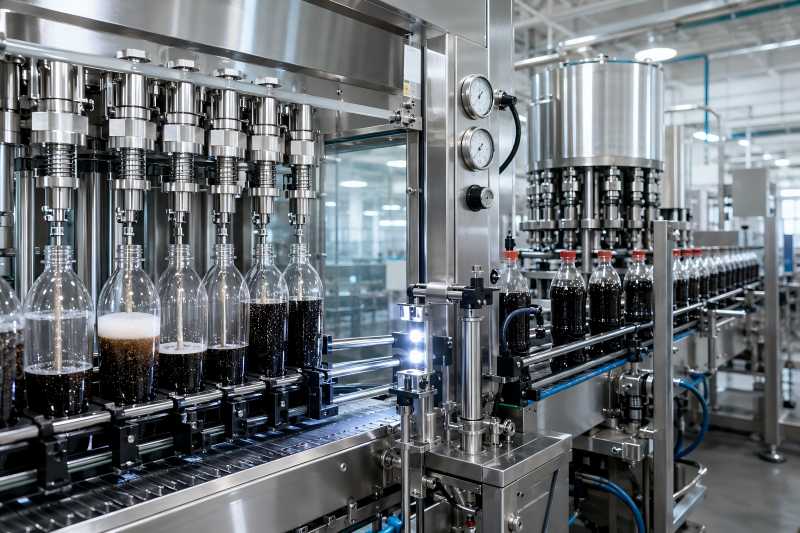
1. Excessive Foaming During Filling
Foaming is one of the most common problems in carbonated drink filling. It not only affects filling accuracy but can also cause product loss, bottle contamination, sticky machine surfaces, and unstable capping.
Carbonated beverages contain dissolved CO₂. When pressure changes too quickly or the product temperature is too high, CO₂ escapes from the liquid and creates foam. This is especially common in soda, sparkling water, beer, energy drinks, and flavored carbonated beverages.
Common Causes of Foaming
- Product temperature is too high before filling
- Filling tank pressure is lower than bottle pressure requirement
- Pressure equalization time is too short
- Filling valve opens too quickly
- Bottle is not properly centered under the filling valve
- Beverage contains too much air before carbonation
- CO₂ content is higher than the machine’s recommended range
- Return gas channel is blocked or unstable
Solutions
The first solution is to control product temperature. Most carbonated drinks should be filled at low temperature, usually around 2–6°C, depending on the product formula and CO₂ volume. Lower temperature helps CO₂ stay dissolved in the liquid and reduces foam formation.
The second solution is to adjust the filling pressure. In isobaric filling, the pressure inside the bottle should be close to the pressure inside the filling tank before liquid enters the bottle. Pressure equalization must be stable and complete before filling starts.
| Product Temperature | Typical Foam Risk | Filling Stability | Suggested Action |
| 2–4°C | Low | High | Ideal for most carbonated drinks |
| 5–8°C | Medium | Acceptable | Adjust pressure and filling speed |
| 9–12°C | High | Unstable | Improve cooling before filling |
| Above 12°C | Very High | Poor | Not recommended for normal production |
Operators should also check the filling valve, return gas pipe, and bottle lifting system. A damaged sealing gasket or blocked gas channel can cause pressure imbalance and increase foaming.
2. Low Filling Level
Low filling level affects product appearance and may cause customer complaints. Even a small level difference can become obvious when bottles are displayed together on shelves.
This problem often appears after machine speed changes, valve wear, pressure fluctuation, or bottle specification changes. In carbonated drink filling, low level may also be related to excessive foam because foam occupies bottle space during filling and collapses later.
Main Causes
- Filling time is too short
- Filling valve flow rate is unstable
- Product pressure changes during operation
- Foam collapses after capping
- Bottle volume tolerance is too large
- Liquid level sensor is not calibrated
- Filling valve spring or gasket is worn
Solutions
Start by checking whether the problem appears on all filling heads or only on specific valves. When only several bottles have low levels, the issue is usually related to individual filling valves. When all bottles are low, the problem is more likely caused by pressure, temperature, speed, or general filling parameter settings.
Operators should recalibrate the filling level system and inspect the filling valves one by one. For mechanical filling valves, worn springs, damaged seals, or blocked liquid channels can reduce liquid flow. For electronic filling systems, flow meters and sensors should be checked regularly.
| Fault Pattern | Possible Cause | Recommended Check |
| All bottles are underfilled | Filling time too short or tank pressure unstable | Adjust filling parameters |
| Random bottles are underfilled | Bottle positioning or foam issue | Check bottle lifting and centering |
| Same filling heads underfill repeatedly | Valve wear or blockage | Inspect specific valves |
| Level drops after capping | Foam collapse or CO₂ release | Improve temperature and pressure control |
A stable filling level depends on both mechanical precision and process control. Temperature, pressure, valve condition, and bottle quality should be reviewed together instead of adjusting only one parameter.
3. Overfilling and Product Overflow
Overfilling increases product waste and makes bottles sticky. It can also affect label adhesion, carton cleanliness, and downstream packing efficiency.
Overflow often happens when filling time is too long, the level control system is inaccurate, or the filling valve does not close quickly enough. In carbonated drink filling equipment, pressure instability may also push extra liquid into the bottle.
Main Causes
- Filling time is too long
- Filling valve closes slowly
- Liquid level sensor is not accurate
- Bottle volume is smaller than expected
- Filling tank pressure is too high
- Valve return gas system does not work properly
Solutions
Operators should first compare the actual bottle capacity with the filling machine settings. Some bottles look similar but have different internal volume due to wall thickness or mold variation.
The filling valve should close sharply and completely. Delayed valve closing may be caused by spring fatigue, air cylinder problems, sticky product residue, or worn sealing parts. Regular cleaning and preventive maintenance are important, especially for sugary carbonated beverages.
For automatic carbonated drink filling equipment, the PLC filling parameters should be checked after bottle size changes. A small setting error can cause continuous overfilling at high speed.
4. CO₂ Loss After Filling
CO₂ retention is one of the most important quality indicators for carbonated beverages. Poor CO₂ retention leads to flat taste, weak mouthfeel, and reduced product value.
CO₂ loss may occur before filling, during filling, or after capping. The filling machine must protect carbonation by keeping pressure stable and reducing unnecessary turbulence.
Common Causes
- Product temperature is too high
- Carbonation system is unstable
- Filling pressure is lower than required
- Bottle pressure release is too fast
- Capping is delayed after filling
- Cap sealing is weak
- Too much headspace remains in the bottle
Reference Data for CO₂ Retention
The following data is a practical reference for production adjustment. Actual values may vary depending on beverage formula, bottle type, and filling system design.
| Filling Condition | CO₂ Retention | Foam Risk | Product Taste Stability |
| 2–4°C, stable pressure | 95–98% | Low | Excellent |
| 5–8°C, stable pressure | 90–95% | Medium | Good |
| 8–10°C, slight pressure fluctuation | 85–90% | High | Acceptable but risky |
| Above 10°C, unstable pressure | Below 85% | Very high | Poor |
Solutions
The product should be cooled before entering the filling machine. A stable buffer tank or carbonated beverage mixer can help reduce pressure fluctuation before filling.
Pressure release after filling should be gradual. Sudden pressure drop causes CO₂ to escape quickly and creates foam. The filling valve exhaust structure should be clean, smooth, and properly adjusted.
Capping should happen immediately after filling. Long exposure before capping allows CO₂ to escape and increases contamination risk.
5. Bottle Leakage After Capping
Bottle leakage is a serious quality problem because it may damage packaging, reduce carbonation, and cause complaints during transportation or storage. Leakage can come from the cap, bottle mouth, capping head, or filling process.
Main Causes
- Cap torque is too low
- Cap is not aligned with the bottle mouth
- Bottle mouth is damaged or deformed
- Capping head is worn
- Cap material quality is unstable
- Liquid or foam remains on the bottle mouth
- Bottle height is inconsistent
Solutions
Check the capping torque first. Different bottle and cap types require different torque ranges. For plastic carbonated drink bottles, torque must be strong enough to seal pressure but controlled enough to avoid cap damage.
The bottle mouth should be clean before capping. Foam or liquid on the sealing surface may weaken the seal. This is why foam control during filling directly affects capping quality.
Operators should also inspect the cap chute, cap sorter, and capping head. A small alignment problem can cause tilted caps, incomplete sealing, or thread damage.
| Leakage Location | Likely Cause | Solution |
| Around cap edge | Low torque or poor cap fit | Adjust torque and check cap quality |
| From bottle mouth thread | Damaged bottle finish | Improve bottle inspection |
| Random leakage | Cap feeding instability | Check cap sorter and chute |
| Same capping head leaks | Worn capping head | Replace or adjust the head |
6. Unstable Filling Pressure
Pressure stability is the foundation of carbonated drink filling. When filling pressure fluctuates, the machine may produce foam, low level, overflow, CO₂ loss, and inconsistent sealing.
Pressure instability usually comes from the CO₂ supply system, filling tank control, pneumatic components, or poor pressure balance between the bottle and tank.
Main Causes
- CO₂ supply pressure is unstable
- Pressure regulator is damaged
- Filling tank pressure sensor is inaccurate
- Gas pipeline leaks
- Pressure equalization valve is blocked
- Pneumatic system pressure is insufficient
- Filling speed is too high for the current pressure setting
Solutions
Operators should check the CO₂ supply pressure and make sure the regulator responds smoothly. The pressure sensor should be calibrated regularly because inaccurate readings can mislead operators.
Gas pipelines, sealing joints, and valves should be checked for leakage. Even small leaks can cause unstable pressure during continuous high-speed production.
The filling speed should match the machine capacity and product characteristics. Increasing speed without adjusting pressure balance often leads to foam and inaccurate filling.
7. Filling Valve Dripping
Dripping after filling makes the bottle surface sticky and may contaminate the conveyor, star wheel, labeler, and packing area. For sugary carbonated drinks, dripping can also attract dust and cause hygiene problems.
Main Causes
- Filling valve seal is worn
- Valve closing action is delayed
- Product residue blocks valve movement
- Liquid contains pulp or particles
- CIP cleaning is incomplete
- Valve spring or pneumatic actuator is weak
Solutions
The filling valve should be disassembled and inspected when dripping appears repeatedly. Sealing rings, valve needles, springs, and contact surfaces should be checked for wear.
For beverages with sugar, flavoring, or small particles, cleaning must be more thorough. Residue inside the valve may prevent complete closure. CIP flow rate, cleaning temperature, detergent concentration, and rinsing time should meet production requirements.
Daily inspection is important. A small dripping issue can quickly become a major hygiene and packaging problem in continuous production.
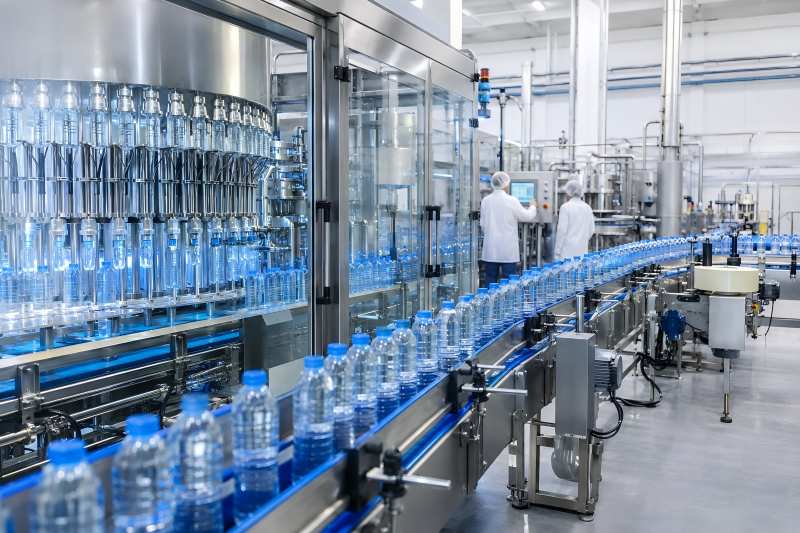
8. Bottle Jamming or Poor Bottle Transfer
Bottle handling problems reduce line efficiency and may cause bottle scratches, spills, broken bottles, or emergency stops. This problem often appears at the bottle infeed, star wheel, filling area, capping area, or conveyor transition points.
Common Causes
- Bottle size does not match star wheel
- Guide rail position is incorrect
- Conveyor speed is not synchronized
- Bottle body is too soft or deformed
- Air conveyor pressure is unstable
- Bottle lifting plate is not aligned
- Changeover parts are not installed correctly
Solutions
Before production starts, operators should confirm that the star wheel, guide rail, screw conveyor, and bottle lifting parts match the bottle size. Incorrect changeover parts often cause repeated jamming.
Bottle quality should also be checked. Lightweight PET bottles may deform under pressure or during transfer, especially when guide rails are too tight or conveyor pressure is too high.
Line speed synchronization is another key point. The rinser, filler, capper, labeler, and conveyor must work at matched speeds to avoid bottle accumulation or gaps.
9. Poor Cleaning and Hygiene Problems
Carbonated drink filling equipment must be cleaned regularly because beverage residue, sugar, flavoring, and microorganisms can affect product safety. Poor cleaning may also cause valve blockage, odor, and unstable filling performance.
Main Causes
- CIP cleaning time is too short
- Cleaning solution concentration is incorrect
- Dead corners exist in pipelines or valves
- Rinsing is incomplete
- Filling valves are not fully opened during cleaning
- Seals and gaskets are aging
- Operators skip manual inspection after CIP
Solutions
A complete CIP process should include pre-rinse, alkaline cleaning, intermediate rinse, acid cleaning when needed, final rinse, and sanitation. The exact process depends on beverage type and production requirements.
Operators should not rely only on automatic cleaning. Filling valves, return gas pipes, product tanks, and cap contact areas should be inspected regularly. Seals and gaskets should be replaced before they become a contamination risk.
| Cleaning Item | Suggested Check Frequency | Main Purpose |
| Filling valve surface | Daily | Prevent residue and dripping |
| Product tank | Daily or per batch | Maintain beverage hygiene |
| Return gas channel | Weekly | Avoid pressure imbalance |
| Seals and gaskets | Monthly | Prevent leakage and contamination |
| CIP flow and temperature | Each cleaning cycle | Confirm cleaning effectiveness |
10. Abnormal Noise or Vibration
Noise and vibration may indicate mechanical wear, poor lubrication, loose parts, or incorrect machine adjustment. Ignoring these signs may lead to serious failure and unplanned downtime.
Main Causes
- Bearings are worn
- Transmission parts are loose
- Star wheel is not aligned
- Bottle lifting system is unstable
- Gearbox lacks lubrication
- Motor or reducer has abnormal load
- Machine base is not level
Solutions
Operators should stop the machine and locate the noise source. Bearings, chains, gears, shafts, and lifting mechanisms should be inspected carefully.
Lubrication should follow the machine maintenance schedule. Too little lubrication increases wear, while too much lubrication may contaminate the production area.
Machine leveling is also important. An uneven base can increase vibration and affect bottle transfer accuracy.
Preventive Maintenance for Carbonated Drink Filling Equipment
Many filling faults can be reduced through preventive maintenance. Instead of waiting for visible problems, operators should check key parts before production and record machine conditions during operation.
Daily Maintenance
- Check filling pressure, product temperature, and CO₂ supply
- Inspect filling valves for dripping or blockage
- Confirm bottle transfer is smooth
- Check cap feeding and capping torque
- Clean product contact surfaces
- Record abnormal noise, foam, leakage, or level variation
Weekly Maintenance
- Inspect sealing gaskets and valve parts
- Check gas pipelines and pressure regulators
- Clean return gas channels
- Verify conveyor speed synchronization
- Check lubrication points
- Review filling accuracy data
Monthly Maintenance
- Calibrate sensors and pressure gauges
- Inspect mechanical transmission parts
- Check electrical cabinet and pneumatic system
- Replace worn seals when needed
- Review downtime records and repeated fault patterns
A stable carbonated drink filling line depends on accurate pressure balance, low-temperature filling, proper valve maintenance, clean pipelines, reliable capping, and correct bottle changeover. By recording fault patterns and checking each possible cause step by step, beverage manufacturers can reduce downtime, improve product consistency, and protect carbonation quality from filling to final packaging.