
Bottle size has a direct impact on the BPH of a filling machine. Smaller bottles such as 330 ml and 500 ml usually allow higher output because they require less filling time and are easier to move at high speed. Larger bottles such as 1 L, 1.5 L, 2 L, and 5 L require more liquid, longer filling time, stronger handling, and more stable conveyor design, so the BPH is usually lower.
The same filling machine may have different capacities for different bottle sizes. For example, it may reach 12,000 BPH with 500 ml bottles, but only 8,000 BPH with 1 L bottles or 5,000 BPH with 1.5 L bottles.
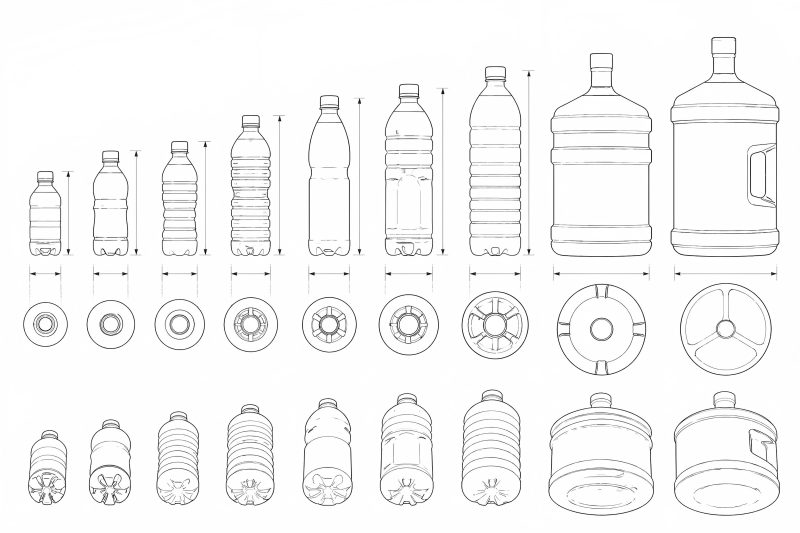
Why Bottle Size Affects Filling Speed
The main reason is simple: larger bottles need more liquid. A 2 L bottle requires four times more liquid than a 500 ml bottle. Even if the filling valve works efficiently, it still needs more time to fill a larger container.
Bottle size affects BPH in several ways:
- Larger bottles require longer filling time.
- Larger bottles need more stable bottle handling.
- Bigger bottles take more space on conveyors.
- Larger containers may need slower transfer speed.
- Capping larger bottles may take more time.
- Labeling and packaging equipment may run slower.
- More product supply capacity is required.
- Bottle changeover becomes more important.
In short, when bottle volume increases, the number of bottles filled per hour usually decreases.
Small Bottles Usually Have Higher BPH
Small bottles such as 250 ml, 330 ml, and 500 ml are common in bottled water, carbonated drinks, juice, energy drinks, and ready-to-drink beverages. These bottles are easier to fill quickly because the filling volume is lower.
For example, a 500 ml water bottle fills much faster than a 1.5 L water bottle. The machine can process more bottles in the same amount of time.
Small bottles also have advantages in high-speed production:
- Shorter filling time
- Faster bottle transfer
- Easier conveyor accumulation
- More stable high-speed operation
- Faster cooling or rinsing process
- Easier shrink wrapping and carton packing
This is why many high-speed bottled water and beverage lines are designed around 330 ml or 500 ml bottle formats.
Large Bottles Usually Have Lower BPH
Large bottles such as 1 L, 1.5 L, 2 L, 3 L, and 5 L require more filling time. They are also heavier after filling, so the conveyor system must handle more load.
Compared with small bottles, large bottles often require:
- Longer filling time
- Wider conveyor spacing
- Stronger guide rails
- More stable bottle transfer
- Larger filling valves
- Higher pump capacity
- Stronger capping torque
- Larger labeling systems
- Stronger packing equipment
A machine that can fill 12,000 bottles per hour for 500 ml bottles may only reach 6,000 to 8,000 bottles per hour for 1.5 L bottles.
Example: Same Machine, Different Bottle Sizes
The same filling machine can have different BPH ratings depending on bottle size.
| Bottle Size | Possible Machine Capacity | Reason |
| 330 ml | 14,000 BPH | Small volume, fast filling |
| 500 ml | 12,000 BPH | Common high-speed size |
| 1 L | 8,000–10,000 BPH | More filling volume |
| 1.5 L | 5,000–8,000 BPH | Longer filling time |
| 2 L | 4,000–6,000 BPH | Large volume and slower transfer |
| 5 L | 1,000–3,000 BPH | Heavy container and special handling |
These numbers are general examples. Actual capacity depends on product type, filling method, filling valve design, bottle shape, machine model, and line configuration.
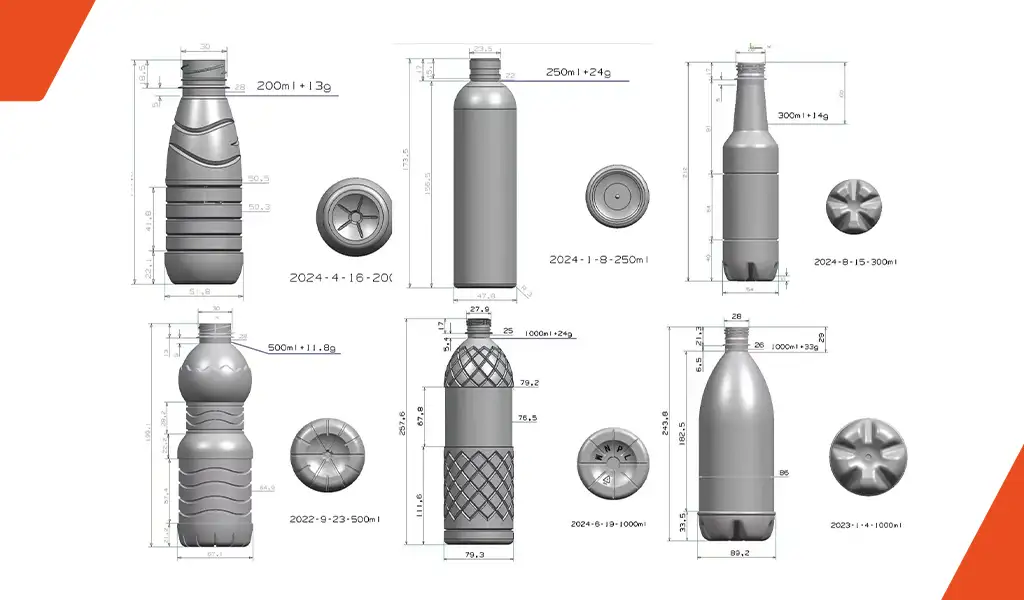
Bottle Diameter and Height Also Matter
Bottle size does not only mean volume. Two 1 L bottles can differ in shape, such as tall slim designs or short wide designs.
Bottle dimensions affect line performance in several ways.
Bottle Diameter
A wider bottle takes more space on the conveyor and filling carousel. This may reduce the number of bottles that can fit around a rotary filling machine. Fewer bottles on the carousel can reduce BPH.
Bottle Height
A taller bottle may require higher machine adjustment. It can wobble more at high conveyor speeds. Tall bottles are more likely to shake, tilt, or fall if the guide rail design is poor.
Bottle Shape
Round bottles are usually easier to handle than irregular bottles. Square, oval, flat, or custom-shaped bottles may require special guide rails, star wheels, and labeling adjustments.
Bottle Weight
Large bottles become heavy after filling. Heavier bottles may require stronger conveyor motors and better transfer control.
Filling Time Is the Core Factor
Filling time is one of the main reasons BPH changes by bottle size. The basic logic is:
More volume per bottle = longer filling time = lower BPH
For example, if one filling valve can fill a 500 ml bottle in 3 seconds, it may need around 6 seconds or more to fill a 1 L bottle, depending on flow rate.
A simplified comparison:
| Bottle Size | Approximate Filling Time | Effect on BPH |
| 330 ml | Shortest | Highest output |
| 500 ml | Short | High output |
| 1 L | Medium | Medium output |
| 1.5 L | Longer | Lower output |
| 2 L | Long | Lower output |
| 5 L | Very long | Much lower output |
The filling time also depends on product viscosity, foam level, filling accuracy, and filling method.
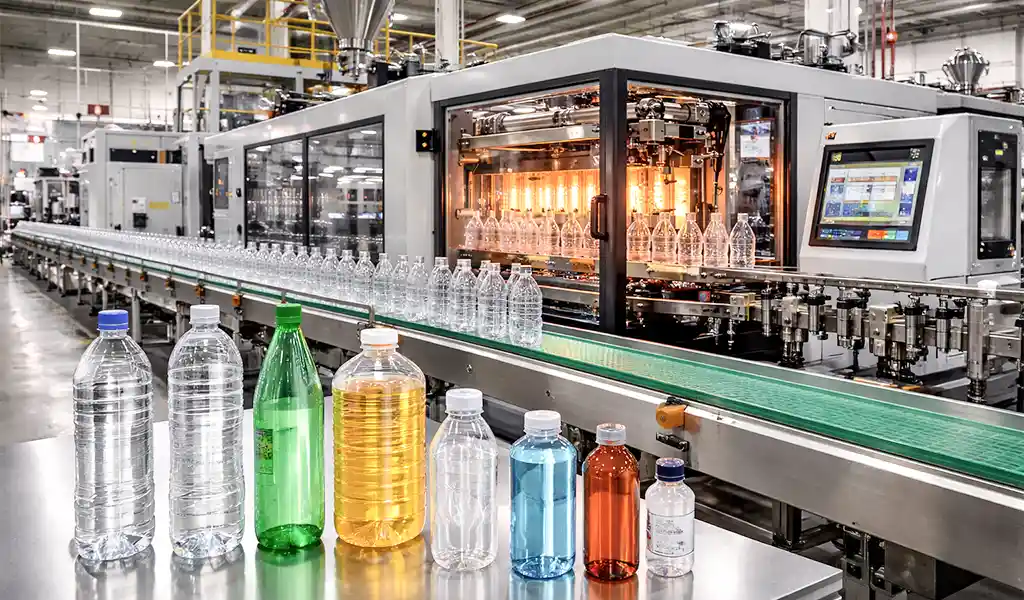
Product Type Can Increase the Effect of Bottle Size
Bottle size affects all filling machines, but the impact becomes stronger when the product is difficult to fill.
Water
Water has low viscosity and flows easily. Bottled water lines can usually run at high BPH, especially for 330 ml and 500 ml bottles.
Carbonated Drinks
Carbonated drinks require pressure control to reduce foaming and CO₂ loss. Larger carbonated bottles may need slower filling to maintain stable carbonation.
Juice
Juice may contain sugar, pulp, or other ingredients. It may need hot filling, sterilization, or more controlled filling conditions.
Edible Oil
Oil flows slower than water and may require flow meter or weight-based filling. Larger oil bottles take more time to fill.
Sauce and Viscous Products
Sauces, pastes, honey, cream, and thick liquids require slower filling. Larger containers can significantly reduce BPH.
The same bottle size may have very different BPH depending on product characteristics.
Filling Method and Bottle Size
Different filling methods respond differently to bottle size.
| Filling Method | Common Products | Bottle Size Impact |
| Gravity filling | Water, low-viscosity liquids | Larger bottles reduce speed moderately |
| Pressure filling | Water, beverages, chemicals | Can maintain better speed with proper pressure |
| Isobaric filling | Carbonated drinks, soda, beer | Larger bottles need careful pressure control |
| Piston filling | Sauce, paste, cream | Larger containers greatly increase filling time |
| Flow meter filling | Oil, chemicals, high-value liquids | Larger bottles require longer measuring time |
| Weight filling | Large containers, chemicals | Larger size increases filling and stabilization time |
For high-speed bottled water, gravity or pressure filling may provide high BPH. For carbonated beverages, isobaric filling is necessary, but it may run slower because of pressure balancing. For viscous products, piston filling may be accurate but slower.
Bottle Size Influences Filling Head Requirements
Filling machine capacity is often related to the number of filling heads. More filling heads usually mean higher BPH.
A simplified formula is:
BPH = Number of filling heads × Bottles filled per head per minute × 60
For small bottles, each filling head can complete more bottles per minute. For large bottles, each head completes fewer bottles per minute.
Example:
| Bottle Size | Filling Heads | Bottles per Head per Minute | Approximate BPH |
| 500 ml | 32 heads | 6.25 | 12,000 BPH |
| 1 L | 32 heads | 4.2 | 8,064 BPH |
| 1.5 L | 32 heads | 3.1 | 5,952 BPH |
| 2 L | 32 heads | 2.5 | 4,800 BPH |
This shows how the same number of filling heads can produce different BPH with different bottle sizes.
Conveyor Speed and Bottle Spacing
Bottle size also changes conveyor design. Larger bottles need more spacing between bottles to prevent collision, shaking, and falling. Wider bottles also occupy more conveyor width and length.
Small bottles can often move closely together, which helps improve output. Large bottles require wider guide rails, stronger conveyor chains, and more stable transfer points.
If the conveyor speed is too fast for large bottles, problems may occur:
- Bottle shaking
- Bottle falling
- Scratched bottle surfaces
- Unstable filling position
- Poor cap placement
- Labeling misalignment
- Packing jams
Therefore, large bottle lines often run at lower BPH to maintain stable production.
Capping Speed Changes with Bottle Size
Capping is another important factor. Small bottles usually use smaller caps and lighter torque requirements. Larger bottles may use larger caps, stronger sealing force, or special closure designs.
For carbonated drinks, larger bottle caps must seal properly to prevent gas leakage. For edible oil and chemical products, caps may include handles, inner plugs, or anti-leak structures. These closures may slow down capping speed.
If capping speed cannot match filling speed, the whole line output will decrease.
Labeling and Packaging Speed
Even if the filling machine can run at high speed, the complete production line may slow down at labeling or packaging.
Bottle size affects downstream equipment:
- Large bottles require larger labels.
- Large bottles need slower label application.
- 5 L and 2 L bottles need larger shrink packs.
- 5 L bottles may require carton packing or handle packing.
- Heavy bottles need stronger packing machines.
- Palletizing patterns are different for each bottle size.
For example, a line may fill 8,000 bottles per hour, but if the shrink wrapping machine can only pack 6,000 bottles per hour, the real output becomes 6,000 BPH.
How to Calculate BPH by Bottle Size
To estimate BPH, you can use this basic formula:
BPH = 3,600 ÷ Cycle Time per Bottle
For a single filling position, if one bottle takes 3 seconds to fill:
3,600 ÷ 3 = 1,200 bottles per hour per filling head
For multiple filling heads:
Total BPH = Number of filling heads × 3,600 ÷ Cycle Time per Bottle
Example:
A filling machine has 20 filling heads.
Each 500 ml bottle takes 5 seconds to complete one filling cycle.
20 × 3,600 ÷ 5 = 14,400 BPH
If a 1.5 L bottle takes 10 seconds:
20 × 3,600 ÷ 10 = 7,200 BPH
This simple calculation shows why larger bottles reduce BPH.
Choosing the Right Machine for Multiple Bottle Sizes
Many factories produce more than one bottle size. For example, a bottled water plant may produce 330 ml, 500 ml, 1 L, and 1.5 L bottles on the same line.
In this case, the filling machine should support fast and accurate bottle changeover.
Important design points include:
- Adjustable filling height
- Changeable star wheels
- Adjustable guide rails
- Bottle size memory in the control system
- Proper bottle spacing
- Compatible capping heads
- Flexible labeling machine
- Packaging equipment for different pack sizes
- Easy cleaning and maintenance
If product size changes often, the factory should focus not only on maximum BPH but also on changeover efficiency.
How to Avoid Capacity Misunderstanding
When discussing BPH with a filling machine supplier, buyers should provide complete information.
Useful details include:
- Bottle volume
- Bottle diameter
- Bottle height
- Bottle shape
- Bottle material
- Cap size
- Product type
- Filling temperature
- Required filling accuracy
- Daily production target
- Working hours per day
- Packaging method
- Future bottle size plans
Instead of asking, “Can this machine reach 12,000 BPH?” it is better to ask:
“Can this machine reach 12,000 BPH for 500 ml bottles, and what is the capacity for 1.5 L bottles?”
This question helps avoid misunderstanding and makes the quotation more accurate.