
Test PET bottles against the loads created by the actual product, filling process, closure, and distribution route. Water bottles need reliable handling and stacking performance, carbonated packages need pressure and gas-retention evaluation, and hot-fill juice bottles need thermal and vacuum performance checks. Use approved methods and acceptance limits for the specific package rather than one universal pass value.
What Must Be Defined Before Testing Starts?
Write a package specification that identifies the bottle drawing, preform, material, neck finish, closure, nominal fill, and intended use. Define filling temperature, carbonation where relevant, storage conditions, transport exposure, and expected shelf life. Include secondary packaging because cartons, trays, and shrink packs affect the loads reaching the bottle.
Before a laboratory receives samples, issue a written plan specifying preparation, measurement procedures, the number of specimens, and the limits that will determine whether the package is accepted. A compression value measured on an empty uncapped bottle cannot be compared directly with a filled capped package tested under different conditions. The report must state exactly what was tested and how.
Separate initial package qualification from routine production inspection. Qualification establishes that the design and process can meet the intended duty. Routine checks then look for changes that could move production away from that approved condition.
Which Checks Apply to Every PET Bottle?
Begin with identity, appearance, dimensions, capacity, and material distribution. Inspect the sealing surface, threads, support ring, base, and areas that interact with handling equipment. Record defects such as contamination, damage, unstable standing, or deformation using agreed examples and limits.
Measure bottle weight and map wall thickness where the design requires control. Total weight alone cannot reveal whether too much material remains in one region while another becomes weak. Use calibrated equipment and a repeatable measurement position so results can be compared across cavities and production times.
Include the intended cap in package qualification rather than approving the empty container in isolation. Check application conditions, opening behavior, tamper evidence, and leakage using the approved method. A satisfactory bottle neck dimension does not by itself prove that a particular cap and capping setup will produce a reliable seal.
| Application | Additional Priorities | Conditions to Record |
| Still Water | Handling, compression, leakage, and sensory performance | Fill level, closure, stacking arrangement, and storage |
| Carbonated Drinks | Pressure resistance, creep, base stability, and gas retention | Carbonation, temperature, time, and package configuration |
| Hot-Fill Juice | Thermal dimensional change, cooling vacuum, and seal integrity | Fill temperature, hold history, capping, and cooling profile |
How Should Water Bottles Be Evaluated?
For still water, examine the filled bottle through normal conveying, rinsing, filling, capping, labeling, and packing. Lightweight designs may behave differently when empty, partially filled, and fully filled. Check whether guides and transfer parts deform the bottle or create repeatable scuffing.
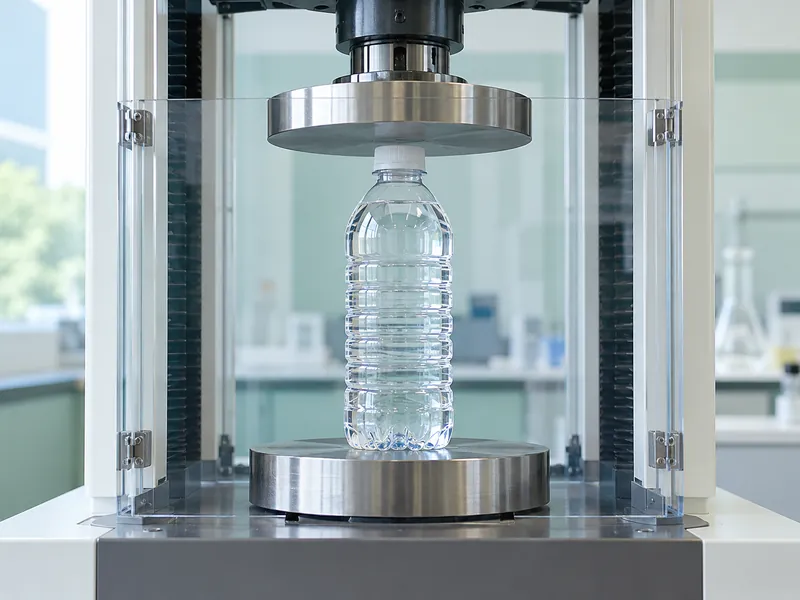
Use compression testing to assess the response to a defined axial load, and use an appropriate package-stacking evaluation for storage. State whether the test is a short loading event or a sustained load over time. A brief top-load result does not fully describe long-term stack behavior.
Perform leak and drop evaluations under agreed conditions, including the intended closure and fill level. Record where and how a failure occurs rather than only labeling the sample as failed. A neck leak, base split, and closure release point to different corrective actions.
Water packaging may also require sensory and shelf-life assessment because unwanted taste or odor can make an otherwise strong package unsuitable. Use the product owner’s approved laboratory program. The article on handling lightweight bottles on a filling machine can help connect laboratory findings with line behavior.
What Is Different for Carbonated Drinks?
A carbonated package experiences internal pressure that varies with the product and temperature. Qualify the bottle and closure for the intended carbonation and distribution conditions. Testing only a cool freshly filled bottle can miss problems that appear during warmer storage.
Use pressure testing equipment and procedures intended for the package, with appropriate guarding and controlled operation. The agreed program may include pressure resistance, creep, base stability, stress-crack evaluation, and closure performance. Do not improvise a pressure test by connecting an unguarded bottle to a plant air line.
Track changes in dimensions and standing stability during the specified storage exposure. A bottle can retain its seal yet expand enough to affect labeling, packing, or consumer use. Examine the base and other highly stressed regions after the relevant conditioning period.
Gas retention needs a time-based evaluation rather than a single pressure reading at release. Assess the filled package under the agreed storage conditions and compare performance with the product’s shelf-life requirement. Bottle wall, closure, fill conditions, and storage temperature all belong in the investigation when carbonation loss is excessive.
How Should Hot-Fill Juice Bottles Be Tested?
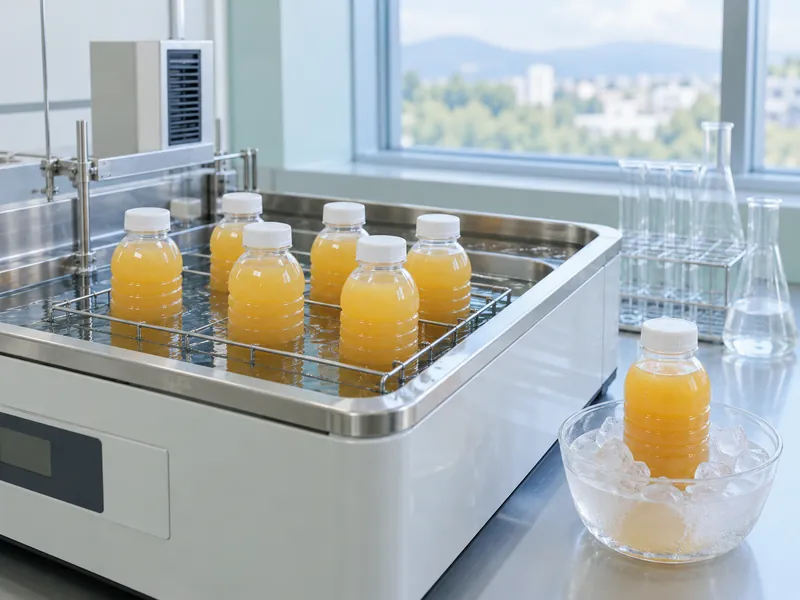
Use the intended hot-fill process profile, including filling temperature, time before capping, any required hold or inversion stage, and cooling. The package must tolerate that full sequence. A bottle dipped briefly into warm water has not necessarily experienced the stresses of the actual filling process.
Measure dimensions, capacity, neck condition, base stability, and appearance before and after the thermal cycle. Evaluate the vacuum created as the filled product cools and confirm that the design accommodates it as intended. Check panels, shoulders, and label areas for unacceptable distortion.
Include the closure and sealing surface in the trial because thermal exposure can affect sealing behavior. Confirm leakage and opening performance after cooling and storage. Mechanical package testing does not establish that the beverage’s thermal treatment achieves its required microbiological outcome; that requires the separately validated product process.
Compare bottles from all relevant cavities and from stable production as well as representative restarts. If the package passes only under a narrow demonstration condition, define and investigate that limitation before release. The approved operating window must be achievable during ordinary manufacturing.
How Should Samples Be Selected and Conditioned?
Identify each sample with the preform lot, cavity, machine recipe, production time, and filling conditions. Take samples across the run so that the test does not describe only one favorable moment. Keep enough information to connect an unusual result to a specific manufacturing condition.
Follow the conditioning requirements of the chosen method. Temperature, elapsed time after blowing, fill state, and closure state can affect the result. If the method is changed, label the data accordingly rather than combining it with earlier results as if nothing changed.
Retain both passing and failing examples when investigating a problem. Photographs, dimensional records, and the location of failure often help more than a spreadsheet containing only final numbers. Preserve traceability when samples are sent to an outside laboratory.
How Do You Set Useful Acceptance Limits?
Acceptance limits should come from the approved package design, customer requirements, distribution study, and applicable test program. A supplier’s generic demonstration value is not automatically appropriate for your bottle. The release procedure should identify defects that require immediate containment and name the person authorized to decide whether investigation, retesting, or rejection is necessary.
When specifying a PET bottle blowing system, attach the package test requirements to the output commitment. The machine should demonstrate accepted bottles at the required rate using the specified preform and utilities. Counting every discharged bottle without checking quality can overstate usable production.
Use trends to identify drift before a limit is crossed. A gradual change in base thickness, neck dimensions, or leak performance deserves attention even when individual samples still pass. Investigate the process rather than widening the limit simply to accommodate a deteriorating result.
What Should the Final Test Report Include?
Record sample identity, equipment, calibration status, conditioning, method, measured results, and the agreed acceptance decision. State any deviations from the planned procedure and explain whether they limit the conclusion. Include failures and retests so the report preserves the complete sequence of evidence.
Release the package only after its application-specific requirements are satisfied and the production team can repeat the approved conditions. Define the checks that continue during routine manufacture and the changes that trigger renewed qualification. This keeps testing connected to the bottles shipped rather than isolated in a one-time laboratory exercise.