
Common labeling defects include wrinkles, bubbles, skewed labels, misalignment, edge lifting, label tearing, missing labels, double labels, and unreadable barcodes. These problems can come from the bottle, label, adhesive, machine setting, production speed, or working environment.
Common Labeling Defects
Different labeling problems often look similar on the finished bottle, but the causes may be very different. Before adjusting the machine, operators should first identify the exact defect type.
| Labeling Defect | Common Appearance | Main Cause | Typical Risk |
| Wrinkled label | Creases on label surface | Uneven pressure, curved bottle, wrong label material | Poor shelf appearance |
| Air bubbles | Small trapped air spots | Dust, moisture, fast application, weak pressing | Reduced visual quality |
| Skewed label | Label tilted left or right | Bottle shaking, poor guiding, wrong sensor timing | Inconsistent packaging |
| Label misalignment | Label too high, low, front, or back | Incorrect machine setting | Barcode or logo position error |
| Edge lifting | Label corners peel up | Weak adhesive, dirty surface, curved area | Label may fall off |
| Label breakage | Label tears during feeding | Excessive tension, poor roll quality | Machine downtime |
| Missing label | Bottle passes without label | Sensor failure, label gap error | Unlabeled products enter market |
| Double label | Two labels on one bottle | Sensor or feeding error | Waste and rework |
| Barcode unreadable | Code distorted or misplaced | Wrinkle, poor print, wrong label position | Traceability failure |
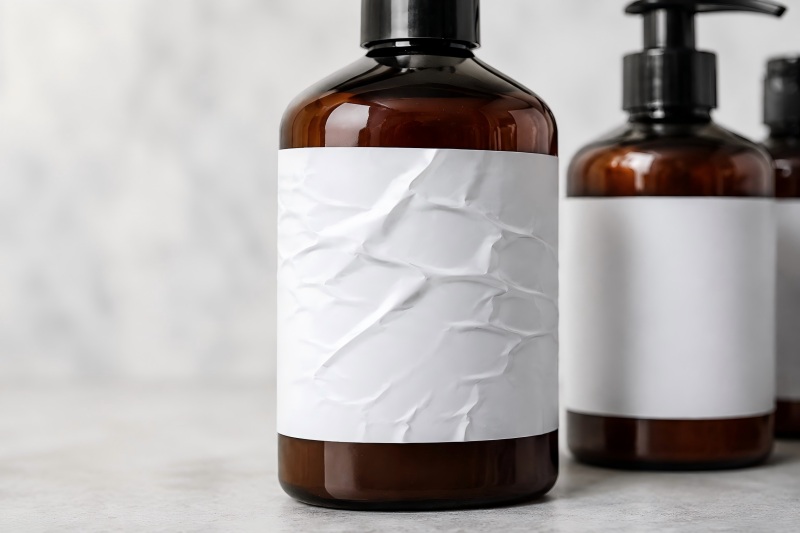
Wrinkled Labels
Wrinkles are one of the most visible labeling defects. They usually appear when the label does not attach smoothly to the bottle surface.
This problem is common on oval bottles, tapered bottles, flexible plastic bottles, and bottles with curved panels. If the label is too large for the available labeling area, the material may not follow the bottle shape properly.
Wrinkles may also happen when the pressing roller is too hard, too soft, or not aligned with the bottle surface. For round bottles, unstable bottle rotation can cause the label to fold during wrap-around labeling.
To avoid wrinkles, the label size should match the actual flat or curved area of the bottle. For tapered bottles, a curved label design may be better than a straight rectangular label. Soft sponge rollers, brush pressing, or flexible belts can also help the label adapt to curved surfaces.
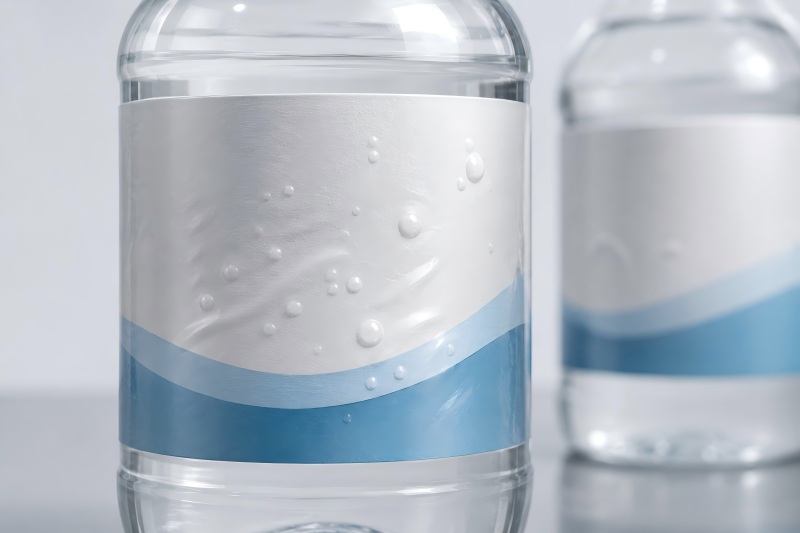
Air Bubbles Under the Label
Air bubbles appear when air is trapped between the label and the bottle surface. They are especially noticeable on transparent labels, glossy labels, and clear bottles.
The most common causes are dust, moisture, static electricity, uneven pressure, or too fast labeling speed. If the bottle surface is not clean, the label cannot bond evenly.
Bubbles may also appear when the label is applied from the center outward without enough smoothing force. In wrap-around labeling, poor bottle rotation can trap air as the label moves around the surface.
To reduce bubbles, bottles should be clean and dry before labeling. The pressing roller or brush should contact the label evenly. For high-end cosmetic or beverage packaging, anti-static control may also be useful.
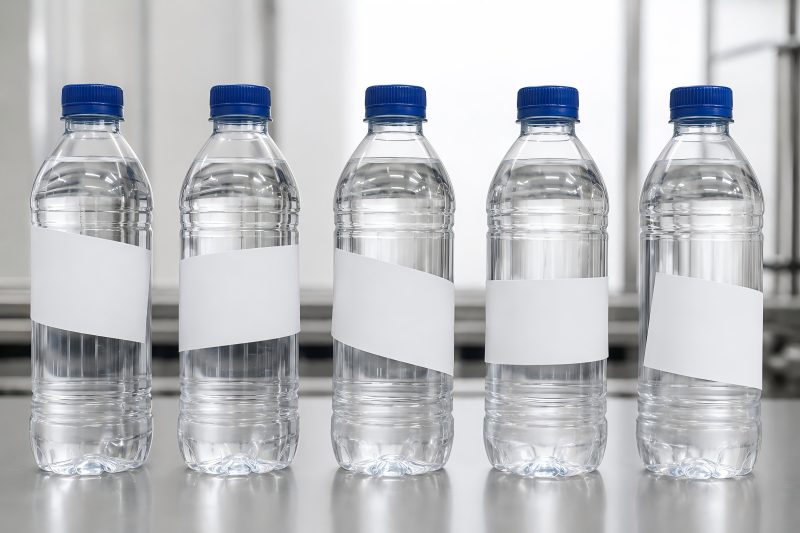
Skewed or Tilted Labels
A skewed label is not straight compared with the bottle body. This defect can make even a premium product look poorly made.
Skewed labels often come from unstable bottle movement. If the bottle shakes, rotates unexpectedly, or touches the guide rail unevenly, the label may be applied at an angle.
Incorrect label roll installation can also cause this issue. If the label web is not centered or the backing paper runs off track, the label may be dispensed at a slight angle.
To avoid skewed labels, operators should check bottle guiding, conveyor alignment, label roll position, and peel plate angle. For flat bottles, side belts should hold the bottle firmly without squeezing it too much.
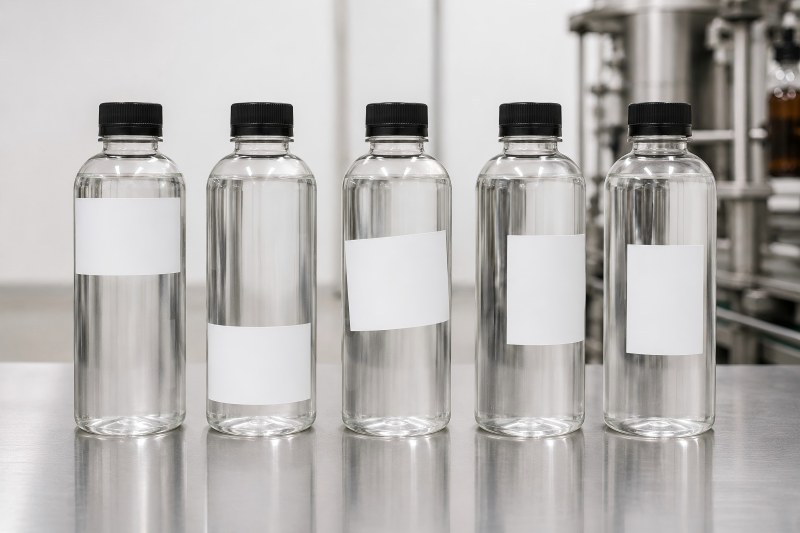
Label Misalignment
Label misalignment means the label is not placed in the correct position. It may be too high, too low, too far left, too far right, or not centered on the bottle.
This defect is common after product changeover. When operators switch to a different bottle size or label size, old settings may no longer match the new product.
Sensor delay, conveyor speed, label feeding speed, and bottle spacing all affect label position. A small timing error can create visible misalignment, especially on small bottles or front-and-back labeling applications.
To prevent misalignment, each product should have saved machine parameters. Operators should record label height, sensor delay, label length, conveyor speed, and guide rail position. Before mass production, several trial bottles should be checked and approved.

Edge Lifting and Poor Adhesion
Edge lifting happens when the label corners or edges start to peel away from the bottle. This problem may appear immediately after labeling or after storage, shipping, or temperature changes.
Poor adhesion is often related to the bottle surface. Oil, dust, water, mold-release agents, and low surface energy plastics can reduce adhesive strength.
HDPE and PP bottles may need special adhesive labels because some standard adhesives do not bond strongly to these materials. Cold environments can also weaken adhesive performance if the label is not designed for low-temperature use.
To avoid edge lifting, factories should test label adhesion on real bottles under real storage conditions. The label should not be applied across sharp curves, deep grooves, or areas that are frequently touched or squeezed.
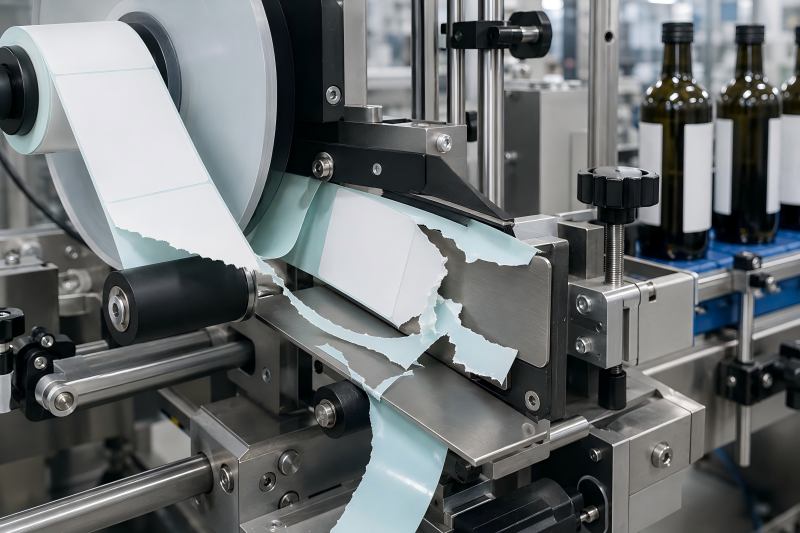
Label Tearing or Backing Paper Breakage
Label tearing usually happens during label feeding or peeling. Backing paper breakage may stop the machine and reduce production efficiency.
The cause may be excessive label tension, damaged label rolls, poor die-cutting quality, or sharp edges on the label path. If the label roll is stored poorly, moisture or pressure may also affect feeding performance.
The machine’s unwinding system should release the roll smoothly. Tension should be strong enough to keep feeding stable but not so strong that it damages the label or liner.
Operators should also check guide rollers, peel plates, and label sensors. Any burr, dirt, or sharp corner can damage the label web during high-speed operation.
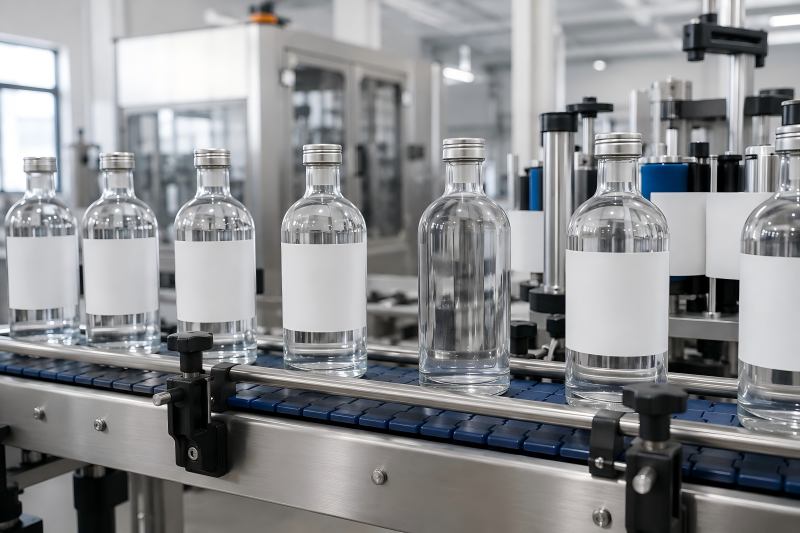
Missing Labels
A missing label means a bottle passes through the machine without receiving a label. This is a serious defect because unlabeled products may not meet market, safety, or traceability requirements.
Missing labels can be caused by sensor failure, incorrect label gap detection, empty label roll, unstable bottle spacing, or software setting errors.
Transparent labels can create special detection problems. A standard label sensor may not detect the label gap clearly, so a transparent label sensor may be required.
To avoid missing labels, the machine should have an alarm for label shortage, label breakage, and missed application. For regulated products, a visual inspection system can check whether every bottle has a label before packing.
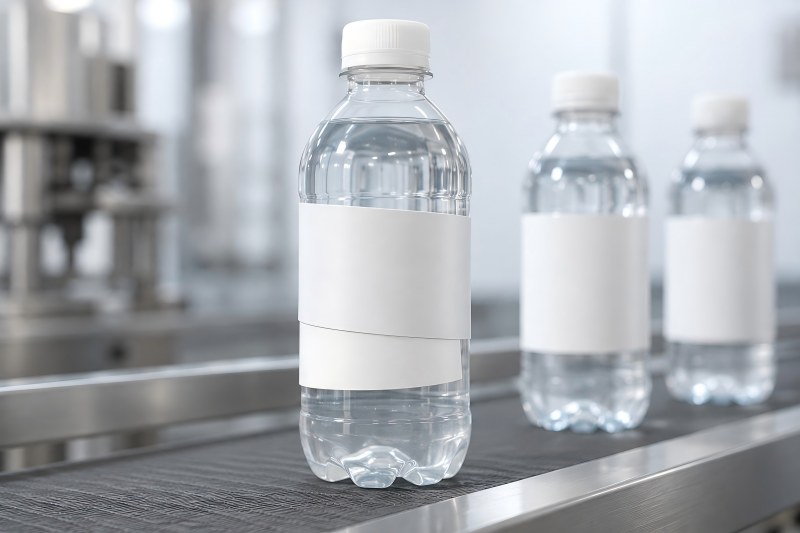
Double Labels
A double-label defect means two labels are applied to one bottle. This often happens when the label sensor reads the gap incorrectly or the label feeding length is not set properly.
Double labeling wastes labels and may block important product information. It can also make the bottle look messy and difficult to sell.
This issue is more common when labels have poor spacing accuracy, weak contrast between the label and backing paper, or unstable roll tension.
To avoid double labels, operators should check label gap detection, label roll quality, and sensor sensitivity. The machine should be tested at the planned production speed, not only at slow speed.
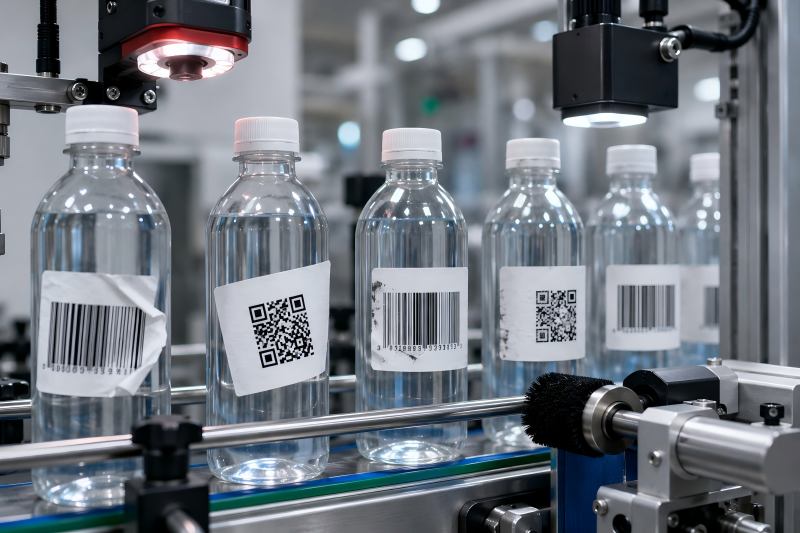
Barcode and QR Code Problems
Labels also carry key product information, such as barcodes, QR codes, batch numbers, production dates, and traceability codes.
If the label is wrinkled, skewed, or placed in the wrong area, the barcode may become difficult to scan. If the coding system is not synchronized with the labeling machine, the printed information may also appear in the wrong position.
For barcode labels, the flatness of the labeled area is very important. A barcode placed across a curved edge, bottle groove, or wrinkle may fail scanning.
To avoid this problem, the barcode should be placed on a stable surface. Factories should also test scanning after labeling, packing, and shrink wrapping if those steps are part of the production line.
Typical Defect Rates and Improvement Targets
Defect rates vary by product type, machine quality, operator skill, and label material. The following data provides a practical reference for automatic bottle labeling lines.
| Production Condition | Common Defect Rate | Better-Controlled Target | Notes |
| Manual labeling | 2%–8% | 1%–3% | Depends heavily on worker skill |
| Basic semi-automatic labeling | 1%–4% | Below 1.5% | Suitable for small batches |
| Standard automatic labeling | 0.5%–2% | Below 0.8% | Requires stable bottle feeding |
| High-precision automatic labeling | 0.2%–1% | Below 0.3% | Needs good labels and inspection |
| Difficult bottles | 1%–5% | Below 1%–2% | Oval, tapered, flexible, or irregular bottles |
These numbers are general references. In real factories, a stable automatic labeling machine with good materials and trained operators can keep defects very low. However, difficult bottle shapes may still require customized fixtures or special label design.
Machine Factors That Affect Labeling Quality
The automatic labeling machine itself plays a major role in defect prevention. Important machine factors include conveyor stability, sensor quality, servo motor accuracy, label tension control, pressing structure, and bottle positioning.
A weak machine frame may vibrate at high speed. Poor vibration control can cause label position errors. Low-quality sensors may miss transparent labels or reflective bottles.
Servo motor control is especially important for accurate label feeding. Compared with simple motor systems, servo systems usually provide better speed matching and label length control.
The pressing structure should also match the bottle. Round bottles need stable rotation, flat bottles need firm side guiding, and soft bottles need gentle pressure.
Label and Bottle Factors
Even the best machine cannot fully solve problems caused by poor label or bottle quality. Labels must have consistent spacing, clean die-cutting, suitable adhesive, and stable roll tension.
Bottle quality also matters. If bottle dimensions vary too much, the label position will also vary. This is common with blow-molded plastic bottles when mold control is not stable.
Surface cleanliness is another key point. Bottles should be free from oil, dust, water droplets, and static particles before labeling.
For cold-filled or refrigerated products, labels should be tested under low-temperature and condensation conditions. Standard labels may fail when the bottle surface becomes wet.
Operator Setup and Daily Checks
Many labeling defects come from setup mistakes rather than machine failure. Operators should follow a repeatable setup process before each production run.
Important checks include:
- Bottle guide rail position
- Conveyor speed
- Label roll direction
- Label sensor sensitivity
- Bottle sensor position
- Labeling height
- Peel plate alignment
- Pressing roller pressure
- Bottle spacing
- Trial sample approval
Daily maintenance is also important. Dust, adhesive residue, and paper scraps can build up around rollers, sensors, and peel plates. Cleaning these areas helps prevent feeding errors and sensor detection problems.
Practical Troubleshooting Table
| Problem | Quick Check | Possible Adjustment |
| Label wrinkles | Check bottle curve and pressing pressure | Reduce label size or adjust roller pressure |
| Label bubbles | Check bottle cleanliness and pressing contact | Clean bottles and improve smoothing |
| Label tilted | Check guide rails and label roll path | Align bottle and label web |
| Label too high or low | Check labeling head height | Adjust label head position |
| Label too early or late | Check sensor delay | Adjust timing parameter |
| Label edge lifts | Check adhesive and bottle surface | Use stronger adhesive or avoid curved edges |
| Label breaks | Check tension and peel path | Reduce tension and inspect rollers |
| Missing labels | Check sensor and label roll | Adjust sensor sensitivity |
| Double labels | Check label gap detection | Reset label length and sensor position |
How to Avoid Labeling Defects Before Mass Production
Pre-production testing is the most effective way to minimize labeling defects. Buyers should send real bottles, caps, labels, and filled samples to the machine supplier when possible.
Testing should include normal speed operation, not only slow demonstration. The machine should be tested with full bottles because bottle weight can affect stability.
It is also useful to test different environmental conditions. Adhesive performance may change in cold rooms, humid workshops, or hot warehouses.
For complex products, buyers should ask for sample videos, labeled bottle photos, and defect checks before machine delivery. This makes the final installation smoother.