
In real production, labeling machine speed is usually measured in BPM, meaning bottles per minute. Some suppliers also use BPH, meaning bottles per hour. For example, 60 BPM equals 3,600 BPH, while 120 BPM equals 7,200 BPH under continuous running conditions.
Public machine specifications show a wide speed range: some semi-automatic units work around 10–20 bottles per minute, while automatic systems can reach 100 BPM, 120 BPM, 200 BPM, or even higher depending on the machine structure and application.
Calculate Your Actual Labeling Output First
Start by asking how many bottles your line must label per shift, but “How many bottles do I need to label per shift?”
A small beverage factory, sauce producer, cosmetics brand, or pharmaceutical supplier may all use bottle labeling equipment, but their production targets can be completely different. A craft beverage brand may only need 1,000–3,000 bottles per day. A medium food factory may need 10,000–30,000 bottles per day. A large beverage line may require much higher speed and continuous operation.
A simple formula can help:
Required BPM = Daily bottle output ÷ Effective production minutes
If your factory needs to label 12,000 bottles in one 8-hour shift, you should not calculate based on 480 full minutes. Real production includes startup, roll change, bottle adjustment, cleaning, inspection, and small stops. If the effective production time is 360 minutes, the minimum required speed is:
12,000 ÷ 360 = 33.3 BPM
In this case, choosing a 40 BPM machine may look enough on paper, but it leaves little room for delay. A 60 BPM automatic bottle labeling machine would be more practical because it gives extra capacity for unstable feeding, operator handling, and future growth.
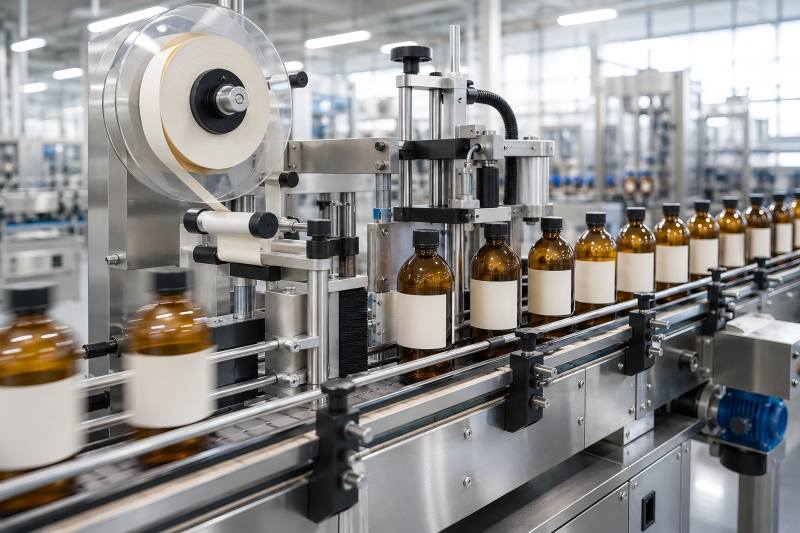
Common Speed Ranges for Bottle Labeling Machines
The table below gives practical speed ranges for different production levels. These are not fixed rules, but they help buyers avoid choosing a machine that is either too small or unnecessarily expensive.
| Production Level | Typical Speed Range | Approx. Hourly Output | Suitable Buyers | Common Machine Type |
| Small batch production | 10–30 BPM | 600–1,800 BPH | Craft beverage, small cosmetics, trial production | Semi-automatic or entry automatic labeler |
| Small to medium line | 30–60 BPM | 1,800–3,600 BPH | Sauce, juice, skincare, chemical bottles | Inline automatic labeling machine |
| Medium production line | 60–120 BPM | 3,600–7,200 BPH | Food, beverage, daily chemical, edible oil | Servo-driven automatic labeler |
| High-speed production | 120–250 BPM | 7,200–15,000 BPH | Large beverage, pharma, FMCG | High-speed inline or rotary labeling machine |
| Very high-speed line | 250+ BPM | 15,000+ BPH | Mass beverage or pharmaceutical production | Rotary labeling system |
Many commercial systems fall within these ranges. For example, some automatic beer bottle labeling systems are advertised at up to 120 bottles per minute, while certain automatic sticker labeling machines list models from 60 to 200 labels per minute depending on container and label characteristics.
Rated Speed vs. Real Production Speed
The speed shown in a supplier quotation is usually the machine’s rated speed under suitable conditions. Real production speed may be lower.
Several factors reduce actual output:
Bottle feeding is not always stable. Empty lightweight PET bottles may shake or fall if the conveyor is too fast. Glass bottles may need gentler handling. Square or oval bottles usually need more accurate positioning than round bottles.
Label length also matters. A short wrap label can be applied faster than a long full-wrap label. Front-and-back labeling takes more control than single-side labeling. If the machine needs bottle orientation, coding, inspection, or rejection, the actual speed may decrease further.
Because of this, buyers should plan with a practical efficiency factor. For many factories, it is safer to calculate around 70%–85% of rated speed instead of assuming the machine will run at maximum speed all day.
How to Calculate the Speed You Really Need
The best way is to calculate your target speed from production demand, then add a safety margin.
| Item | Example A: Small Factory | Example B: Medium Factory | Example C: Larger Line |
| Daily target | 6,000 bottles | 20,000 bottles | 60,000 bottles |
| Shift length | 8 hours | 8 hours | 10 hours |
| Effective running time | 360 minutes | 390 minutes | 500 minutes |
| Minimum required speed | 17 BPM | 52 BPM | 120 BPM |
| Suggested machine speed | 30 BPM | 80 BPM | 150–200 BPM |
| Reason for buffer | Roll change and manual handling | Size changeover and line balance | Continuous output and future expansion |
This table shows why the minimum calculated speed should not be the final machine speed. A factory needing 52 BPM should not buy a machine rated exactly at 52 BPM. Once label roll replacement, material variation, conveyor stops, and quality inspection are considered, the line may struggle to hit the daily target. A 70–80 BPM machine would be more comfortable.
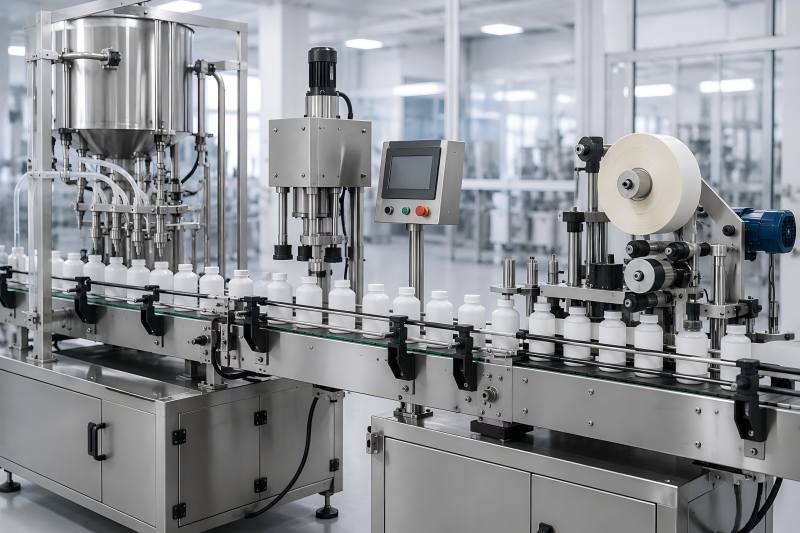
Match Labeling Speed with the Filling Line
The labeling machine should not be selected separately from the filling machine, capping machine, coding machine, and packing section. In a complete bottle production line, the slowest machine controls the real line speed.
For example, if your filling machine runs at 60 BPM but your labeler only runs at 30 BPM, bottles will accumulate before labeling. Operators may need to stop the line, move bottles manually, or reduce filling speed. This lowers total production efficiency.
On the other hand, buying a 150 BPM labeler for a 40 BPM filling line may not improve output. The labeler will simply wait for bottles most of the time. That extra investment may only make sense if the buyer plans to upgrade the filling line soon.
A good rule is to choose a labeling machine that is slightly faster than the upstream machine. For example:
| Filling Line Speed | Recommended Labeling Speed | Selection Logic |
| 20 BPM | 30 BPM | Enough for small batch production |
| 40 BPM | 50–60 BPM | Prevents labeling from becoming the bottleneck |
| 80 BPM | 100–120 BPM | Gives room for unstable feeding and roll changes |
| 120 BPM | 150 BPM or above | Suitable for continuous medium-high output |
| 200 BPM | 240–300 BPM | Better for high-speed integrated lines |
This buffer helps the line run more smoothly, especially when bottle spacing is not perfect.
Bottle Shape Affects the Speed
Round bottles are usually easier and faster to label. They can rotate smoothly against a wrap belt or roller, making them suitable for high-speed wrap-around labeling.
Flat, square, oval, or irregular bottles are more demanding. They may need side belts, bottle separation devices, orientation systems, or stabilizing structures. If the label must be placed on a specific panel, the machine speed may need to be reduced for accuracy.
Small bottles and vials can move quickly, but they may also be unstable. Pharmaceutical vial labelers use precision handling systems for faster, accurate labeling. Some vial and syringe labelers are specified at up to 250 vials per minute or 200 syringes per minute, showing that small-container speed depends strongly on machine design and product control.
Large bottles, such as 3L or 5L oil bottles, are different. They require stronger conveying, wider guides, and more stable positioning. Even if the labeling head can dispense labels quickly, the bottle handling system may limit the final speed.
Label Type Also Changes the Required Speed
Different labeling methods have different speed characteristics.
A self-adhesive labeling machine is common for food, beverage, cosmetics, daily chemical, and pharmaceutical bottles. It is flexible, clean, and suitable for many label designs. For many medium-speed lines, self-adhesive labeling is a practical choice.
Shrink sleeve labeling can cover the full bottle body or special-shaped containers, but the labeler must work with a shrink tunnel. Speed depends not only on sleeve application but also on steam or heat shrink performance.
Wet glue or paste labeling is often used for glass bottles and high-volume beverage applications. It can be economical for large production, but it requires glue control, cleaning, and stable bottle handling.
Compare speed only after confirming the labeling method. A 120 BPM self-adhesive labeler and a 120 BPM sleeve labeling line may have different space requirements, operating costs, and maintenance needs.
Single Label, Double Label, or Multi-Label?
A bottle with one wrap-around label is usually easier to run at higher speed. A bottle with front and back labels needs more positioning accuracy. If neck labels, tamper-evident labels, or top labels are added, machine complexity increases.
A beer bottle, for example, may require front label, back label, neck label, and medal label. Some automatic machines for beer bottles are designed to apply multiple adhesive labels and can reach high hourly output under suitable conditions. CDA’s B1500 beer bottle labeler, for example, is described as applying up to four labels and reaching up to 1,800 bottles per hour.
If your product needs multiple labels, it is better to send sample bottles and label drawings to the supplier before confirming speed. The supplier should test whether all labels can be applied accurately at your target BPM.
Accuracy Is More Important Than Maximum Speed
Speed has no value if label placement is unstable. Crooked labels, wrinkles, bubbles, and inconsistent label height can damage brand image and increase waste.
For retail products, label position directly affects shelf appearance. For pharmaceuticals, health products, and chemicals, labeling accuracy may also affect traceability, barcode readability, and regulatory information.
A machine running at 100 BPM with stable labeling may be better than a 150 BPM machine that creates frequent rejects. Buyers should ask suppliers about labeling accuracy, bottle testing, sensor quality, servo control, and rejection options.
Important checks include:
- Label height consistency
- Front-and-back label alignment
- Barcode readability after labeling
- Wrinkle control on curved bottles
- Stability at both low and high speed
- Performance during continuous running
- Changeover time between bottle sizes
Do You Need Future Capacity?
Many buyers choose labeling speed based only on current orders. This can create problems within one or two years if sales increase.
If your current demand is 40 BPM, buying a 40 BPM machine may be too conservative. A 60 BPM or 80 BPM machine gives more flexibility without moving into a very expensive high-speed system. If your product line is growing quickly, choosing a machine with adjustable speed and modular options may be more cost-effective.
However, future capacity should be realistic. A small factory does not always need a 200 BPM machine. Higher-speed machines may require better conveyors, automatic bottle feeding, more skilled operators, larger space, and stricter maintenance.
When Is a 30–60 BPM Machine Enough?
A 30–60 BPM automatic bottle labeling machine is often enough for small and medium production. It is suitable when the factory has one filling line, several bottle sizes, and moderate daily output.
This range is common for sauces, honey, juice, essential oils, cosmetics, shampoo, cleaning products, and small beverage brands. It balances cost, automation, and flexibility.
This speed range is a good choice when:
- Daily output is below 15,000–20,000 bottles
- Bottle sizes change often
- Operators still handle some feeding or packing tasks
- Budget control is important
- The buyer needs stable automation, not maximum speed
When Should You Choose 80–120 BPM?
The 80–120 BPM range is suitable for factories with more stable production and higher daily demand. At this level, machine structure becomes more important. Servo labeling heads, bottle separation systems, stable conveyors, and good sensors are usually needed.
This speed is often used in beverage, edible oil, daily chemical, and food packaging lines. Public machine examples also show many automatic systems around this range, such as rotary or wrap labeling machines rated up to 120 bottles per minute depending on bottle size, label length, and material.
Choose this range if your filling line already reaches around 60–90 BPM or if your daily production target is above 20,000 bottles.
When Do You Need 150 BPM or Higher?
A speed of 150 BPM or higher is usually for larger production lines. At this level, the labeling machine is not just a standalone unit. It must work as part of a complete automatic line with stable filling, capping, coding, inspection, carton packing, and conveying.
High-speed machines are suitable for bottled water, carbonated drinks, pharmaceutical bottles, personal care products, and large FMCG production. Some high-speed bottle sticker labeling machines are listed with production speeds up to 240 bottles per minute, depending on specifications.
Before choosing this level, buyers should confirm factory layout, operator skill, label roll size, automatic rejection, spare parts supply, and maintenance capability.
Final Recommendation
The right speed for an automatic bottle labeling machine depends on real output, not only rated BPM. For small batch production, 30 BPM may be enough. For medium production, 60–120 BPM is often more practical. For large continuous lines, 150–250 BPM or higher may be required.
A safe selection process is:
- Calculate daily bottle output.
- Convert it into required BPM.
- Reduce available time to real effective running time.
- Add a 20%–30% speed buffer.
- Check the filling line speed.
- Confirm bottle shape, label size, and number of labels.
- Ask for sample testing before final purchase.
The best labeling machine is not always the fastest one. It is the machine that can label your bottles accurately, continuously, and efficiently at the speed your production line truly needs.