
Understanding BPH helps plan bottled water production and choose the right equipment. The basic formula is simple: BPH equals bottles produced per hour. However, real production planning should also consider bottle size, filling heads, line efficiency, daily working hours, bottle blowing capacity, labeling speed, packing speed, and future growth.
What Does BPH Mean?
BPH stands for bottles per hour. It means the number of bottles a machine or production line can fill in one hour.
For example:
- A 3,000 BPH machine can fill about 3,000 bottles per hour.
- A 6,000 BPH machine can fill about 6,000 bottles per hour.
- A 12,000 BPH line can fill about 12,000 bottles per hour.
- A 24,000 BPH line can fill about 24,000 bottles per hour.
In bottled water production, BPH is usually used for PET bottle lines, such as 330 ml, 500 ml, 1 L, 1.5 L, and 2 L bottles. For larger containers, such as 5 L bottles or 5-gallon bottles, the capacity may be expressed differently because filling speed is much lower.
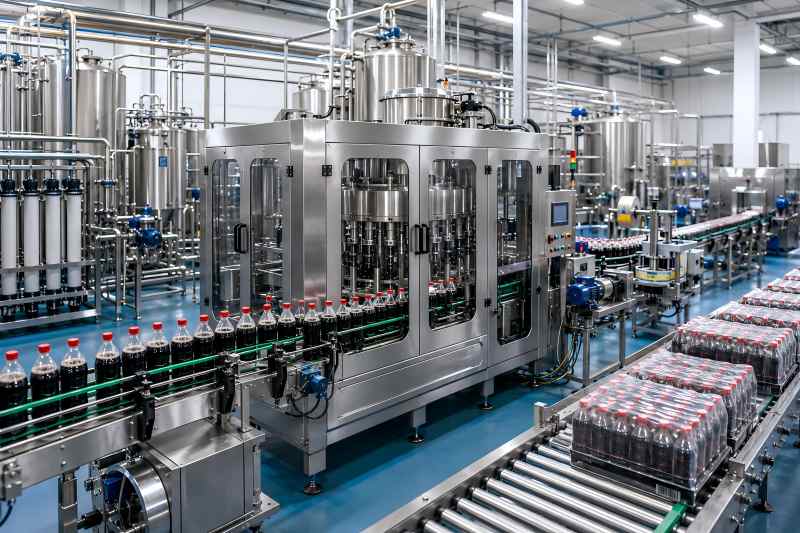
Basic Formula for Calculating BPH
The simplest formula is:
BPH = Total bottles produced ÷ Production hours
For example, if a bottled water plant produces 48,000 bottles in 8 hours:
48,000 ÷ 8 = 6,000 BPH
This means the actual average production output is 6,000 bottles per hour.
You can also calculate the required BPH based on daily production target:
Required BPH = Daily production target ÷ Effective working hours
For example, if your target is 80,000 bottles per day and your plant runs 10 effective hours per day:
80,000 ÷ 10 = 8,000 BPH
So, you need a line that can produce at least 8,000 bottles per hour. In real production, you should choose a slightly higher rated capacity because no filling line runs at 100% efficiency all day.
Rated BPH vs Actual BPH
When a supplier says a machine is rated at 12,000 BPH, this usually means the machine can reach this speed under suitable conditions. But the actual daily output may be lower because of normal production losses.
Common reasons include:
- Machine startup time
- Bottle jams
- Cap feeding problems
- Label roll replacement
- Film replacement
- Water treatment adjustment
- Machine cleaning
- Bottle size changeover
- Preventive maintenance
- Operator breaks
- Quality inspection time
For this reason, manufacturers often calculate line output using efficiency.
Actual BPH = Rated BPH × Line efficiency
For example:
A bottled water line is rated at 12,000 BPH. If the real operating efficiency is 85%:
12,000 × 85% = 10,200 actual BPH
This means the line may produce around 10,200 sellable bottles per hour during normal operation.
Common Efficiency Levels for Bottled Water Lines
Line efficiency depends on equipment quality, operator skill, layout design, packaging material quality, and maintenance.
| Line Type | Typical Efficiency | Explanation |
| Semi-automatic line | 60%–75% | More manual handling and more downtime |
| Small automatic line | 70%–85% | Suitable for local water plants |
| Medium automatic line | 80%–90% | More stable production and better matching |
| High-speed automatic line | 85%–95% | Requires good layout and skilled maintenance |
| Poorly matched line | Below 70% | Bottlenecks often reduce real output |
When calculating BPH, it is safer to use 80%–85% efficiency for most small and medium bottled water plants. For high-speed plants with strong automation, 85%–90% may be more realistic.
How Bottle Size Affects BPH
Bottle size has a direct effect on filling speed. Smaller bottles require less water per bottle, so they can usually be filled faster. Larger bottles require more filling time, so the same machine may produce fewer bottles per hour.
For example, the same filling machine may have different capacities for different bottle sizes:
| Bottle Size | Possible Rated Capacity | Reason |
| 330 ml | 14,000 BPH | Small volume, faster filling |
| 500 ml | 12,000 BPH | Common high-speed bottle size |
| 1 L | 8,000–10,000 BPH | More filling volume per bottle |
| 1.5 L | 5,000–8,000 BPH | Longer filling time |
| 2 L | 4,000–6,000 BPH | Larger bottle, slower output |
| 5 L | 1,000–3,000 BPH | Requires special filling design |
This is why buyers should always tell suppliers the exact bottle volume when asking for a filling machine quotation. A machine described as “12,000 BPH” may refer to 500 ml bottles, not 1.5 L bottles.
Calculating BPH Based on Filling Heads
For rotary bottled water filling machines, capacity is often related to the number of filling heads and the speed of rotation.
A simplified formula is:
BPH = Number of filling heads × Bottles filled per head per minute × 60
For example, a machine has 24 filling heads, and each head fills 8 bottles per minute:
24 × 8 × 60 = 11,520 BPH
So, the machine capacity is about 11,500 BPH.
Another example:
A machine has 40 filling heads, and each head fills 10 bottles per minute:
40 × 10 × 60 = 24,000 BPH
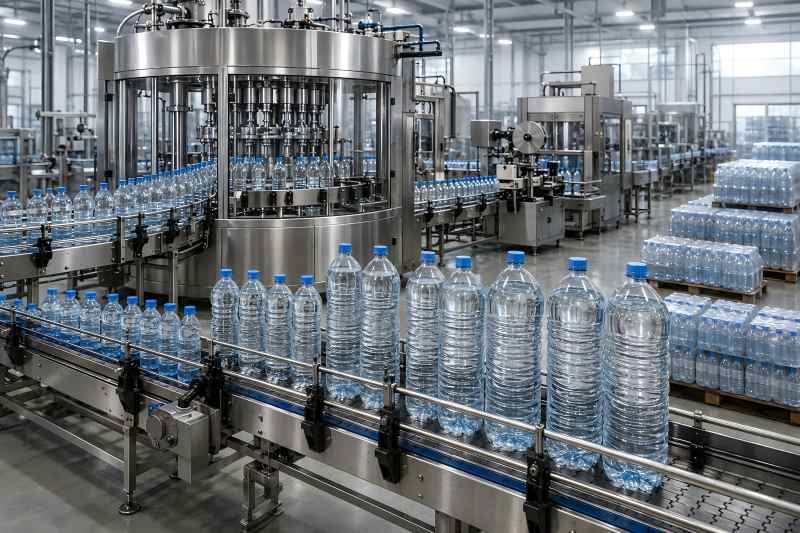
This formula is useful for understanding why larger machines usually have more filling heads. Higher BPH requires more filling valves, faster bottle transfer, stronger machine frames, better control systems, and more stable conveyors.
Calculating Required BPH from Daily Production Target
Before choosing a bottled water filling machine, you should first define your daily production goal.
Use this formula:
Required rated BPH = Daily target ÷ Working hours ÷ Estimated efficiency
For example:
Your daily target is 100,000 bottles.
Your working time is 10 hours per day.
Estimated efficiency is 85%.
100,000 ÷ 10 ÷ 0.85 = 11,765 BPH
In this case, a 12,000 BPH bottled water line may be suitable.
Example Calculation Table
| Daily Target | Working Hours | Efficiency | Required Rated BPH | Suggested Line |
| 20,000 bottles/day | 8 hours | 80% | 3,125 BPH | 3,000–4,000 BPH |
| 50,000 bottles/day | 8 hours | 80% | 7,812 BPH | 8,000 BPH |
| 100,000 bottles/day | 10 hours | 85% | 11,765 BPH | 12,000 BPH |
| 200,000 bottles/day | 12 hours | 85% | 19,608 BPH | 20,000–24,000 BPH |
| 500,000 bottles/day | 16 hours | 90% | 34,722 BPH | 36,000 BPH |
This table helps buyers estimate the right machine capacity before contacting suppliers.
Calculating Daily Output from Machine BPH
You can also calculate daily production based on a machine’s rated BPH.
Formula:
Daily output = Rated BPH × Working hours × Efficiency
For example:
A plant uses a 12,000 BPH bottled water filling line.
It runs 10 hours per day.
Average efficiency is 85%.
12,000 × 10 × 0.85 = 102,000 bottles/day
So, the actual daily output may be around 102,000 bottles.
If the plant runs two shifts, 16 hours per day:
12,000 × 16 × 0.85 = 163,200 bottles/day
This calculation helps factories plan orders, raw material supply, bottle stock, cap stock, label stock, and warehouse space.
BPH and Complete Line Matching
The filling machine is only one part of the bottled water line. A complete line may include:
- Water treatment system
- Bottle blowing machine
- Air conveyor
- Rinsing-filling-capping monoblock
- Cap feeding system
- Labeling machine
- Date coding machine
- Shrink wrapping machine
- Carton packing machine
- Palletizing system
The real BPH depends on the slowest machine in the line. If the filler is 12,000 BPH but the labeling machine can only handle 8,000 BPH, the complete line cannot reach 12,000 BPH.
Example:
| Equipment Section | Rated Speed |
| Bottle blowing machine | 12,000 BPH |
| Filling machine | 12,000 BPH |
| Labeling machine | 10,000 BPH |
| Shrink wrapping machine | 8,000 BPH |
| Palletizing system | 12,000 BPH |
In this case, the actual line capacity may be limited to around 8,000 BPH because the shrink wrapping machine becomes the bottleneck.
For this reason, all machines should be matched carefully. A well-balanced 8,000 BPH line may perform better than a poorly matched 12,000 BPH line.
BPH and Bottle Blowing Capacity
Many bottled water plants use PET bottle blowing machines before filling. If the bottle blowing machine cannot supply enough bottles, the filling machine will stop frequently.
For example:
- Filling machine: 12,000 BPH
- Bottle blowing machine: 8,000 BPH
The filling machine cannot maintain 12,000 BPH because it only receives 8,000 bottles per hour.
To avoid this problem, the blowing machine capacity should match or slightly exceed the filling machine capacity. Some factories also use bottle storage silos or buffer conveyors to reduce short-term interruptions.
BPH and Packaging Speed
After filling and capping, bottles still need to be labeled, coded, packed, and palletized. Downstream packaging equipment has a major effect on real output.
For small bottled water plants, manual packing may be acceptable. But for medium and large lines, automatic shrink wrapping and palletizing are usually needed.
If a plant produces 12,000 bottles per hour and packs 24 bottles per shrink pack:
12,000 ÷ 24 = 500 packs per hour
That means the shrink wrapping machine must handle about 500 packs per hour. If the packing machine cannot reach this speed, the line will slow down.
BPH and Working Shifts
Some factories increase production not by buying a larger filling machine, but by running more hours per day.
For example, a 6,000 BPH line running 8 hours at 85% efficiency produces:
6,000 × 8 × 0.85 = 40,800 bottles/day
If the same line runs 16 hours:
6,000 × 16 × 0.85 = 81,600 bottles/day
This means a smaller line with two shifts may produce the same daily output as a larger line with one shift. However, longer working hours require more labor, maintenance, energy, and management.
Common Mistakes When Calculating BPH
Only Looking at Filling Machine Speed
Some buyers focus only on the filler capacity and ignore labeling, packing, and palletizing. This can create bottlenecks.
Ignoring Bottle Size
A machine rated for 12,000 BPH with 500 ml bottles may not reach the same speed with 1.5 L bottles.
Assuming 100% Efficiency
No production line runs at full rated speed all day. Always include efficiency loss in your calculation.
Forgetting Changeover Time
If your plant produces multiple bottle sizes, changeover time will reduce daily output.
Choosing Too Small a Line
A line that is too small may become a bottleneck when orders increase.
Choosing Too Large a Line
A line that is too large may increase investment, energy use, and maintenance cost before sales volume is ready.