BPH, or bottles per hour, is one of the most important indicators when selecting a filling machine or designing a complete filling line. It helps factories understand production capacity, plan daily output, estimate investment, and match upstream and downstream equipment.
Small production lines usually range from 1,000 to 5,000 BPH and are suitable for startups or local brands. Medium production lines often range from 6,000 to 18,000 BPH and are ideal for growing factories with stable demand. Large plants may use 20,000 to 48,000 BPH or higher lines for mass production and lower unit cost.
What Does BPH Mean in Filling Machines?
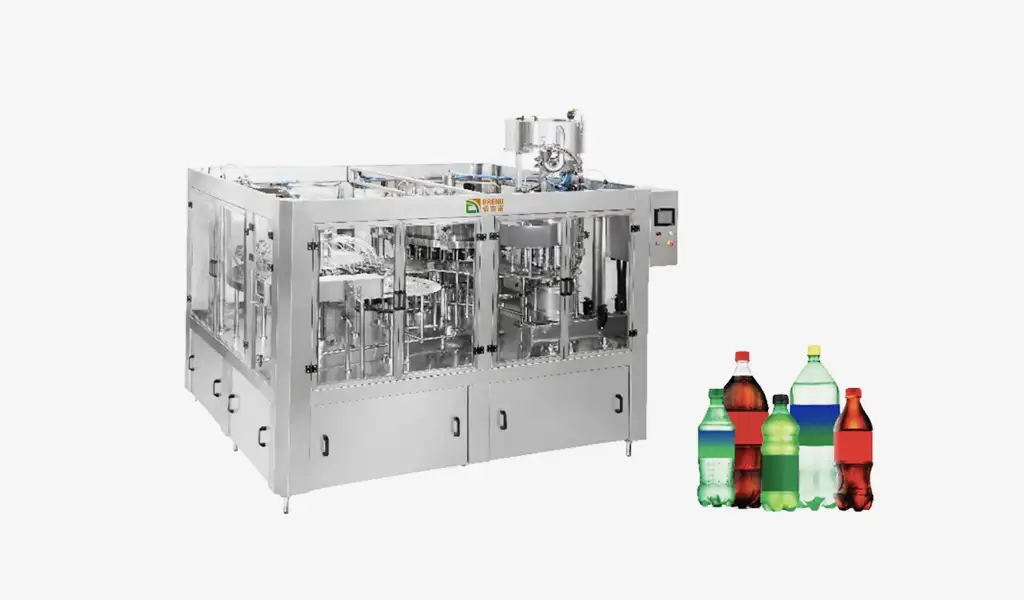
BPH stands for bottles per hour. It is a unit used to describe the production capacity of a filling machine or a complete filling line. For example, a filling machine rated at 6,000 BPH is designed to fill around 6,000 bottles in one hour under standard operating conditions.
In many industries, BPH is used because bottles are the final packaging unit. Whether the product is water, soda, juice, milk, oil, sauce, shampoo, or chemical liquid, the factory usually needs to know how many bottles can be produced per hour, per shift, or per day.
For example:
- 2,000 BPH means about 2,000 bottles per hour.
- 6,000 BPH means about 6,000 bottles per hour.
- 12,000 BPH means about 12,000 bottles per hour.
- 24,000 BPH means about 24,000 bottles per hour.
If a factory runs one 8-hour shift with a 6,000 BPH filling line, the theoretical output is:
6,000 bottles/hour × 8 hours = 48,000 bottles per shift
But in real production, the actual output may be lower because of machine startup, cleaning, bottle changeover, cap feeding, label replacement, downtime, and quality checks.
BPH vs Real Production Output
Many new buyers misunderstand BPH. They may think a 10,000 BPH line can always produce 10,000 sellable bottles every hour. In reality, BPH usually refers to the machine’s designed or rated speed, not guaranteed finished output every hour.
Real output is affected by several factors:
- Machine efficiency
- Bottle feeding stability
- Filling accuracy
- Product foam or viscosity
- Cap supply
- Labeling speed
- Packaging machine speed
- Operator experience
- Cleaning and maintenance time
- Product changeover frequency
- Factory layout and conveyor design
A machine rated at 12,000 BPH may produce around 9,500 to 11,500 finished bottles per hour in normal production, depending on the line design and operating conditions.
For this reason, buyers should not only ask, “What is the BPH of this filling machine?” They should also ask, “What is the stable production output of the complete line?”
Common Filling Machine Capacity Ranges
Filling machines are available in many capacity levels. The right BPH depends on business size, product demand, budget, packaging format, and future expansion plans.
| Production Scale | Typical Capacity Range | Suitable For | Common Features |
| Laboratory or pilot line | 100–1,000 BPH | R&D, product testing, small batches | Flexible operation, low investment |
| Small production line | 1,000–5,000 BPH | Startups, local brands, low-volume production | Compact design, easier operation |
| Medium production line | 6,000–18,000 BPH | Regional factories, growing beverage brands | Automatic filling, capping, labeling, packaging |
| Large production line | 20,000–48,000 BPH | Large beverage plants, bottled water factories | High-speed rotary machines, full automation |
| Ultra-high-speed line | 60,000+ BPH | Large industrial plants, global brands | Advanced automation, high investment |
These ranges are general references. Different industries may define small, medium, and large lines differently. For example, 6,000 BPH may be considered medium capacity for juice or sauce filling, but relatively small for bottled water production.
Why BPH Is Important for Factory Planning
BPH directly affects the entire production system. It influences equipment selection, plant layout, utility demand, labor arrangement, and investment budget.
A higher BPH line usually requires:
- More filling heads
- Faster conveyors
- Larger cap feeding systems
- Higher-speed labeling equipment
- Faster packing machines
- Larger water treatment or product preparation capacity
- More stable compressed air and power supply
- Better automation control
- More space for operation and maintenance
- Stronger quality inspection systems
For example, if a factory chooses a 24,000 BPH filling machine but uses a labeling machine that can only handle 12,000 BPH, the whole line will be limited by the labeling machine. The filling machine cannot run at full speed because downstream equipment becomes the bottleneck.
Therefore, BPH should be considered at the complete line level, not only at the filling machine level.
How to Calculate Required BPH
To choose the right filling machine capacity, a factory should first calculate its expected production demand.
A simple formula is:
Required BPH = Daily production target ÷ Effective production hours per day
For example, if a company wants to produce 60,000 bottles per day and plans to run 8 hours per day, the basic capacity requirement is:
60,000 ÷ 8 = 7,500 BPH
However, the factory should consider production efficiency. If real line efficiency is estimated at 80%, then the required rated machine capacity should be:
7,500 ÷ 0.8 = 9,375 BPH
In this case, the factory may choose a 10,000 BPH or 12,000 BPH line.
Example BPH Calculation Table
| Daily Target | Working Hours | Estimated Efficiency | Recommended Rated Capacity |
| 20,000 bottles/day | 8 hours | 80% | About 3,000 BPH |
| 50,000 bottles/day | 8 hours | 80% | About 8,000 BPH |
| 100,000 bottles/day | 10 hours | 85% | About 12,000 BPH |
| 200,000 bottles/day | 12 hours | 85% | About 20,000 BPH |
| 500,000 bottles/day | 16 hours | 85% | About 40,000 BPH |
This calculation helps buyers avoid choosing a machine that is too small or too large.
Small Production Lines: 1,000 to 5,000 BPH
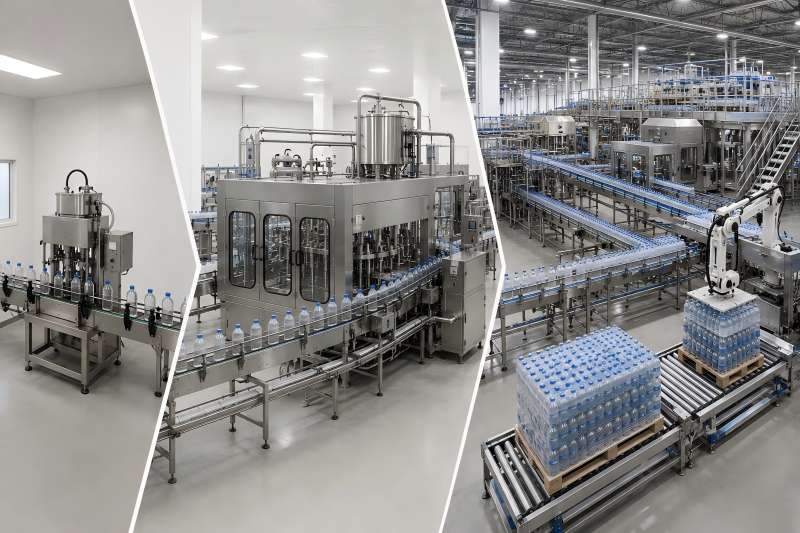
Small filling lines are suitable for startups, local beverage factories, small water plants, specialty food brands, cosmetic producers, and chemical product manufacturers with limited production demand.
A small line usually focuses on flexibility and lower investment. It may use semi-automatic or compact automatic machines. Operators may manually load bottles, caps, labels, or cartons, depending on the automation level.
Common applications include:
- Bottled water
- Juice drinks
- Sauces
- Edible oil
- Liquid detergent
- Hand sanitizer
- Small-batch beverages
- Local carbonated drinks
- Honey or syrup products
Small BPH lines are often easier to install and operate. They require less factory space and lower utility consumption. However, they may need more manual labor and may not be suitable for fast-growing brands with high market demand.
A 2,000 BPH line may be a good starting point for a new brand, but if the business grows quickly, the line may soon become a bottleneck. Therefore, even small factories should consider future demand when selecting capacity.
Medium Production Lines: 6,000 to 18,000 BPH
Medium filling lines are common in regional beverage factories, growing bottled water plants, juice producers, dairy beverage factories, edible oil plants, and personal care product manufacturers.
At this level, automation becomes more important. A medium line usually includes automatic bottle feeding, rinsing, filling, capping, labeling, coding, inspection, shrink wrapping, and sometimes palletizing.
For beverage production, a 6,000 to 18,000 BPH line may include:
- Water treatment system
- Beverage blending system
- Filling and capping monoblock
- Cap elevator and cap sterilizer
- Conveyor system
- Labeling machine
- Date coding machine
- Bottle inspection system
- Shrink wrapping machine
- Carton packing machine
- Palletizing equipment
Medium production lines offer a good balance between investment and efficiency. They are suitable for companies that already have stable sales channels and need reliable daily output.
For many beverage brands, 12,000 BPH is a practical capacity because it supports commercial-scale production without the very high investment of a large industrial line.
Large Plants: 20,000 to 48,000+ BPH
Large filling lines are designed for high-volume production. They are commonly used in bottled water plants, carbonated beverage factories, juice plants, beer-style beverage lines, dairy beverage lines, and large household chemical factories.
A large line requires high-speed rotary equipment, advanced automation, strong quality inspection, and efficient logistics planning. The whole system must be balanced carefully because even a small bottleneck can cause serious production loss.
Large plants often use:
- High-speed blow molding machines
- Air conveyors
- High-speed rinsing-filling-capping monoblocks
- Automatic cap handling systems
- High-speed labeling machines
- Vision inspection systems
- Automatic packing machines
- Robotic palletizers
- Centralized control systems
- Automatic CIP systems
- Production data monitoring
Large lines require greater investment, but they reduce unit production cost when demand is high. They are suitable for companies with strong distribution networks, stable raw material supply, and high-volume sales demand.
However, high BPH is not always better. If the market demand is not high enough, a large line may sit idle, increasing depreciation, energy cost, and maintenance cost.
BPH and Bottle Size
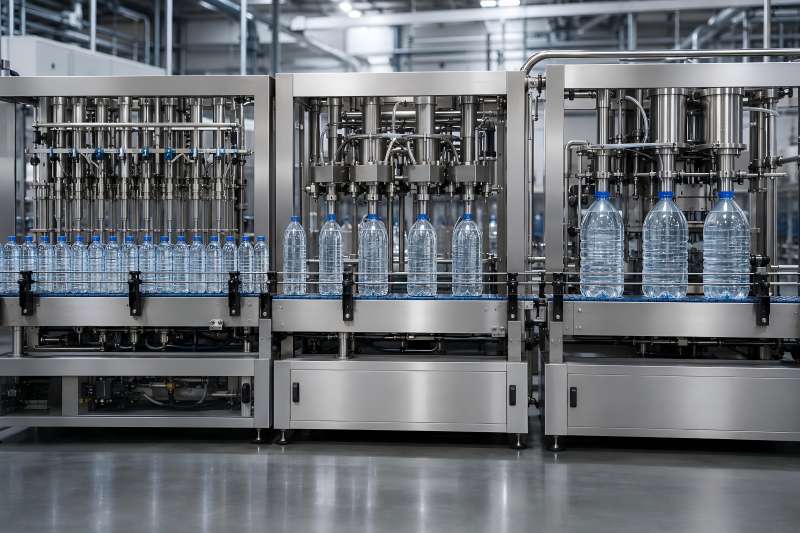
Container size greatly affects filling speed and overall line output. A filling machine may run faster with 330 ml or 500 ml bottles than with 1.5 L or 5 L bottles. Larger bottles require more filling time because each bottle contains more liquid.
For example, a filling valve can fill a 500 ml bottle faster than a 2 L bottle. This means the same machine may have different BPH ratings for different bottle sizes.
A machine may be rated:
- 12,000 BPH for 500 ml bottles
- 8,000 BPH for 1 L bottles
- 5,000 BPH for 1.5 L bottles
Therefore, buyers should always confirm the BPH based on their actual bottle size. Asking only for machine capacity without bottle size may lead to inaccurate selection.
BPH and Filling Method
Different filling methods also affect BPH. The product type determines which filling method is suitable.
Common filling methods include:
Gravity Filling
Gravity filling is often used for low-viscosity, non-carbonated liquids such as water, vinegar, and some chemicals. It is simple and cost-effective.
Pressure Filling
Pressure filling is suitable for low-viscosity liquids that require faster filling or more controlled flow.
Isobaric Filling
Isobaric filling suits soda, sparkling water, beer, and carbonated juice production. It fills under balanced pressure to reduce foaming and CO₂ loss.
Piston Filling
Piston filling is used for viscous products such as sauce, cream, paste, honey, and thick liquid food products.
Flow Meter Filling
Flow meter filling is suitable for products requiring accurate volume control, such as edible oil, chemicals, and high-value liquids.
Viscous products usually have lower BPH because they flow more slowly. Carbonated drinks also require more controlled filling conditions to reduce foam. Water filling lines can often reach higher BPH more easily than sauce or carbonated beverage lines.
BPH and Line Efficiency
Line efficiency measures how much of the rated capacity is actually achieved during production. A line may be designed for 12,000 BPH, but if it only produces 9,600 bottles per hour on average, the operating efficiency is 80%.
Line efficiency can be affected by:
- Bottle jams
- Cap shortage
- Label roll replacement
- Machine alarms
- Cleaning time
- Operator mistakes
- Poor conveyor design
- Product changeover
- Packaging material issues
- Preventive maintenance
Improving line efficiency is often more cost-effective than buying a larger machine. A stable 10,000 BPH line with 90% efficiency may produce more sellable bottles than a 12,000 BPH line with frequent downtime.
BPH and Downstream Packaging
A filling machine is only one part of the line. After filling, bottles still need to be capped, inspected, labeled, coded, packed, and palletized. If any downstream machine is slower than the filler, it limits the whole line.
For example:
- Filler capacity: 12,000 BPH
- Labeling machine capacity: 10,000 BPH
- Shrink wrapping capacity: 8,000 BPH
In this case, the real line capacity may be closer to 8,000 BPH, because the shrink wrapping machine becomes the bottleneck.
This is why equipment matching is critical. The capacity of each machine should be designed as a complete system.
Choosing the Right BPH for Your Factory
To choose the right BPH, buyers should consider several questions:
- What is your target daily output?
- How many hours will the factory run per day?
- How many shifts are planned?
- What bottle sizes will be used?
- What products will be filled?
- Is the product carbonated, viscous, hot-filled, or aseptic?
- How often will the product or bottle size change?
- What is the expected growth in the next 3 to 5 years?
- How much factory space is available?
- What is the budget for automation?
- What packaging format will be used after filling?
- Is manual operation acceptable, or is full automation required?
A good filling machine supplier should not simply recommend the largest machine. They should help calculate realistic capacity based on product type, bottle format, production target, and complete line design.
However, BPH should never be viewed alone. Real production output depends on bottle size, product characteristics, filling method, line efficiency, operator skill, packaging speed, and maintenance quality. The best filling line is not always the fastest one. It is the one that matches your production target, product type, budget, factory layout, and long-term business plan.