
Water bottling lines involve many connected processes, from water treatment and bottle handling to filling, capping, labeling, coding, packing, and final inspection. A minor issue at one stage can disrupt the whole production line.
Common problems include unstable filling volume, bottle deformation, poor capping, leakage, labeling errors, conveyor jamming, low efficiency, water quality issues, cap feeding failure, coding errors, and packing problems. Most of these issues can be reduced through proper equipment adjustment, regular maintenance, quality raw materials, operator training, and production data tracking.
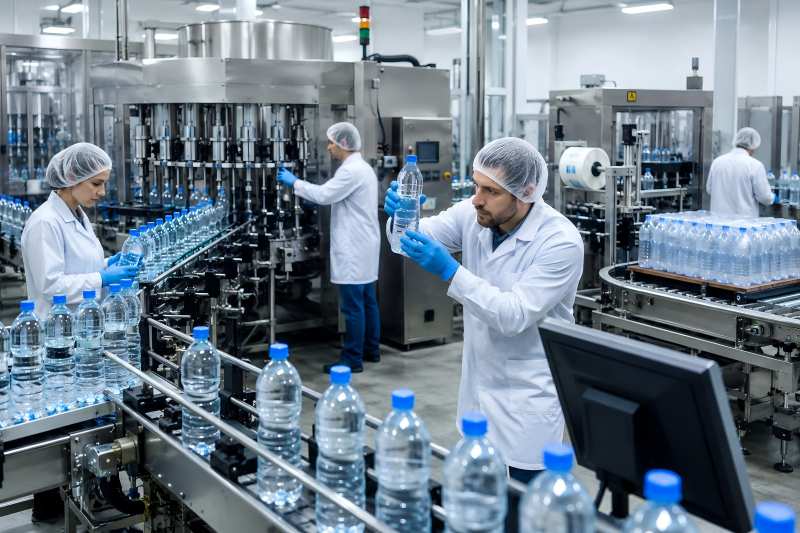
Unstable Filling Volume
One of the most common problems in water bottling production is unstable filling volume. Some bottles may be underfilled, while others may be overfilled. It affects appearance and may create compliance or customer concerns.
Common Causes
Unstable filling volume can be caused by several factors. The filling valve may be worn, blocked, or not closing properly. The water pressure may be unstable during production. Air inside the pipeline may also affect filling accuracy. In some cases, incorrect machine settings or poor bottle positioning can lead to inconsistent filling levels.
How to Solve It
First, check whether the filling valves are clean and working properly. If there is scale, dust, or foreign matter inside the valve, clean it immediately. If the valve sealing part is worn, replace it in time.
Second, make sure the water supply pressure is stable. A buffer tank or pressure controller keeps water flow stable. Operators should also remove air from the pipeline before starting production.
Third, check the filling machine parameters, including filling time, filling speed, and bottle height settings. For different bottle sizes, the machine should be adjusted correctly before mass production.
| Problem | Possible Cause | Solution |
| Underfilled bottles | Low water pressure | Stabilize supply pressure |
| Overfilled bottles | Valve closing delay | Inspect and replace valve seals |
| Uneven filling levels | Air in pipeline | Exhaust air before production |
| Random filling errors | Incorrect settings | Recalibrate filling parameters |
Bottle Deformation
Bottle deformation is another frequent issue in water bottling lines, especially when using lightweight PET bottles. Bottles may become dented, squeezed, or unstable during conveying, filling, capping, or packing.
Common Causes
The main reason is that the bottle wall is too thin or the bottle design is not strong enough. If the air pressure in the bottle blowing machine is not suitable, the bottle may not form correctly. High capping torque can also deform the bottle neck or body. In addition, conveyor pressure between bottles may squeeze soft bottles during high-speed operation.
How to Solve It
The bottle design should match the production speed and handling process. For lightweight bottles, the shape must still provide enough strength. Bottle ribs, shoulder design, and base structure can improve stability.
During bottle blowing, check mold temperature, air pressure, preform heating, and stretching conditions. A well-formed PET bottle should have even wall thickness.
For capping, adjust the torque to a suitable level. The cap must seal securely without damaging the bottle. Conveyor speed and bottle pressure should also be controlled to avoid squeezing.
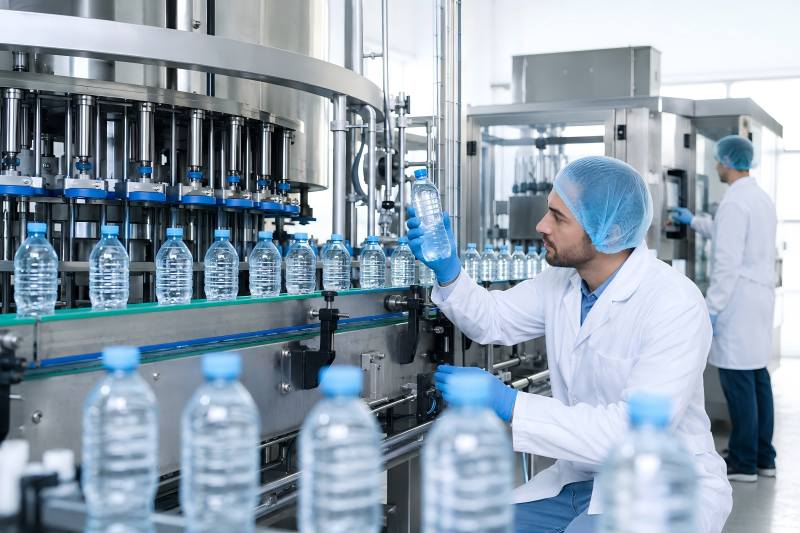
Poor Capping Quality
Capping problems can directly lead to leakage, loose caps, damaged threads, or customer complaints. Since bottled water is often transported over long distances, cap sealing quality is extremely important.
Common Capping Problems
Common issues include caps not being tightened properly, caps placed at an angle, damaged bottle necks, cap scratches, and leakage after capping. Sometimes caps may not feed smoothly from the cap sorter to the capping head.
Common Causes
Poor cap quality is one cause. If caps are not uniform in size or have burrs, the capping machine may not work smoothly. Incorrect capping torque is another common reason. If the torque is too low, caps may be loose. If it is too high, the bottle neck or cap thread may be damaged.
Machine wear can also affect capping accuracy. Worn capping heads, unstable bottle holders, or improper alignment can cause tilted caps.
How to Solve It
Use stable-quality caps from reliable suppliers. Before production, inspect cap size, thread quality, and sealing liner condition.
Set the correct capping torque according to bottle and cap specifications. Production staff should test sealed bottles regularly during operation. A torque meter can be used for more accurate inspection.
Also, clean the cap feeding system and check whether the cap chute, cap sorter, and capping head are aligned correctly. If capping parts are worn, replace them in time.
Bottle Leakage
Bottle leakage is a serious problem because it affects product quality, carton strength, warehouse storage, and customer confidence. Even a small leakage rate can create large losses in mass production.
Common Causes
Leakage may come from loose caps, damaged caps, defective bottle necks, poor sealing surfaces, or incorrect capping pressure. Sometimes bottle damage during conveying or packing can also cause leakage.
How to Solve It
First, locate the exact source of the leakage. If leakage appears around the cap, check capping torque, cap quality, and bottle neck finish. If the bottle body leaks, inspect bottle blowing quality, bottle thickness, and possible damage from conveyors or packing machines.
It is also helpful to add online leak detection equipment, especially for medium and large bottling plants. Regular sampling inspection should be done after capping and before packing.
Labeling Problems
Good labeling improves product appearance and brand image. However, labeling problems are common in water bottling lines. Labels may wrinkle, shift, bubble, fall off, or appear uneven.
Common Causes
The bottle surface may be wet or dusty before labeling. The label material may not match the bottle shape. The labeling machine may not be adjusted correctly. For shrink sleeve labels, temperature control in the shrink tunnel is especially important. If the temperature is too low, the label may not shrink completely. If it is too high, the bottle may deform.
How to Solve It
Before labeling, make sure the bottle surface is clean and dry. If condensation forms on cold bottles, add air drying equipment before the labeling machine.
Choose suitable labels based on bottle shape and packaging style. Different bottle shapes may need different labeling solutions.
For sticker labels, adjust label feeding speed, bottle rotation speed, and pressing position. For shrink sleeve labels, control steam or hot air temperature carefully to achieve smooth shrinking without bottle damage.
| Labeling Issue | Cause | Solution |
| Wrinkled label | Uneven bottle rotation | Adjust labeling wheel and belt |
| Label falling off | Wet bottle surface | Add bottle drying system |
| Label shifted | Sensor misalignment | Adjust label sensor position |
| Poor sleeve shrinking | Wrong tunnel temperature | Optimize heat or steam settings |
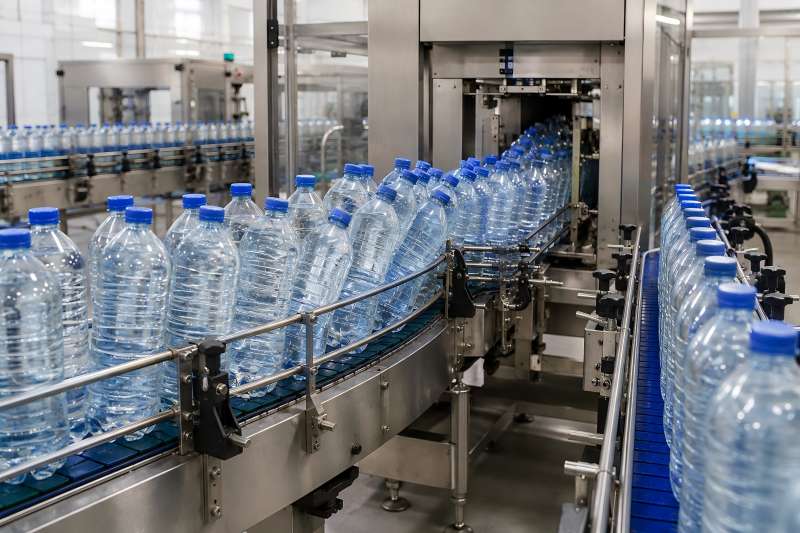
Conveyor Jamming
Conveyors connect different machines in the water bottling line. If the conveyor system does not run smoothly, the entire line may stop frequently. Bottle jamming can happen before filling, after capping, before labeling, or during packing.
Common Causes
Bottle jamming is often caused by poor conveyor speed matching. If one machine runs faster than the next machine, bottles may accumulate and squeeze each other. If guide rails are too tight or too loose, bottles may fall, rotate incorrectly, or block the conveyor.
Bottle shape can also affect conveying performance. Lightweight bottles with unstable bases are more likely to fall during high-speed movement.
How to Solve It
The conveyor speed should match the production speed of each machine. Buffer areas can be added between major equipment to reduce sudden pressure.
Adjust guide rails according to bottle diameter and height. The guide rails should support smooth bottle movement without excessive friction.
For lightweight bottles, use air conveyors or specially designed conveyor systems to reduce bottle pressure. Regular cleaning is also important because water, dust, and label waste can increase friction and cause jamming.
Low Production Efficiency
Many water bottling plants find that the actual output is lower than the rated capacity of the equipment. For example, a line designed for 12,000 bottles per hour may only produce 8,000 or 9,000 bottles per hour in real operation.
Common Causes
Low efficiency may be caused by frequent stops, slow manual operation, poor machine connection, unstable bottle supply, or lack of operator experience. Sometimes the bottleneck is not the filling machine itself but the labeling, packing, bottle blowing, or cap feeding system.
How to Solve It
First, identify the slowest process in the line. The overall output depends on the weakest part of the system. If the filling machine is fast but the packing machine is slow, the whole line will still be limited.
Second, record downtime reasons every day. For example, operators can classify downtime into bottle shortage, cap shortage, label failure, equipment alarm, conveyor jam, or manual adjustment. After collecting this data for one or two weeks, the factory can clearly see which problem happens most often.
Third, improve operator training. Skilled workers can adjust machines faster, identify problems earlier, and reduce unnecessary downtime.
Poor Water Quality After Bottling
The main purpose of a water bottling line is to provide safe and clean drinking water. If water quality becomes unstable after bottling, the problem must be taken seriously.
Common Causes
Water quality problems may come from the water treatment system, storage tank, pipeline, filling machine, bottle, cap, or air environment. If equipment is not cleaned and disinfected properly, bacteria may grow inside pipes or tanks. Poor sealing can also allow contamination after filling.
How to Solve It
A good cleaning and sanitation system is essential. Water tanks, pipelines, filling valves, and caps-contact parts should be cleaned regularly. Many factories use CIP systems to improve cleaning efficiency.
The water treatment system also requires regular inspection. Filters, membranes, UV sterilizers, ozone systems, and other components must be maintained according to operating requirements.
Bottles and caps should be stored in clean areas. Operators should avoid touching bottle openings, caps, and other product-contact surfaces directly.
Regular water quality testing is necessary. Testing should include raw water, treated water, water before filling, and finished bottled water.
Cap Feeding Failure
Cap feeding problems may stop the capping machine frequently. Caps may block in the cap sorter, fall in the wrong direction, or fail to reach the capping head in time.
Common Causes
Caps may be too light, deformed, dusty, or not suitable for the cap feeding system. The cap chute angle may be wrong. The air blowing or vibration system may not be strong enough. If the cap storage hopper is too full or too empty, feeding may also become unstable.
How to Solve It
Check cap quality before production. Caps should be uniform, clean, and free from deformation.
Adjust the cap sorter speed, chute angle, and feeding height. Keep enough caps in the hopper, but do not overload it.
Clean the cap feeding path regularly. Dust, plastic particles, or damaged caps can easily cause blockage.
Bottle Rinsing Problems
Before filling, bottles are usually rinsed to remove dust or small particles. If bottle rinsing is not effective, contamination risk may increase.
Common Causes
Rinsing nozzles may be blocked. Water pressure may be too low. The rinsing time may be too short. Bottles may not be held in the correct position during rinsing.
How to Solve It
Inspect rinsing nozzles regularly and clean blocked nozzles. Make sure the rinsing water pressure is stable. Adjust bottle clamps to ensure bottles are correctly inverted and rinsed inside.
For higher hygiene requirements, factories can use sterile water, ozone water, or other suitable rinsing methods depending on product standards.
Coding and Date Printing Errors
Date coding is important for product tracking and sales management. Problems such as missing codes, blurred codes, wrong dates, or poor adhesion can cause packaging rejection.
Common Causes
The coding machine may be positioned incorrectly. The bottle or label surface may be wet. Ink quality may be poor. The sensor may fail to detect bottles correctly. Operators may also forget to update the production date.
How to Solve It
Before each production run, check the coding content carefully. Confirm production date, batch number, and expiration date.
Adjust the coding head position based on bottle or label location. Keep the printing surface dry and clean.
For inkjet printers, maintain the nozzle and use suitable ink. For laser coding, adjust power and speed according to label material.
Packing Problems
After filling, capping, labeling, and coding, bottled water must be packed into shrink film, cartons, or trays. Packing problems can affect transportation safety and product appearance.
Common Problems
Common packing issues include loose shrink film, broken film, unstable bottle arrangement, weak carton sealing, damaged cartons, or bottles falling during packing.
Common Causes
Film thickness may not be suitable. Shrink tunnel temperature may be too low or too high. Bottle grouping may be unstable. Carton quality may not match product weight. The packing machine may not be synchronized with the upstream line.
How to Solve It
Choose suitable film or carton materials according to bottle size and pack weight. Adjust shrink tunnel temperature and conveyor speed. Make sure bottles are arranged firmly before wrapping or boxing.
For carton packing, use strong cartons and proper sealing tape or glue. Check whether the carton erector, case packer, and sealing machine are working correctly.
Frequent Machine Alarms
Modern water bottling lines often use PLC control systems, sensors, and automatic alarms. Frequent alarms can reduce production efficiency and frustrate operators.
Common Causes
Sensors may be dirty, loose, or misaligned. Cables may be damaged. Air pressure may be unstable. Safety doors may not close properly. Sometimes alarms are caused by incorrect machine settings or poor coordination between equipment.
How to Solve It
Always identify the cause before resetting any alarm. Operators should record alarm codes and alarm time. Maintenance staff can use this record to find repeated problems.
Clean sensors regularly and check their positions. Inspect electrical connections and air pressure systems. If the same alarm appears frequently, machine parameters or mechanical parts may need adjustment.
High Bottle and Material Waste
Material waste increases production cost. Waste may include damaged bottles, rejected caps, broken labels, wasted film, rejected cartons, and unsellable finished products.
Common Causes
Waste is often caused by poor machine adjustment, unstable raw material quality, operator mistakes, or frequent startup and shutdown. Lightweight bottles are more sensitive to mechanical pressure and may be damaged more easily.
How to Solve It
Track waste by category. For example, record how many bottles are wasted during blowing, filling, labeling, and packing. This helps the factory identify where the biggest loss occurs.
Use stable-quality packaging materials. Low-quality bottles, caps, labels, and films may look cheaper at first but can create more waste during production.
Operators should follow standard startup procedures. Many waste problems happen during machine startup, product changeover, or emergency stops.
Poor Maintenance Management
Many bottling line problems are not caused by sudden machine failure. They are caused by poor daily maintenance. Small problems such as loose screws, worn seals, dirty sensors, or dry bearings can gradually become serious breakdowns.
How to Improve Maintenance
Factories should plan maintenance tasks by day, week, month, and year.
| Maintenance Frequency | Main Tasks |
| Daily | Clean machine surfaces, check sensors, inspect leakage, remove waste |
| Weekly | Check valves, belts, guide rails, air pressure, and lubrication points |
| Monthly | Inspect electrical cabinets, motors, bearings, and moving parts |
| Yearly | Full machine inspection, replacement of worn parts, system calibration |
Regular maintenance costs less than sudden breakdown repairs. Keeping spare parts such as seals, sensors, valves, belts, and capping heads can also reduce downtime.
Operator Training Problems
Even high-quality equipment cannot perform well without trained operators. Many water bottling line problems are related to incorrect operation, delayed response, or lack of basic machine knowledge.
Common Issues
Operators may not understand alarm meanings. They may adjust machine settings randomly. Some may ignore early signs of machine wear. Poor communication between production and maintenance teams can also delay problem-solving.
How to Solve It
Regular maintenance costs less than sudden breakdown repairs. Training should include machine startup, shutdown, cleaning, adjustment, safety rules, common fault handling, and quality inspection.
It is also useful to create simple operation manuals near each machine. These manuals can include key settings, daily inspection points, and common troubleshooting steps.
Lack of Production Data
Without data, it is difficult to improve production performance. Some factories only know that the line is “not stable,” but they do not know which machine causes the most downtime or which material creates the most waste.
How to Solve It
Start with simple records. Track daily output, downtime, reject rate, filling accuracy, leakage rate, and material waste. Even a basic spreadsheet can help managers find patterns.
For larger plants, automatic data collection systems can monitor production speed, machine alarms, and line efficiency in real time. This supports smarter decisions and prevents recurring production issues.