
Monoblock filling machines are highly efficient systems, but they require proper care and attention to operate at peak performance. Common issues such as inconsistent filling, leakage, foaming, and mechanical failures can disrupt production—but most of these problems are preventable or easily fixable with the right knowledge.
By understanding root causes and implementing structured troubleshooting and maintenance strategies, manufacturers can:
- Reduce downtime
- Improve product quality
- Increase operational efficiency
- Extend machine lifespan
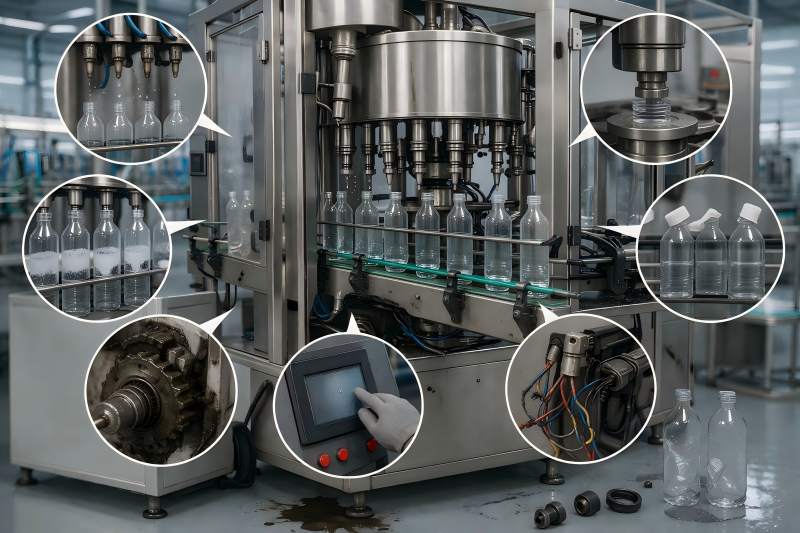
Quick Troubleshooting Guide
| Problem | Quick Fix |
| Uneven fill levels | Recalibrate and clean nozzles |
| Dripping nozzles | Replace seals and adjust valves |
| Foaming | Reduce speed, use bottom-up filling |
| Bottle misalignment | Adjust rails and synchronize conveyor |
| Pump failure | Clean filters and check pressure |
| Air bubbles | Degas liquid and seal connections |
| Poor sealing | Adjust torque and replace capping heads |
| Sensor errors | Clean and recalibrate sensors |
| Machine stops | Check power and control system |
| Slow production | Clean, lubricate, and maintain |
Inconsistent Filling Levels
Inconsistent filling volume is one of the most critical issues, directly impacting product quality, regulatory compliance, and customer satisfaction.
Causes
- Air bubbles in the product supply line
- Worn-out seals or valves
- Improper calibration of filling nozzles
- Variations in liquid viscosity
- Clogged or partially blocked nozzles
Solutions
- Recalibrate filling parameters regularly
- Clean and inspect nozzles to remove blockages
- Replace worn seals and O-rings
- Ensure consistent product temperature and viscosity
- Eliminate air pockets by degassing the liquid
Leakage and Dripping Nozzles
Leakage during or after filling leads to product waste, contamination, and messy production lines.
Causes
- Worn or damaged seals
- Faulty valve closure
- Misaligned nozzles
- Loose hose connections
Solutions
- Replace worn gaskets and seals regularly
- Inspect and adjust valve mechanisms
- Tighten all pipeline connections
- Use proper “suck-back” or anti-drip settings
Excessive Foaming During Filling
Foaming is especially problematic in beverage and chemical industries, as it affects fill accuracy and slows production.
Causes
- High filling speed
- Turbulent liquid flow
- Incorrect nozzle design
- Carbonation or air mixing
Solutions
- Use bottom-up filling techniques
- Reduce filling speed at the start and end
- Optimize nozzle design to minimize turbulence
- Control product temperature and gas content
Conveyor Jams and Bottle Misalignment
Smooth bottle movement is essential for efficient operation. Misalignment can cause stoppages and damage.
Causes
- Improper guide rail settings
- Unsynchronized conveyor speed
- Worn star wheels or timing screws
- Sensor misalignment
Solutions
- Adjust guide rails according to bottle size
- Synchronize conveyor and filling speeds
- Regularly inspect and replace worn components
- Clean and recalibrate sensors
Pump Malfunctions and Slow Flow Rate
The pump is a key component responsible for delivering liquid accurately.
Causes
- Blocked filters or suction lines
- Air entering the system
- Worn pump components
- Incorrect pressure settings
Solutions
- Clean filters and remove blockages
- Ensure proper liquid supply levels
- Inspect and repair pump components
- Maintain stable pressure conditions
Air Bubbles in Filled Products
Air bubbles can lead to inaccurate fill levels and poor product appearance.
Causes
- High-speed filling
- Leaks in suction lines
- Poor degassing of liquid
Solutions
- Reduce filling speed
- Use vacuum or degassing systems
- Check and seal all suction connections
Capping and Sealing Issues
Improper sealing can result in product leakage, contamination, and reduced shelf life.
Causes
- Worn capping heads
- Incorrect torque settings
- Misalignment of bottles
- Damaged sealing components
Solutions
- Replace worn capping heads
- Adjust torque settings according to specifications
- Ensure proper bottle positioning
- Regularly inspect sealing mechanisms
Sensor and Control System Failures
Modern monoblock machines rely heavily on sensors and automation systems.
Causes
- Dirty or misaligned sensors
- Electrical faults
- Software or PLC errors
- Power fluctuations
Solutions
- Clean and recalibrate sensors
- Inspect wiring and electrical connections
- Replace faulty components
- Install surge protection systems
Machine Downtime or Unexpected Shutdowns
Sudden shutdowns can disrupt production and cause significant losses.
Causes
- Power supply issues
- Pneumatic system failure
- Safety interlock activation
- Control system malfunction
Solutions
- Check power stability and connections
- Inspect air pressure systems
- Review safety settings and interlocks
- Perform regular system diagnostics
Reduced Production Efficiency
Over time, machines may operate slower or less efficiently.
Causes
- Accumulated debris and contamination
- Wear and tear of components
- Poor maintenance practices
Solutions
- Implement regular cleaning schedules
- Lubricate moving parts
- Replace worn components proactively
- Train operators for proper handling
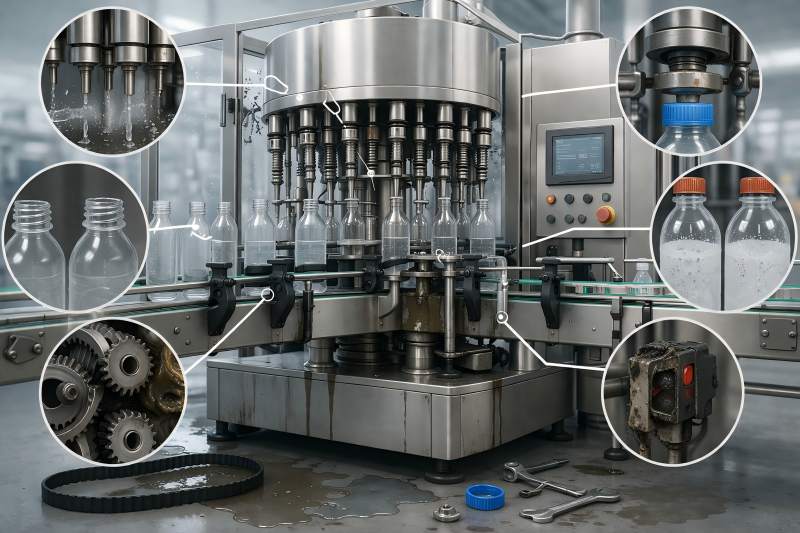
Preventive Maintenance: The Key to Avoiding Problems
While troubleshooting is essential, prevention is even more important. Many machine failures occur due to lack of maintenance or improper operation.
Best Practices
- Perform daily cleaning and sanitation
- Schedule regular calibration and inspection
- Replace wear parts before failure
- Train operators on correct setup procedures
- Monitor performance data for early warning signs
Routine maintenance not only prevents breakdowns but also improves overall efficiency and extends equipment life.