
From bottled water and edible oil to sauces, detergents, creams, and chemicals, the type of container being filled has a direct impact on machine selection, filling accuracy, production speed, and line stability.
Why Container Type Matters in Filling Machine Selection
Not all containers behave the same way during filling. A rigid PET bottle moves differently from a flexible pouch. A wide-mouth jar requires a different filling approach than a narrow-neck vial. Lightweight plastic cups may need special handling, while metal cans may require a more robust transfer system.
Container type affects several key parts of the filling process:
- Container feeding and positioning
- Filling nozzle design
- Filling speed and accuracy
- Product splash, foaming, or dripping control
- Capping or sealing compatibility
- Changeover difficulty between formats
A filling machine that performs well with one package style may not be ideal for another. That is why manufacturers must evaluate both the product and the container before selecting equipment.
Main Categories of Containers
Industrial filling machines are commonly used for the following container categories:
| Container Category | Common Examples | Typical Industries |
| Bottles | PET bottles, glass bottles, HDPE bottles | Beverage, food, chemical, personal care |
| Jars | Glass jars, plastic jars | Sauce, honey, jam, cosmetics |
| Cans | Metal cans, aluminum cans | Beverage, food, chemical |
| Cups and Tubs | Yogurt cups, butter tubs, cream containers | Dairy, food, dessert |
| Pouches | Stand-up pouches, sachets, spouted pouches | Beverage, sauce, detergent, personal care |
| Vials and Small Containers | Vials, ampoules, mini bottles | Pharmaceutical, cosmetics, laboratory |
| Drums and Large Containers | Jerrycans, buckets, drums, IBC totes | Chemical, lubricant, industrial liquid |
| Specialty Containers | Irregular containers, custom-molded packaging | Premium food, cosmetics, specialty chemicals |
Each type has its own filling requirements and production challenges.
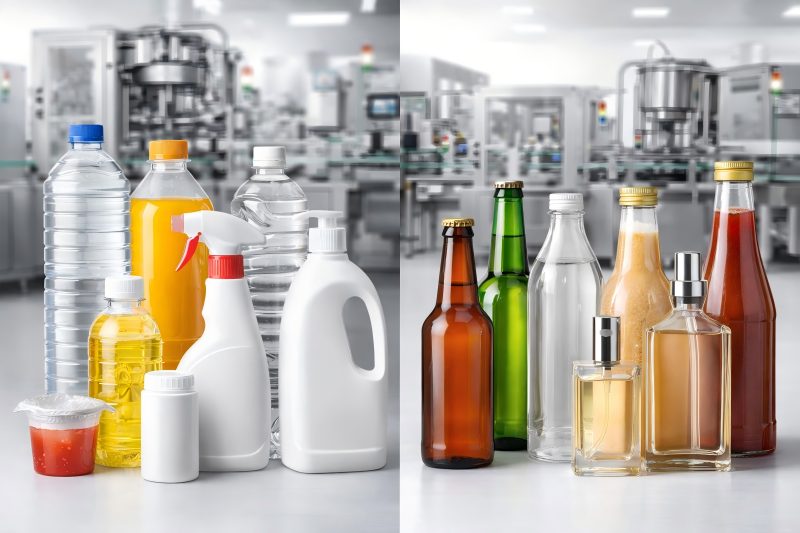
Bottles: The Most Common Container Type
Bottles are the most common containers in industrial filling, available in different materials, shapes, and sizes to suit a wide range of products.
Plastic Bottles
Plastic bottles, often made from PET, HDPE, LDPE, or PP, are lightweight and economical. Industrial filling machines frequently handle plastic bottles for water, juice, edible oil, detergents, shampoos, disinfectants, and chemicals.
Common plastic bottle formats include:
- Round bottles
- Square bottles
- Oval bottles
- Flat bottles
- Trigger-spray bottles
- Narrow-neck bottles
- Wide-mouth bottles
Plastic bottles are often used on automatic high-speed lines because they are compatible with conveyor systems and can be easily integrated with capping and labeling equipment.
Glass Bottles
Glass bottles are common in industries where product image, chemical stability, or heat resistance is important. They are frequently used for sauces, juices, alcoholic beverages, pharmaceuticals, and cosmetics.
Glass bottles are more rigid and stable than lightweight plastic containers, but they also require careful handling to reduce breakage. Filling machines used for glass bottles often need smooth transfer systems, stable bottle positioning, and splash-free filling control.
Bottle Compatibility Summary
| Bottle Type | Advantages | Filling Considerations |
| PET Bottle | Lightweight, economical, popular for beverages | May deform if very hot product is filled |
| HDPE Bottle | Durable, chemical-resistant | Often used for detergents and chemicals |
| Glass Bottle | Premium look, chemical resistance | Needs careful handling |
| PP Bottle | Good heat resistance | Often used for hot-fill or specialty products |
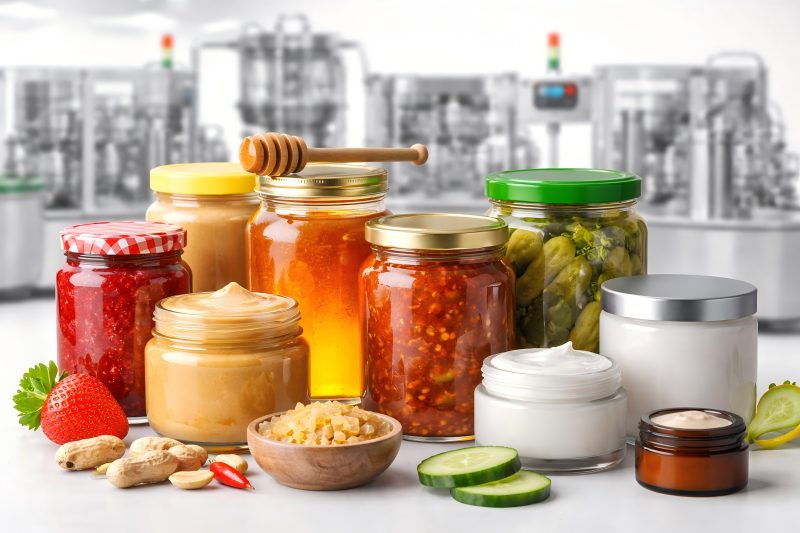
Jars for Thick, Semi-Viscous, and Premium Products
Jars are another major container type used with industrial filling machines. They are especially common for thicker products or premium-packaged goods.
Typical products filled into jars include:
- Jam
- Honey
- Peanut butter
- Chili sauce
- Pickles
- Cosmetic cream
- Face mask
- Wax products
Jars can be made of glass or plastic. Their wide openings make them easier to fill with viscous, chunky, or particulate-containing products. For example, sauces with vegetable pieces or thick food pastes are often better suited to jars than narrow-neck bottles.
Wide-mouth jars also simplify piston filling and reduce product residue around the filling nozzle.
Jar Filling Challenges
Jars offer convenience, but they also require attention to:
- Accurate fill volume for thick products
- Clean filling without smearing on the rim
- Container alignment under the filling head
- Cap or lug closure compatibility
For food products, hygiene is especially important, and some jar filling lines include vacuum capping or hot filling systems.
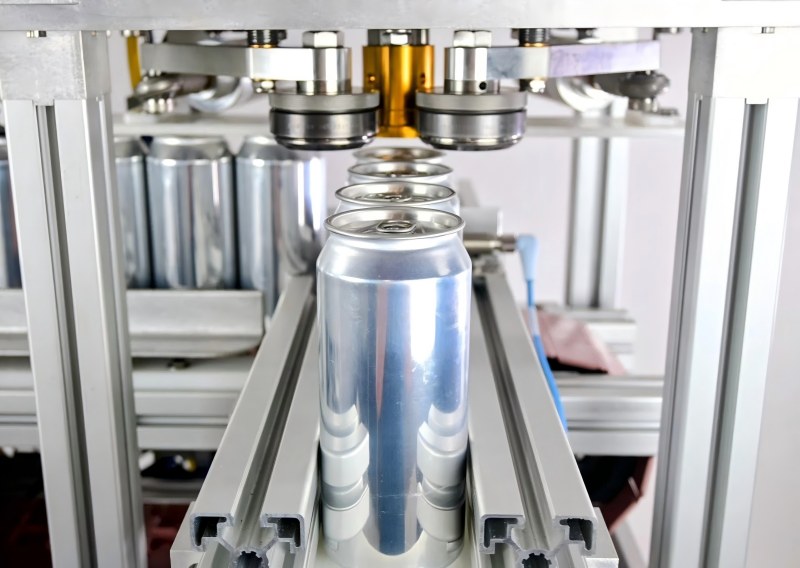
Cans for Beverage and Food Filling
Industrial filling machines can also fill metal and aluminum cans. These are common in the beverage and processed food sectors.
Common canned products include:
- Carbonated drinks
- Beer
- Energy drinks
- Coffee beverages
- Condensed milk
- Soup
- Canned sauces
Can filling usually requires specialized systems because cans often move quickly on high-speed lines and may later pass through seaming equipment instead of standard capping systems.
For carbonated beverages, can filling machines are usually designed with counter-pressure technology to control foam and maintain carbonation. For still liquids or food products, gravity, volumetric, or piston-based systems may be used depending on product viscosity.
Why Cans Need Special Handling
Compared with bottles, cans have different requirements:
- Open-top design before sealing
- Need for seam sealing rather than screw capping
- Risk of foam overflow during fast filling
- Metal compatibility considerations for certain products
Because of these factors, can filling systems are often highly specialized.
Cups and Tubs for Dairy and Ready-to-Eat Foods
Cups and tubs are widely used in the food industry, especially for products with spoonable or semi-solid textures.
Examples include:
- Yogurt
- Pudding
- Ice cream base
- Butter
- Margarine
- Dips
- Fresh cheese
- Dessert products
These containers are usually made of plastic or coated paperboard and are often sealed with foil, film, or snap-on lids after filling.
Cup filling machines are typically rotary or inline systems that perform several steps in sequence, such as:
- Cup feeding
- Filling
- Optional fruit or topping dosing
- Lid placement
- Heat sealing
- Date coding
- Discharge
Cup and tub filling is common in hygienic and sanitary production environments. Machine design often emphasizes easy cleaning and precise dosing.
Pouches and Flexible Packaging
Flexible packaging is popular for its lighter weight, space savings, and greater design flexibility. Industrial filling machines can fill many types of pouches.
Common Pouch Types
- Stand-up pouches
- Flat pouches
- Sachets
- Spouted pouches
- Zipper pouches
- Pillow bags
Products commonly packed in pouches include:
- Sauce
- Juice
- Baby food
- Detergent
- Shampoo
- Liquid soap
- Cream
- Powder-liquid blends
Pouches require different machine handling compared with rigid containers. Instead of being guided only by conveyors, they often need opening, positioning, bottom support, and sealing processes integrated into the filling line.
Rigid vs Flexible Packaging Comparison
| Packaging Type | Examples | Main Benefit | Main Challenge |
| Rigid Containers | Bottles, jars, cans | Better stability during transfer | Higher material and transport cost |
| Flexible Packaging | Pouches, sachets | Lightweight and space-saving | More complex opening and sealing process |
Pouch filling machines are especially useful for manufacturers seeking modern packaging styles or reduced logistics costs.
Vials, Small Bottles, and Precision Containers
Small containers such as vials, mini bottles, ampoules, and sample containers are common in pharmaceutical, cosmetic, and laboratory applications.
These containers are typically filled with:
- Essential oils
- Serums
- Eye drops
- Reagents
- Vaccines
- Oral liquids
- Perfume samples
Precision is critical in this category. Filling machines for small containers often use peristaltic pumps, servo-controlled volumetric filling, or time-pressure systems to achieve accurate low-volume filling.
These applications may also require:
- Sterile or clean-room design
- No-drip nozzles
- Nitrogen flushing
- Stoppering and crimping systems
- Visual inspection integration
Small container filling lines are often slower than mass beverage lines, but accuracy and cleanliness are much more important.
Large Containers: Jerrycans, Buckets, Drums, and IBC Totes
Industrial filling machines are not limited to retail-size packages. They can also fill large industrial containers for bulk products.
Common large container types include:
- Jerrycans
- Pails or buckets
- Drums
- Barrels
- Intermediate Bulk Containers (IBC totes)
These are widely used for:
- Lubricants
- Chemical raw materials
- Cleaning agents
- Paints
- Solvents
- Agricultural liquids
Bulk container filling systems may be semi-automatic or fully automatic depending on output requirements. In some cases, filling is based on net weight rather than volume, especially when product density can vary.
Large Container Filling Features
| Container Type | Typical Capacity | Common Filling Method |
| Jerrycan | 5–30 L | Volumetric or weight filling |
| Bucket/Pail | 5–25 L | Piston, flowmeter, or weight filling |
| Drum | 50–250 L | Weight-based or lance filling |
| IBC Tote | 500–1,200 L | Weight filling with heavy-duty support |
These systems often include heavy-duty frames, anti-drip filling lances, automatic positioning, and safety features for hazardous products.
Specialty and Custom-Shaped Containers
Many manufacturers use uniquely shaped containers to stand out in the market. These may include:
- Asymmetrical cosmetic bottles
- Special sauce bottles
- Decorative glass containers
- Premium beverage packaging
- Trigger bottles with unusual neck shapes
Industrial filling machines can handle these containers, but success depends on machine flexibility and proper change parts. Custom containers may require:
- Special bottle guides
- Customized star wheels
- Tailored filling nozzle spacing
- Adjustable grippers or holders
- Slower line speeds for stable transfer
The more unusual the container geometry, the more important it becomes to test compatibility before purchasing equipment.
Container Material Differences and Their Impact
Container shape matters, but so does material. Different materials influence how the container behaves under production conditions.
Container Material Comparison
| Material | Common Uses | Advantages | Limitations |
| PET | Water, juice, edible oil | Lightweight, transparent, affordable | Limited heat resistance |
| HDPE | Detergent, chemical, milk | Durable, chemical-resistant | Less premium appearance |
| Glass | Sauce, beverage, cosmetics | Premium look, excellent barrier | Fragile, heavier |
| Aluminum/Metal | Cans, industrial products | Strong, recyclable | Requires specialized sealing |
| PP | Hot-fill products, cups | Heat resistant | Not always as clear as PET |
| Flexible Film | Pouches, sachets | Lightweight, compact | Needs special sealing systems |
The material influences not just filling, but also rinsing, capping, sealing, transport, and storage performance.
How Product Type and Container Type Work Together
Container selection is closely linked to product characteristics. A low-viscosity drink can be filled into bottles, cans, or pouches. A chunky sauce may be better suited to jars or wide-mouth pouches. A corrosive chemical may require HDPE containers. A high-end cosmetic serum may be packaged in glass vials.
Here is a simplified matching guide:
| Product Type | Suitable Containers |
| Water and juice | PET bottles, glass bottles, cans, pouches |
| Thick sauces | Glass jars, plastic jars, pouches |
| Yogurt and dairy | Cups, tubs, bottles |
| Detergents and cleaners | HDPE bottles, pouches, jerrycans |
| Pharmaceuticals | Vials, ampoules, small bottles |
| Industrial chemicals | Jerrycans, drums, IBC totes |
| Creams and gels | Jars, tubes, pump bottles, pouches |
This is why filling machine selection should always consider both product behavior and packaging format.
Can One Filling Machine Fill Multiple Container Types?
In some cases, yes. Many modern filling machines are designed with adjustable guides, change parts, servo controls, and recipe settings that allow them to fill multiple container formats. For example, one machine may handle several bottle sizes or both round and square containers.
However, there are limits. A machine designed for rigid bottles is not automatically suitable for pouches. A jar filling machine for chunky paste may not be ideal for small sterile vials. A can filler for carbonated drinks is highly specialized.
Machines with higher flexibility are useful for manufacturers with multiple SKUs, but they may involve:
- More changeover parts
- Longer adjustment times
- Slightly lower maximum speeds than dedicated lines
- Higher initial investment
The best solution depends on whether the priority is versatility or peak efficiency.
A complete understanding of container compatibility helps filling machine manufacturers select equipment that improves efficiency, maintains filling accuracy, reduces waste, and supports long-term production flexibility.
As packaging formats continue to diversify, modern filling machines are becoming more adaptable than ever. Still, the most successful filling line is always the one that matches the product, container, and production goals as a complete system.