
Among the most commonly used liquid filling solutions, piston filling machines and gravity filling machines are widely selected for different applications.
Although both are used to fill liquids into bottles, jars, or containers, their working principles, product suitability, and performance advantages are quite different.
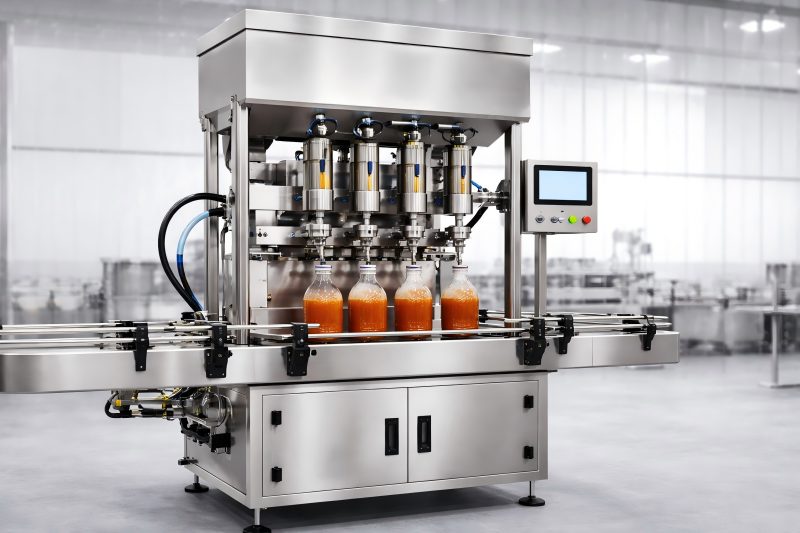
What Is a Piston Filling Machine?
A piston filling machine uses a piston and cylinder to measure and dispense fixed product volumes, delivering accurate, consistent filling for various liquid products.
This type of machine is especially suitable for medium- to high-viscosity products, such as sauces, creams, lotions, gels, honey, syrup, shampoo, and paste-like materials.
Key Features of Piston Filling Machines
- Volumetric filling with high accuracy
- Suitable for viscous and semi-viscous products
- Can handle products with small particulates
- Available in semi-automatic and automatic models
- Commonly used in food, cosmetics, pharmaceutical, and chemical industries
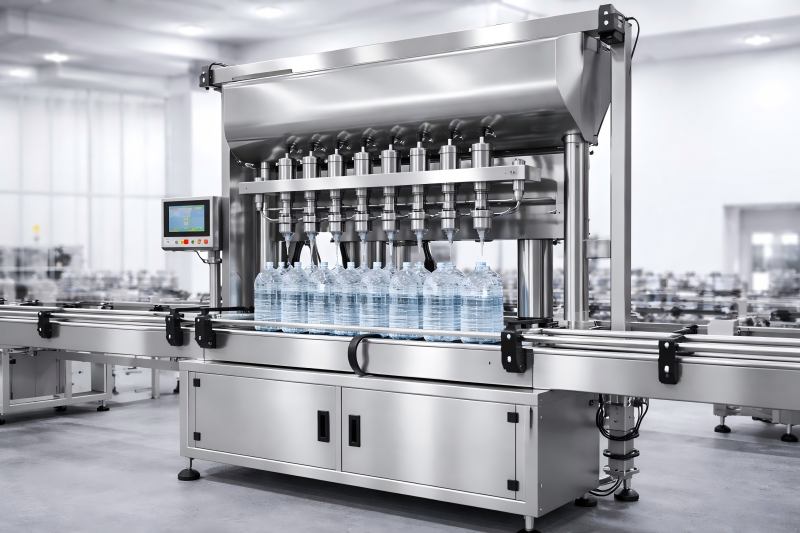
What Is a Gravity Filling Machine?
A gravity filling machine fills containers by allowing liquid to flow naturally from a tank into the bottle through gravity. When the filling valve opens, the liquid moves downward into the container without piston pressure.
Gravity fillers are best suited for low-viscosity, free-flowing liquids, such as water, juice, edible oil, vinegar, alcohol, detergent, and disinfectant.
Key Features of Gravity Filling Machines
- Simple filling principle
- Best for thin liquids
- Easy operation and maintenance
- Cost-effective for standard liquid bottling
- Widely used in beverage, water, and household liquid industries
Main Difference Between Piston Filling and Gravity Filling
- A piston filling machineuses mechanical force to measure and push a fixed amount of product into the container.
- A gravity filling machine works by letting liquid flow naturally from the tank into the container.
Because of their different filling methods, piston fillers are more suitable for viscous products, while gravity fillers work better with low-viscosity liquids.
Comparison Table: Piston vs Gravity Filling Machine
| Item | Piston Filling Machine | Gravity Filling Machine |
| Filling Principle | Piston-driven volumetric filling | Natural gravity flow |
| Suitable Viscosity | Medium to high | Low |
| Filling Accuracy | High | Good for thin liquids |
| Best Product Type | Cream, sauce, syrup, gel, paste | Water, juice, oil, alcohol |
| Machine Structure | More complex | Simpler |
| Cleaning Difficulty | Moderate to high | Easier |
| Initial Cost | Higher | Lower |
| Maintenance | More components to maintain | Lower maintenance demand |
| Best Production Use | Thick or valuable products | High-volume thin liquids |
Working Principle of a Piston Filling Machine
A piston filling machine works in two main steps:
Step 1: Product Intake
The piston moves backward and draws product from the hopper or tank into the cylinder.
Step 2: Product Discharge
The piston moves forward and pushes the preset product volume through the nozzle into the container for accurate and consistent filling.
Since each cycle fills a preset volume, the machine offers strong consistency and accurate dosing.
Best Uses
- Sauce filling
- Honey filling
- Cream filling
- Lotion filling
- Shampoo filling
- Paste filling
Working Principle of a Gravity Filling Machine
A gravity filling machine also works in a simple two-step process:
Step 1: Liquid Supply
The product reservoir is mounted higher than the filling nozzles, allowing liquid to flow downward into containers through gravity.
Step 2: Natural Filling
When the valve opens, the liquid flows down into the bottle by gravity.
The filling amount is usually controlled by time, level, or flow settings.
Best Uses
- Water filling
- Juice filling
- Vinegar filling
- Edible oil filling
- Alcohol filling
- Thin detergent filling
Viscosity: The Most Important Selection Factor
When choosing between these two machines, product viscosity should be the first thing to consider.
Choose a Gravity Filling Machine If:
- The liquid is thin
- The product flows easily
- No mechanical pressure is needed
Choose a Piston Filling Machine If:
- The product is thick
- The liquid flows slowly
- Accurate pushing and dosing are required
Simple Rule
- Thin liquids = Gravity filling
- Thick liquids = Piston filling
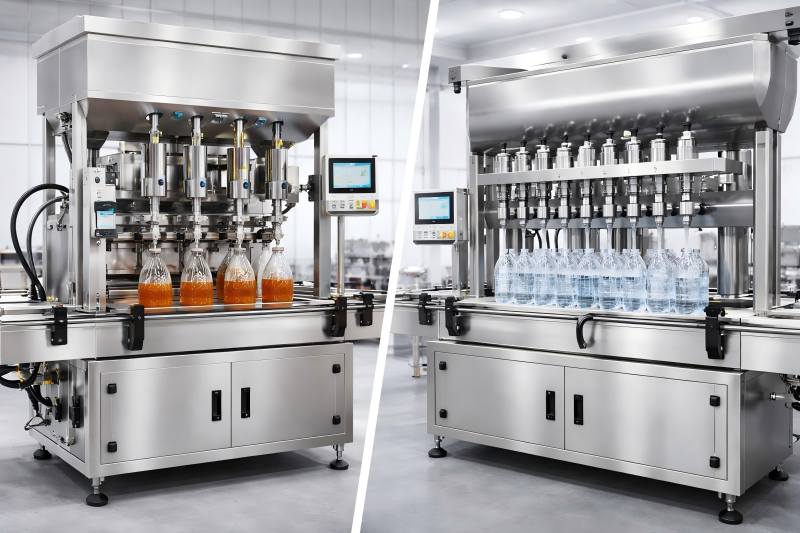
Filling Accuracy and Consistency
Filling accuracy is important for cost control, compliance, and product quality.
Piston Filling Machine
Piston fillers usually provide higher accuracy because they dispense a fixed measured volume each cycle. This is ideal for products where overfilling or underfilling must be minimized.
Gravity Filling Machine
Gravity fillers can achieve stable results with thin liquids, but filling performance may be influenced more by flow characteristics, temperature, and foaming.
Conclusion
If filling precision is a top priority, especially for viscous or expensive products, piston filling is usually the better choice.
Product Suitability Comparison
| Product | Recommended Machine | Reason |
| Water | Gravity Filling Machine | Thin and fast-flowing |
| Juice | Gravity Filling Machine | Low viscosity |
| Edible Oil | Gravity Filling Machine | Smooth liquid flow |
| Vinegar | Gravity Filling Machine | Easy gravity feed |
| Shampoo | Piston Filling Machine | Medium viscosity |
| Lotion | Piston Filling Machine | Thick consistency |
| Honey | Piston Filling Machine | Sticky and slow-flowing |
| Syrup | Piston Filling Machine | Needs accurate volumetric dosing |
| Tomato Sauce | Piston Filling Machine | High viscosity |
| Peanut Butter | Piston Filling Machine | Very thick product |
Filling Speed and Production Efficiency
Production speed is another important factor, but the best machine depends on the product.
For thin liquids, gravity filling machines can be very efficient because the product flows quickly and naturally. In high-output lines for water, juice, or cleaning liquids, gravity filling can provide excellent speed with a relatively simple structure.
For thicker liquids, piston filling machines are usually more efficient because gravity systems would fill too slowly or inconsistently. Piston fillers provide controlled product movement, allowing the machine to maintain reliable performance even with viscous materials.
The right choice depends on which machine fills your product more efficiently.
A gravity filler may outperform a piston filler on water, while a piston filler will greatly outperform a gravity filler on cream or paste.
Foaming and Product Behavior
Some liquids tend to foam during filling, especially detergents, cleaning liquids, personal care liquids, and certain beverages. Foaming can affect fill level appearance, filling speed, and container sealing.
Gravity filling can sometimes be more gentle for certain liquids, depending on nozzle design and flow control. But if the product splashes or foams easily, specialized filling nozzles, diving nozzles, or controlled flow strategies may still be necessary.
Piston filling can also handle foaming products, but machine design becomes important. The nozzle type, filling speed, cutoff valve behavior, and suction-back function all influence final performance.
If your product foams heavily, neither technology should be chosen based on principle alone. Instead, the actual machine configuration must be considered carefully.
Hygiene, Cleaning, and Sanitation
Cleaning requirements vary greatly by industry. Beverage, dairy, food, cosmetics, and pharmaceutical sectors often require hygienic design, easy cleaning, and minimal product residue.
Gravity filling machines usually have a simpler product path, especially in applications involving thin liquids. For frequent product changes involving low-viscosity liquids, this can be a practical advantage.
Piston filling machines have more product-contact components, such as cylinders, valves, seals, and nozzles. This gives them strong filling control but may also require more careful cleaning and maintenance, especially when handling sticky or residue-forming products.
In hygienic production, both machine types can be designed with sanitary stainless steel construction, food-grade seals, and CIP or easy-disassembly features. Still, from a general operational perspective, gravity filling systems are often simpler to clean when the product is thin.
Container Type and Packaging Flexibility
The type of bottle or container also affects machine choice. Both piston fillers and gravity fillers can work with bottles, jars, cans, and other containers, but the product type and dosing style influence compatibility.
Piston filling machines are often chosen for jars, tubs, and containers used for sauces, creams, and pastes. They are also good for products where precise filling into wide-mouth containers is required.
Gravity filling machines are commonly used for bottles holding water, beverages, liquid chemicals, and oils. They work especially well when the liquid flows easily into narrow-neck bottles at stable speed.
If your packaging line handles different container shapes and multiple product viscosities, the flexibility of the overall filling system should be evaluated before making a decision.
Initial Investment and Operating Cost
Budget matters in every equipment purchase. In general, gravity filling machines tend to have a simpler structure and therefore often come with a lower initial price, especially for standard low-viscosity applications.
Piston filling machines usually cost more because they involve piston cylinders, valves, seals, synchronized control systems, and more robust product handling components. However, their higher purchase cost can be justified when filling thick or high-value products that demand precision.
Operating cost should also be considered. A poorly matched machine can create waste, downtime, cleaning trouble, and maintenance costs. For example:
- Using a gravity filler on thick liquids may result in slow filling and inconsistency
- Using a piston filler for very thin, low-value liquids may add unnecessary complexity and cost
Choosing the correct technology often saves more money over time than focusing only on the initial purchase price.
Cost and Operation Comparison
| Factor | Piston Filling Machine | Gravity Filling Machine |
| Initial Cost | Higher | Lower |
| Best Cost Efficiency For | Thick, valuable, measured products | Thin, high-volume liquids |
| Product Waste Control | Better in precise dosing | Good for standard thin liquid filling |
| Cleaning Time | Usually longer | Usually shorter |
| Mechanical Complexity | Higher | Lower |
| Spare Parts Demand | More seals and components | Fewer product-handling parts |
| Long-Term Value | High for viscous products | High for simple liquid filling |
Maintenance and Reliability
Maintenance needs depend on machine design, production intensity, and product characteristics.
Piston filling machines have more moving parts in the product dosing mechanism. Pistons, seals, valves, and cylinders need regular inspection and maintenance. When properly maintained, piston fillers are highly reliable, but they do require more attention than simpler systems.
Gravity filling machines are structurally simpler, which can reduce maintenance workload. There are fewer mechanical dosing components, making them attractive for operations that want easy upkeep and straightforward daily operation.
However, reliability is not only about simplicity. A piston filler that is correctly chosen for a viscous product may be far more reliable than a gravity filler forced to handle a product it was never meant to fill.
Industry Application Differences
Different industries naturally prefer different filling principles because their product types vary.
Piston filling machines are common in:
- Food processing for sauces, ketchup, mayonnaise, syrup, honey
- Cosmetics for cream, lotion, gel, serum, conditioner
- Pharmaceutical and healthcare for ointments and gel products
- Chemical industries for paste-like or semi-viscous materials
Gravity filling machines are common in:
- Bottled water production
- Juice and beverage packaging
- Edible oil bottling
- Household chemical filling for thin detergents and disinfectants
- Alcohol and solvent filling for free-flowing liquids
Understanding where each machine is commonly used can help confirm whether your own product is a better fit for one technology or the other.
Accuracy vs Simplicity: Which Matters More?
In many real purchasing decisions, the choice comes down to a trade-off between precision and simplicity.
A piston filling machine offers stronger volumetric accuracy and better handling of thick products. It is the right answer when portion control, viscosity handling, and filling consistency are critical.
A gravity filling machine offers simpler operation, easier cleaning, and efficient high-speed handling of thin liquids. It is ideal when the product flows easily and the process does not require piston-based dosing precision.
Neither is inherently better in every case. The right machine is the one that matches the real physical behavior of your product and the operational goals of your factory.
How to Choose Based on Production Needs
| Production Need | Better Choice | Why |
| Filling water or juice | Gravity Filling Machine | Best for low-viscosity liquids |
| Filling lotion or cream | Piston Filling Machine | Handles thicker product easily |
| Need high volumetric precision | Piston Filling Machine | Fixed measured volume per cycle |
| Need simple cleaning and changeover | Gravity Filling Machine | Simpler liquid path |
| Budget-sensitive startup with thin liquids | Gravity Filling Machine | Lower complexity and cost |
| Thick food or cosmetic product line | Piston Filling Machine | Better product control |
| Fast thin-liquid bottling line | Gravity Filling Machine | Efficient flow and high throughput |
| Sticky, slow-flowing products | Piston Filling Machine | Active product movement |
Questions to Ask Before Choosing
Before you buy either a piston filling machine or a gravity filling machine, ask these practical questions:
- Is the product thin, medium, or thick?
- Does the product contain particles or suspended solids?
- How important is filling accuracy?
- How many bottles or containers per hour are required?
- How often will the product change?
- How important is easy cleaning?
- What is the available equipment budget?
- Is the container narrow-necked, wide-mouth, or variable in shape?
- Does the product foam, drip, or string during filling?
- Will the line need future automation upgrades?
These questions help move the decision from theory to real manufacturing conditions.
Common Mistakes When Selecting a Filling Machine
Many equipment buyers make avoidable mistakes during selection. Some of the most common include:
Choosing only by budget
A lower-cost machine is not truly cheaper if it causes waste, downtime, or inaccurate filling.
Ignoring viscosity changes
Some liquids become thicker or thinner depending on temperature. This can affect filling performance.
Focusing only on current output
The machine should match not only today’s production but also near-future expansion plans.
Underestimating cleaning needs
Sticky or hygienic products may require more cleaning time than expected.
Assuming all liquids behave the same
Even products that look similar can fill very differently based on formulation, foam level, density, and temperature.
Avoiding these mistakes can greatly improve the return on your equipment investment.
Which One Is Better?
It depends on your product type and production goals.
A piston filling machine is the right choice when you need:
- Accurate volumetric dosing
- Strong performance with viscous products
- Reliable filling of creams, sauces, gels, syrups, and pastes
- Better control over expensive or thick materials
A gravity filling machine is better when you need:
- Efficient filling of thin, free-flowing liquids
- Simple machine structure and easy cleaning
- Lower initial investment
- Fast bottling for water, juice, oil, and similar liquids
In other words, piston filling is usually the better solution for thick products, while gravity filling is usually the better solution for thin products.