
The bottled water industry has experienced significant global growth over the past decades, driven by increasing health awareness, urbanization, and demand for safe and convenient drinking water. Starting a bottled water plant can be a highly profitable venture, but it requires careful planning, regulatory compliance, and strategic investment.
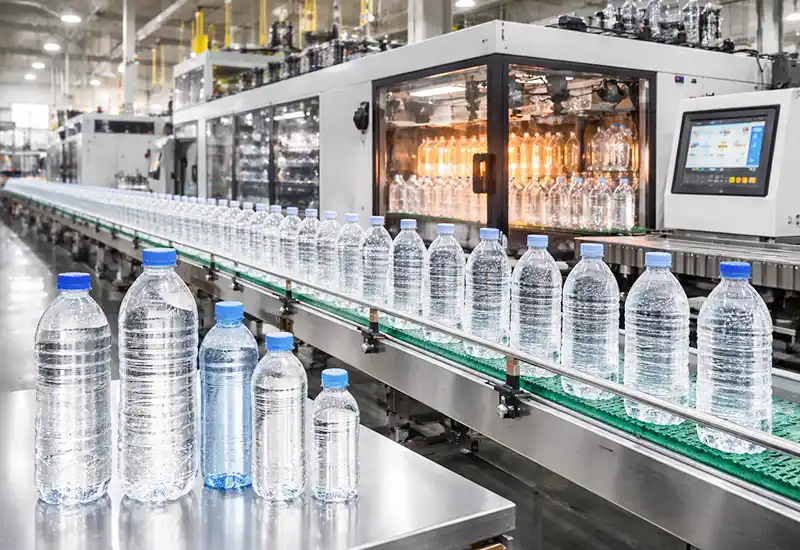
Understanding the Bottled Water Industry
Before entering the market, it is crucial to understand how the bottled water industry operates. Bottled water is broadly categorized into:
- Purified water (treated municipal or groundwater)
- Spring water
- Mineral water
- Distilled water
- Alkaline or functional water
The industry is highly competitive and includes both global brands and local producers. Consumer demand is influenced by factors such as:
- Health and safety concerns
- Convenience and portability
- Brand trust and perception
- Environmental awareness (e.g., recyclable packaging)
Trends such as eco-friendly packaging, premium water (alkaline, mineral-rich), and flavored water are reshaping the market.
Market Research
Market research is essential for a bottled water business, helping identify opportunities, define target customers, and shape effective product positioning.
Key Aspects of Market Research:
- Target Market: Residential consumers, offices, hotels, gyms, schools, or export markets
- Demand Analysis: Evaluate consumption trends and seasonal demand
- Competitor Analysis: Study pricing, packaging, distribution channels, and brand positioning
- Pricing Strategy: Determine competitive yet profitable pricing
- Distribution Channels: Retail stores, supermarkets, online platforms, and direct delivery
Sample Market Analysis Table
| Factor | Description | Example Insight |
| Target Customers | Demographic and business segments | Urban households and offices |
| Competitors | Local and international brands | Strong presence of mid-range brands |
| Price Range | Average market price per bottle | $0.30–$1.50 depending on size |
| Distribution Channels | How products reach customers | Supermarkets and home delivery services |
| Market Trends | Consumer preferences | Growing demand for eco-friendly bottles |
How to Choose the Right Location
Selecting the right location is critical for operational efficiency and cost control.
Key Considerations:
- Water Source: Proximity to a reliable and clean water source (groundwater, spring, or municipal supply)
- Accessibility: Easy access to transportation networks (roads, ports, logistics hubs)
- Utilities: Availability of electricity, water, and waste management systems
- Labor Availability: Skilled and semi-skilled workforce
- Land Cost: Affordable land with expansion potential
- Zoning Regulations: Compliance with industrial zoning laws
A well-chosen location can significantly reduce logistics costs and improve production efficiency.
Understanding Local Laws and Regulations
Compliance with local laws is mandatory for operating a bottled water plant. Regulations vary by country but generally cover water quality, production standards, labeling, and environmental compliance.
United States
In the U.S. Food and Drug Administration:
- Bottled water is regulated as a food product
- Must comply with FDA standards of identity and quality
- Facilities must follow Good Manufacturing Practices (GMP)
- Labeling must include source, treatment method, and nutritional information
Additionally, environmental regulations may be enforced by the Environmental Protection Agency, especially regarding water extraction and waste discharge.
European Union
- Governed by the European Food Safety Authority
- Strict standards for mineral and spring water classification
- Mandatory traceability and labeling requirements
Understanding these frameworks ensures legal compliance and avoids penalties.
Licensing and Certifications
To legally operate a bottled water plant, you must obtain several permits and certifications.
Common Requirements:
- Business registration license
- Water extraction permit
- Food production license
- Health and safety certification
- Environmental clearance
- Quality certifications (ISO, HACCP)
Key Certifications:
- ISO 22000:Food safety management
- HACCP: Hazard Analysis and Critical Control Points
- NSF Certification: For equipment and water quality
The application process may involve inspections, documentation, and testing. Consult local authorities or legal professionals before proceeding.
Production Process and Equipment List
A thorough grasp of the bottled water production line ensures safety, efficiency, and compliance, transforming raw water into a sealed, market-ready product.
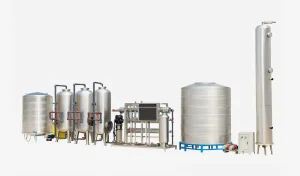
Water Source and Pre-Treatment
The process begins with sourcing water. Depending on your business model, this may include:
- Groundwater (wells or boreholes)
- Municipal water supply
- Natural spring water
Before entering the main treatment system, raw water typically undergoes pre-treatment to remove large particles and impurities.
Key Pre-Treatment Equipment:
- Raw water pump
- Sand filter (removes suspended solids)
- Activated carbon filter (removes odor, chlorine, and organic compounds)
- Water softener (reduces hardness caused by calcium and magnesium)
Water Purification System
This is the most critical stage, where water is purified to meet drinking standards. The exact configuration depends on your product type (purified, mineral, or spring water).
Core Technologies:
- Reverse Osmosis (RO): Removes dissolved salts, heavy metals, and microorganisms
- Ultrafiltration (UF): Removes bacteria and suspended particles
- UV Sterilization: Kills microorganisms using ultraviolet light
- Ozone Sterilization: Provides residual disinfection and extends shelf life
Process Flow Example:
Raw Water → Sand Filter → Carbon Filter → RO System → UV → Ozone → Storage Tank
Treated Water Storage
After purification, water is stored in hygienic tanks before filling.
Equipment:
- Stainless steel storage tanks (SS304 or SS316)
- CIP (Clean-in-Place) systems for tank sanitation
- Level sensors and automated controls
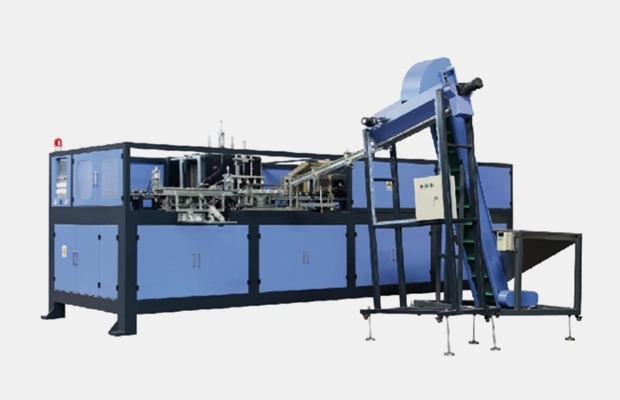
Bottle Production (Blowing System)
If you are producing PET bottles in-house, you will need a bottle blowing system.
Process:
- PET preforms are heated
- Molded into bottles using high-pressure air
Equipment:
- PET bottle blowing machine
- Air compressor (high-pressure)
- Chiller (for mold cooling)
- Preform loader and unscrambler
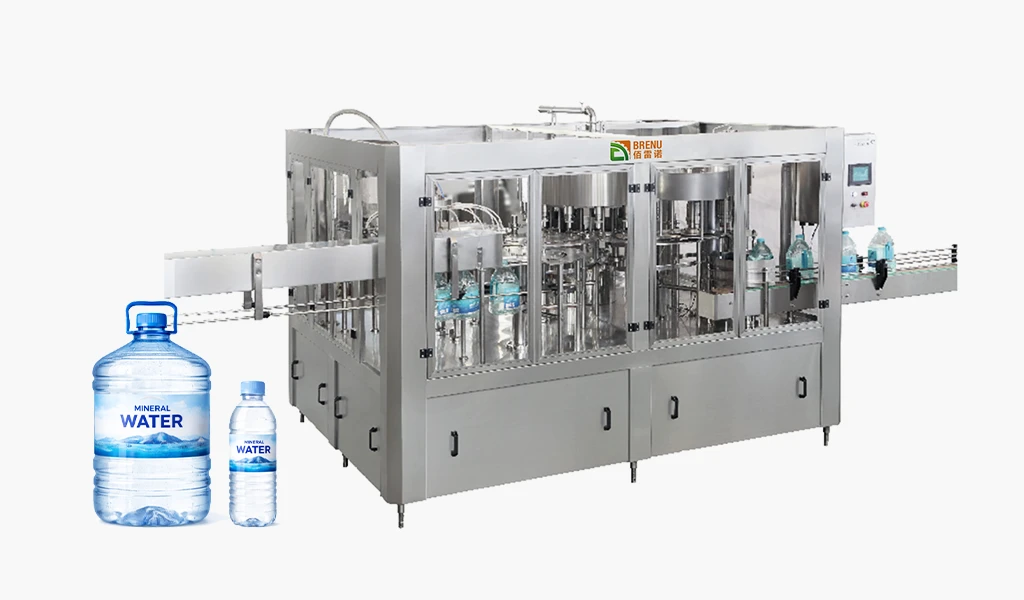
Bottle Rinsing, Filling, and Capping (Monoblock System)
This is the core of the production line, often integrated into a monoblock filling machine.
Process Steps:
- Rinsing: Bottles are cleaned with sterile water or air
- Filling: Precisely measured water is filled into bottles
- Capping: Bottles are sealed immediately to prevent contamination
Equipment:
- Automatic bottle unscrambler
- Monoblock rinsing-filling-capping machine
- Cap feeder and sorter
Labeling and Coding
After filling, bottles are labeled and coded for identification and traceability.
Equipment:
- Sleeve labeling machine or sticker labeling machine
- Inkjet or laser coding machine
Label Information Includes:
- Brand name
- Water source/type
- Volume
- Manufacturing and expiry dates
- Batch number
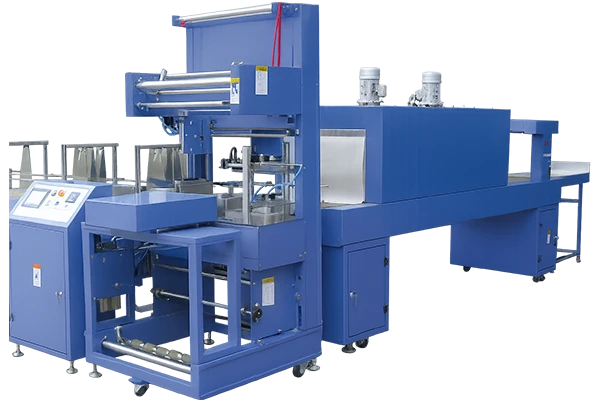
Packaging System
The final product is grouped and packed for distribution.
Packaging Options:
- Shrink wrapping (common for small bottles)
- Carton boxing
- Handle-wrapped packs
Equipment:
- Shrink wrapping machine
- Carton packing machine
- Palletizer (optional for large-scale plants)
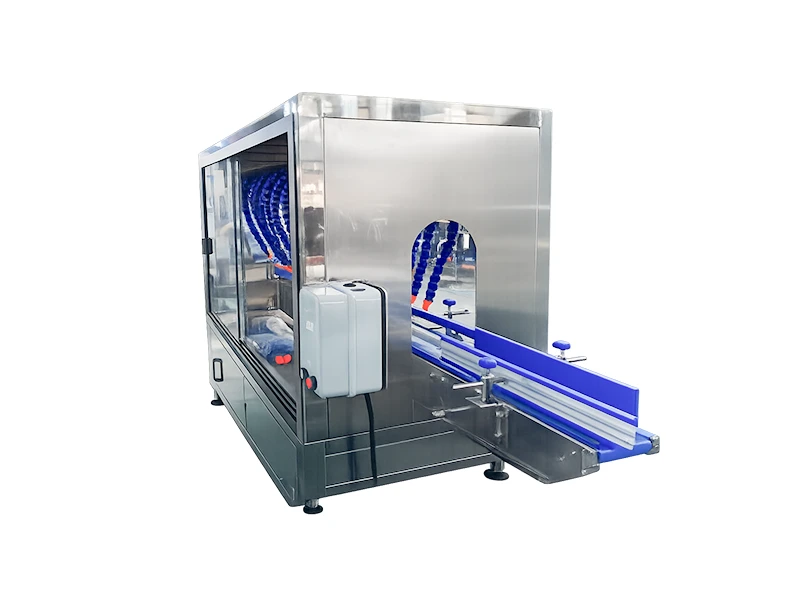
Conveying System
A network of conveyors connects all stages of the production line.
Equipment:
- Air conveyors (for empty bottles)
- Belt conveyors (for filled bottles)
Utility Systems
Supporting systems are essential for stable operations.
Utilities Include:
- Air compressor system
- Water pumps
- Chillers and cooling towers
- Electrical control panels
- Backup generators
Integrated Equipment Overview Table
| Production Stage | Main Equipment |
| Pre-Treatment | Sand filter, carbon filter |
| Purification | RO system, UV, ozone |
| Storage | Stainless steel tanks |
| Bottle Production | Blowing machine, air compressor |
| Filling & Capping | Monoblock filling machine |
| Labeling | Labeling machine, coding machine |
| Packaging | Shrink wrapper, carton packer |
| Conveying | Air/belt conveyors |
| Quality Control | pH meter, TDS meter |
| Utilities | Compressor, chiller, generator |
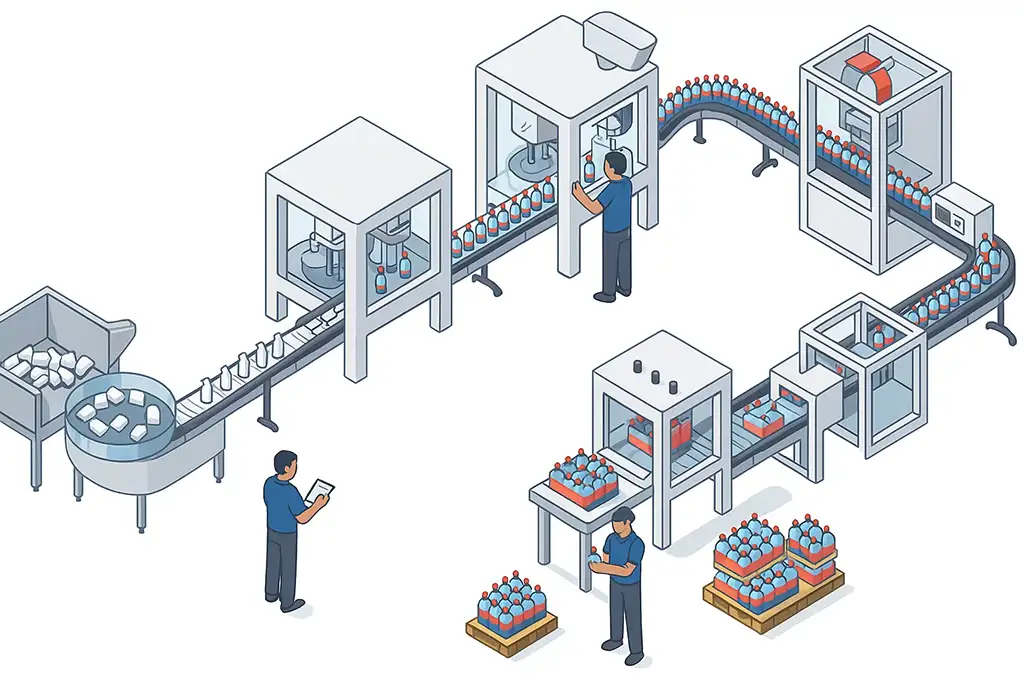
Factory Layout
In the bottled water industry, factory layout must follow a logical, linear flow—from raw water intake to finished product dispatch—while strictly separating clean and non-clean areas to prevent contamination.
Raw Water Storage Area
This is the first step in the production process.
Features:
- Raw water tanks or reservoirs
- Pumps and pipelines
- Pre-filtration systems
Design Tips:
- Located at the far end of the production line
- Isolated from clean production areas
- Easy access for maintenance and inspection
Water Treatment Room
This is the core technical area where water is purified.
Equipment:
- Sand filters, carbon filters
- Reverse osmosis systems
- UV and ozone sterilizers
Design Requirements:
- Controlled environment (temperature and humidity)
- Adequate drainage system
- Easy access for equipment maintenance
Bottle Blowing Area
If you produce bottles in-house, this area is required.
Features:
- PET preform storage
- Bottle blowing machines
- Air compressors and chillers
Layout Considerations:
- Separate from filling area due to heat and noise
- Close enough to reduce bottle transportation time
Filling Area (Clean Room)
This is the most critical and sensitive zone in the factory.
Functions:
- Bottle rinsing
- Water filling
- Capping
- Initial inspection
Clean Room Requirements:
- Positive air pressure environment
- HEPA filtration (optional for high-end plants)
- Controlled temperature and humidity
- Stainless steel surfaces
Personnel Rules:
- Workers must wear protective clothing (gloves, masks, hairnets)
- Entry through sanitation zones only
Labeling and Packaging Area
After filling, bottles move to labeling and packaging.
Equipment:
- Labeling machines
- Shrink wrapping or carton packing machines
Design Tips:
- Located immediately after filling area
- Can be classified as a semi-clean zone
Finished Goods Warehouse
This area stores packaged products before distribution.
Features:
- Pallet storage systems
- Loading docks
- Inventory management systems
Key Considerations:
- Dry and well-ventilated environment
- Protection from sunlight and contamination
- Easy access for trucks and logistics
Quality Control Laboratory
A dedicated lab ensures product safety and compliance.
Functions:
- Water testing (chemical and microbiological)
- Process monitoring
Equipment:
- pH meters, TDS meters
- Microbiological testing tools
Location:
- Near production area for quick sampling
- Isolated to prevent contamination
Utility and Support Areas
These areas support plant operations but are often overlooked.
Includes:
- Boiler room (if applicable)
- Air compressor room
- Electrical control room
- Maintenance workshop
Design Tips:
- Keep utilities separate from production areas
- Ensure easy access for technicians
Administrative and Staff Areas
A complete factory also includes non-production spaces.
Includes:
- Offices
- Meeting rooms
- Staff changing rooms
- Cafeteria and rest areas
Hygiene Note:
- Changing rooms should connect to production areas
- Provide separate uniforms for clean zones
Quality Control and Testing
Bottled water producers must comply with strict standards depending on the country of operation.
Example: United States
The U.S. Food and Drug Administration requires:
- Compliance with Standards of Identity for Bottled Water
- Limits on contaminants (microbial, chemical, radiological)
- Adherence to Good Manufacturing Practices (GMP)
Additionally, guidance from the Environmental Protection Agency may apply to source water quality.
International Standards:
- WHO Drinking Water Guidelines
- ISO 22000 (Food Safety Management)
- HACCP System
These frameworks provide a structured approach to risk management and quality assurance.
Key Water Quality Parameters
Understanding and controlling water quality parameters is essential for compliance and consistency.
| Parameter | Acceptable Range/Condition | Importance |
| pH | 6.5 – 8.5 | Ensures neutral taste and safety |
| TDS | < 500 mg/L (varies by standard) | Indicates dissolved solids level |
| Turbidity | < 1 NTU | Measures clarity |
| Microbial Count | 0 CFU/100 ml | Ensures no harmful bacteria |
| Heavy Metals | Within regulatory limits | Prevents toxicity |
| Residual Ozone | Controlled level | Maintains sterilization |
Branding and Packaging Strategy
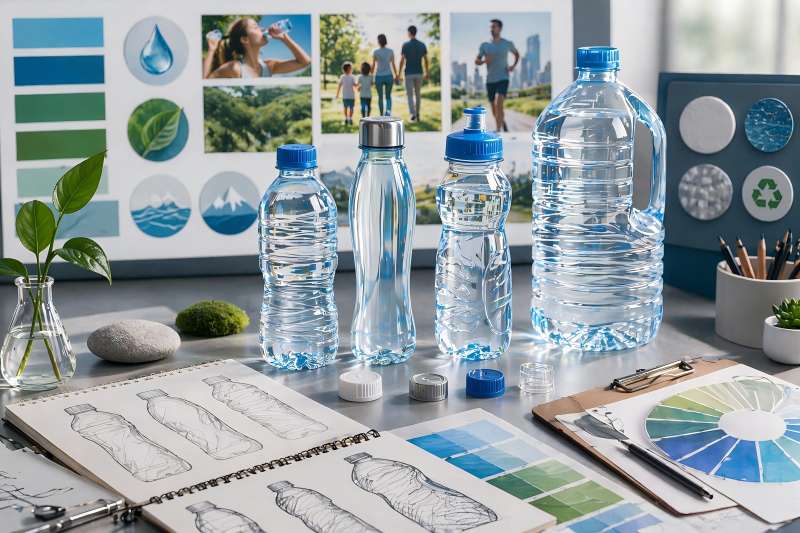
Defining Your Brand Positioning
Before designing logos or packaging, you must clearly define your brand identity.
Essential Questions to Consider:
- Who are your target customers?(urban professionals, families, athletes)
- What is your price segment? (premium, mid-range, economy)
- What makes your water unique? (purity, mineral content, sustainability)
- What emotions do you want your brand to evoke?
Common Positioning Types:
- Premium Brand: Focus on purity, luxury, and design
- Health-Oriented Brand: Emphasize mineral content or alkalinity
- Eco-Friendly Brand: Highlight sustainability and recyclable packaging
- Value Brand: Compete on affordability and accessibility
Core Brand Identity Components
Your brand identity expresses your business through its visuals, messaging, and overall communication style.
Core Elements:
- Brand Name: Easy to remember, pronounce, and legally available
- Logo Design: Clean, modern, and scalable
- Color Palette: Often includes blue (purity), green (nature), or white (cleanliness)
- Typography: Professional and readable fonts
- Tagline/Slogan: Communicates your core value (e.g., purity, freshness, sustainability)
Example Brand Messages:
- “Pure Hydration, Every Drop”
- “Nature’s Freshness in Every Bottle”
- “Sustainably Sourced, Perfectly Pure”
Bottle Design Strategy
Bottle design plays a crucial role in brand differentiation.
Design Factors:
- Shape: Unique silhouettes help your product stand out
- Grip & Ergonomics: Easy to hold and carry
- Transparency: Clear bottles emphasize purity
- Cap Design: Secure and tamper-evident
Popular Bottle Types:
- Standard cylindrical bottles (cost-effective)
- Slim bottles (premium feel)
- Sport-cap bottles (active lifestyle segment)
- Large gallon bottles (home and office use)
Packaging Materials
Choosing the right material affects cost, sustainability, and brand perception.
| Material Type | Advantages | Disadvantages | Best Use Case |
| PET Plastic | Lightweight, low cost, widely used | Environmental concerns | Mass-market products |
| Recycled PET (rPET) | Eco-friendly, sustainable branding | Slightly higher cost | Eco-conscious brands |
| Glass | Premium look, recyclable | Heavy, fragile, higher logistics cost | High-end or luxury products |
| Biodegradable | Strong sustainability appeal | Limited availability, higher cost | Niche eco brands |
Starting a bottled water plant is a complex but rewarding business opportunity. Success relies on strategic planning, regulatory compliance, operational efficiency, and effective branding.
By understanding the industry, conducting thorough market research, selecting the right location, investing in quality equipment, and maintaining strict quality control, you can build a competitive and sustainable bottled water business.