
Isobaric filling machines reduce foam and CO₂ loss by controlling pressure, flow, venting, and sealing throughout the filling process. The core principle is simple: carbonated beverages must be filled without sudden pressure changes. When the container is pressurized before filling and the beverage enters under balanced pressure, CO₂ stays dissolved more effectively. This reduces foam, improves fill accuracy, preserves carbonation, and protects product quality.
Why Foam and CO₂ Loss Happen During Filling
Foam is not simply an appearance problem. In beverage production, excessive foam can cause product waste, unstable filling accuracy, low net content, sticky bottles, contamination risk around the filling area, and slower production speed. Foam forms when dissolved CO₂ comes out of solution too quickly. This usually happens when the beverage experiences a sudden pressure drop, high temperature, turbulence, or impact during filling.
Carbonated beverages are normally processed under pressure and often at lower temperatures because low temperature and high pressure help improve CO₂ solubility. Research and educational chemistry references both show that gas solubility increases as pressure increases, while higher temperature reduces CO₂ solubility in carbonated drinks.
In simple terms, warm drinks foam more easily than cold drinks, and depressurized drinks lose carbonation faster than pressurized drinks. A traditional gravity or atmospheric filling machine cannot properly control this pressure difference. When carbonated liquid flows into an unpressurized bottle, the pressure drops quickly, CO₂ expands, and foam rises rapidly. This is why isobaric filling is so important for products that need stable carbonation.
Atmospheric Filling vs Isobaric Filling
| Item | Atmospheric Filling | Isobaric Filling |
| Filling pressure | Usually open to normal air pressure | Container pressure is matched with product tank pressure |
| Best suited for | Still water, juice, non-carbonated drinks | Carbonated beverages |
| Foam control | Poor for carbonated products | Strong foam reduction |
| CO₂ retention | Low, because pressure drops quickly | High, because pressure is maintained |
| Fill level stability | Can be unstable with foamy drinks | More stable and accurate |
| Production speed | Slower when foam is severe | Faster for carbonated products |
| Product quality | Risk of flat taste | Better carbonation preservation |
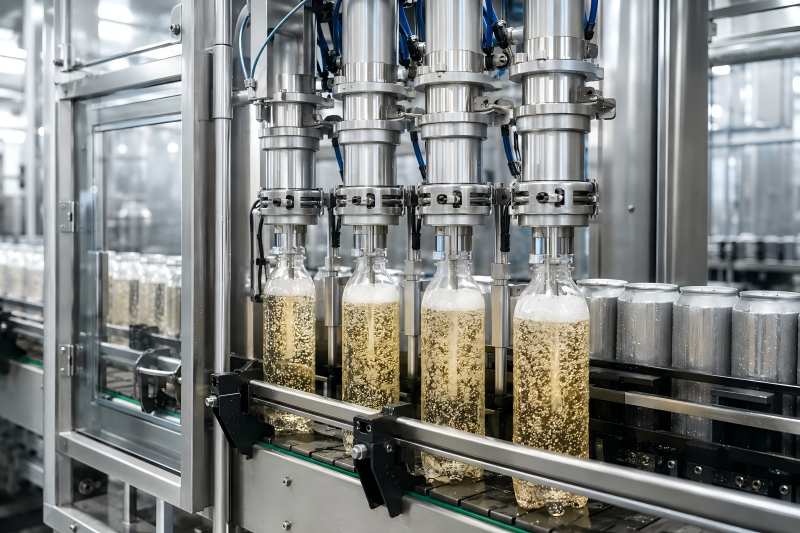
How Isobaric Filling Reduces Foam
Pre-Pressurizing the Container
The first key step is container pressurization. Before filling begins, the machine injects CO₂ or another suitable gas into the bottle or can. This increases the internal pressure of the empty container and makes it closer to the pressure inside the beverage tank.
This pressure balance is important because CO₂ escapes when the liquid moves from a high-pressure environment to a low-pressure environment. If the container is already pressurized, the beverage enters more calmly. There is less shock, less bubble formation, and less foam.
For beer and soft drinks, this step also helps reduce oxygen exposure. CO₂ flushing reduces air before filling, lowering oxygen exposure and improving flavor stability in sensitive beverages.
Maintaining Equal Pressure During Filling
After the container is pressurized, the filling valve opens. The beverage flows from the tank into the container while pressure remains controlled. This is the main difference between isobaric filling and ordinary filling.
Because the pressure in the container is close to the pressure in the product tank, dissolved CO₂ is less likely to break out of the liquid. The beverage does not suddenly expand or foam. This makes the filling process smoother and more stable.
Henry’s law helps explain this behavior. When the CO₂ pressure above the liquid remains high, more CO₂ stays dissolved in the beverage. When the pressure drops, the liquid cannot hold the same amount of CO₂, so gas escapes as bubbles.
Bottom-Up or Low-Turbulence Filling
Foam is also caused by turbulence. If liquid splashes, falls from a height, or hits the bottle wall too strongly, bubbles form more easily. Many isobaric filling machines use filling valves designed to guide the beverage gently into the container.
A smoother liquid path reduces agitation. The beverage enters with less impact, which helps prevent CO₂ from escaping. For high-speed production lines, this is very important because even small turbulence problems can become serious when thousands of bottles are filled per hour.
Good valve design helps control:
- Flow speed
- Liquid direction
- Pressure balance
- Venting rate
- Final fill level
A well-designed isobaric filling valve does not simply “pour” the drink. It manages pressure, gas displacement, and liquid flow at the same time.
Controlled Gas Venting
When liquid enters the container, the gas inside must go somewhere. If gas is released too quickly, pressure drops sharply and foam forms. If gas is vented too slowly, filling speed decreases.
Isobaric filling machines solve this problem with controlled venting. The machine releases gas gradually while the beverage fills the bottle or can. This keeps the pressure stable enough to prevent sudden CO₂ breakout, while still allowing the container to fill efficiently.
This stage plays a key role in foam control. Good venting control allows the machine to balance speed and product stability. Poor venting control can cause foam, underfilling, inconsistent levels, or excessive product loss.
How Isobaric Filling Reduces CO₂ Loss
Foam and CO₂ loss are closely connected. Foam is visible evidence that CO₂ is escaping from the drink. When foam overflows or collapses before capping, part of the carbonation has already been lost.
Isobaric filling reduces CO₂ loss in several ways.
First, it prevents sudden pressure drop. Since the container is pressurized before filling, the beverage remains in a more stable pressure environment.
Second, it reduces turbulence. Less agitation means fewer bubble nucleation points and less gas release.
Third, it enables faster sealing after filling. Many carbonated beverage lines are designed so that containers are capped or sealed quickly after filling. This helps trap the remaining CO₂ inside the package.
Fourth, it improves temperature control. Although the filling machine itself does not always chill the beverage, isobaric filling works best when combined with proper product cooling. Lower temperature helps CO₂ stay dissolved, reducing carbonation loss before, during, and after filling.
Main Causes of Foam and How Isobaric Filling Controls Them
| Cause of Foam | What Happens | Isobaric Filling Solution |
| Sudden pressure drop | CO₂ escapes rapidly from liquid | Pre-pressurizes the container |
| High beverage temperature | CO₂ becomes less soluble | Works with chilled product conditions |
| Turbulent liquid flow | Liquid agitation creates bubbles | Uses controlled, low-turbulence filling |
| Fast gas release | Pressure changes too quickly | Uses gradual gas venting |
| Delayed sealing | CO₂ escapes before closure | Supports fast capping or sealing |
| Poor valve design | Splashing and unstable flow occur | Uses dedicated carbonated beverage filling valves |
Why Temperature Still Matters
Even with a good isobaric filling machine, temperature control remains essential. Carbonated beverages should usually be filled at a controlled low temperature because cold liquid holds CO₂ better than warm liquid. When the beverage warms up, CO₂ solubility decreases, and the product becomes more likely to foam.
This is why carbonated beverage production lines often include cooling, carbonation, pressure storage, isobaric filling, and quick sealing as a connected process. The filling machine works as part of the complete production line. To achieve the best result, manufacturers must control the entire process from beverage preparation to final packaging.
For example, if a sparkling water line has poor temperature control before filling, the isobaric filler may still reduce foam compared with atmospheric filling, but the final result may not be ideal. The beverage may still foam, filling speed may need to be reduced, and CO₂ retention may be lower than expected.
Why CO₂ Loss Affects Product Quality
CO₂ is not only used to create bubbles. It also affects taste, aroma perception, mouthfeel, and product identity. A carbonated drink with insufficient CO₂ may taste flat, weak, or less refreshing. For beer, poor carbonation can affect foam head, aroma release, and drinking experience. For sparkling water, CO₂ level is directly linked to the sharpness and freshness of the product.
CO₂ loss can also create commercial problems. If carbonation varies from bottle to bottle, customers may receive inconsistent products. Some bottles may taste strong and sparkling, while others may taste flat. This damages brand trust and may increase complaints.
In addition, excessive foam during filling can cause direct product waste. Foam overflow means liquid loss. It can also contaminate the outside of bottles or cans, requiring extra rinsing and cleaning. In high-speed production, this can reduce efficiency and increase operating costs.
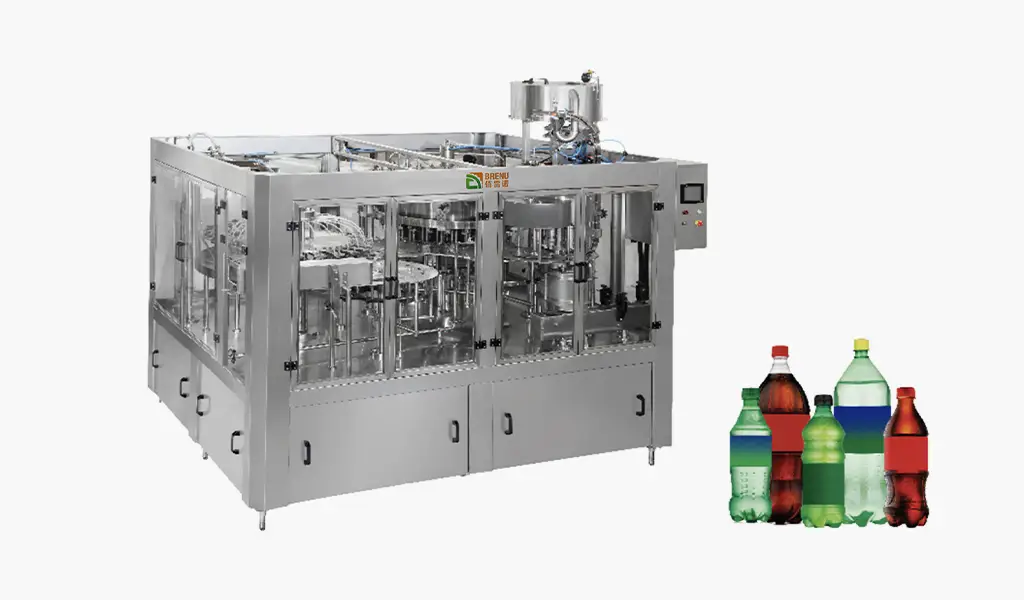
Key Machine Features That Help Reduce Foam
A well-designed isobaric filling machine should include several features for foam and CO₂ control.
Accurate Pressure Control
The system should maintain stable pressure in the product tank and container. Unstable pressure often leads to inconsistent foam control. High-quality pressure sensors, valves, and control systems help keep the process consistent.
CO₂ Flushing and Pressurization
CO₂ flushing helps remove air from containers and creates the pressure needed for carbonated filling. This is useful for both foam reduction and oxygen control.
Smooth Filling Valves
Filling valves should be designed for carbonated liquid. They need to guide the beverage smoothly into the container, reduce splashing, and manage gas return or venting.
Stable Product Tank Design
The beverage tank should maintain pressure and reduce internal turbulence. If the tank pressure changes frequently, filling performance may become unstable.
Fast and Reliable Sealing
After filling, bottles or cans should be sealed quickly. The longer the open container waits before sealing, the more CO₂ can escape.
Sanitary Construction
Food and beverage equipment should be easy to clean and sanitize. In the United States, 21 CFR Part 117 covers current good manufacturing practice and preventive controls for human food, including requirements related to sanitary operations and food-contact surfaces.
Important Parameters for Better Foam and CO₂ Control
| Parameter | Why It Matters | Practical Recommendation |
| Product temperature | Lower temperature improves CO₂ retention | Keep beverage consistently chilled before filling |
| Tank pressure | Stable pressure keeps CO₂ dissolved | Avoid large pressure fluctuations |
| Container pressurization | Prevents sudden pressure drop | Match container pressure with product tank pressure |
| Filling speed | Excessive speed can increase turbulence | Adjust speed based on beverage carbonation level |
| Venting control | Poor venting causes foam or slow filling | Use controlled gas release |
| Capping/sealing time | Open containers lose CO₂ | Seal immediately after filling |
| Valve cleanliness | Dirty valves affect flow and hygiene | Clean and sanitize regularly |
Common Beverages That Benefit from Isobaric Filling
Carbonated Soft Drinks
Soft drinks often contain high levels of dissolved CO₂. If filled under atmospheric pressure, they foam heavily and lose carbonation quickly. Isobaric filling helps maintain consistent carbonation, fill level, and package appearance.
Sparkling Water
Sparkling water depends almost entirely on CO₂ for its sensory character. Even small CO₂ losses can make the product taste less crisp. Isobaric filling helps protect the clean, sharp mouthfeel expected from sparkling water.
Beer
Beer is highly sensitive to oxygen and foam behavior. Counter-pressure filling helps reduce carbonation loss and can also support oxygen reduction when combined with CO₂ purging. This is important for flavor stability and shelf life.
Kombucha
Carbonated kombucha can be difficult to fill because it may foam easily, especially if fermentation and carbonation are not tightly controlled. Isobaric filling can improve stability, but manufacturers still need good temperature and pressure management.
Sparkling Juice and Functional Drinks
Some fruit-based or functional beverages contain sugars, proteins, fibers, or natural ingredients that can influence foam behavior. For these products, isobaric filling helps, but recipe design and filtration may also affect filling performance.
How to Improve Isobaric Filling Performance
To get the best result from an isobaric filling machine, beverage manufacturers should not focus only on the machine itself. They should optimize the full production process.
First, maintain consistent beverage temperature before filling. A stable cold product is easier to fill and less likely to foam.
Second, check carbonation level before production. If CO₂ content is too high for the selected bottle, temperature, and pressure settings, foaming may still happen.
Third, keep tank pressure stable. Pressure instability can create inconsistent filling results.
Fourth, choose the correct filling valve for the beverage type. Beer, soda, sparkling water, and kombucha may require different valve settings or filling speeds.
Fifth, reduce unnecessary product agitation. Pumps, pipes, elbows, and transfer points should be designed to avoid excessive turbulence.
Sixth, ensure fast capping or sealing. A good filling process can still lose CO₂ if the container remains open for too long.
Finally, clean and maintain the machine regularly. Dirty valves, worn seals, or unstable sensors can cause foam, leakage, inaccurate filling, and hygiene risks.