
Choosing the right bottled water size is one of the most strategic decisions you can make when setting up or scaling a production line. Bottle capacity directly affects your target market, packaging design, filling equipment configuration, logistics costs, regulatory compliance, and ultimately your profit margins.
Why Bottle Size Matters in Bottled Water Production
From the production side, changing bottle size also changes the way a bottling line operates.
A 330 ml bottle and a 1.5 L bottle may both run on the same filling platform when the machine is designed for flexible changeovers, but they do not necessarily run at the same speed. Larger bottles need longer filling times and require more stable conveying and handling.
Bottle size can influence:
- Filling volume and filling time
- Bottle blowing molds
- Bottle neck and cap specifications
- Conveyor guides and bottle handling
- Label dimensions
- Shrink wrapping or carton configuration
- Pallet arrangement
- Production capacity in bottles per hour
This is why selecting bottle capacity should be part of the complete factory planning process.
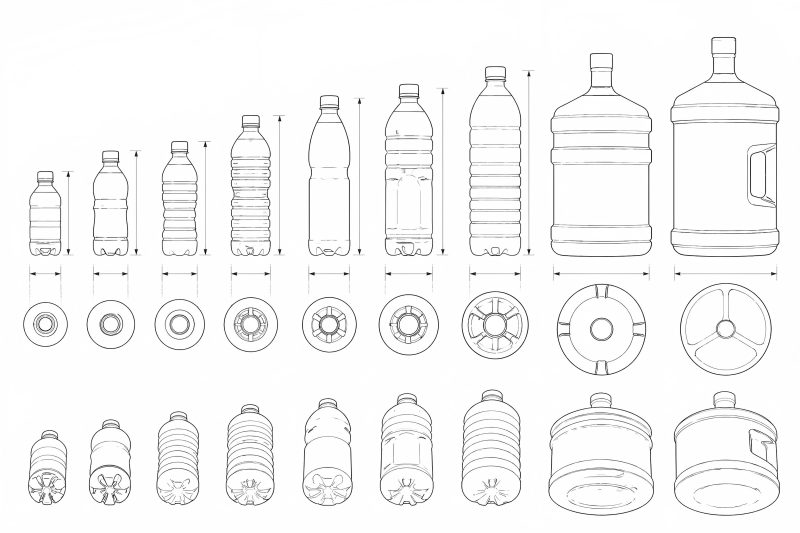
Different Countries and Their Measurement Systems
One critical factor often overlooked in bottled water production is regional measurement standards. Different countries use different units, which directly influence labeling, packaging, and consumer perception.
Market Positioning
- Small bottles (200ml–350ml): Premium, convenience-focused, often used in airlines, hotels, and events
- Medium bottles (500ml–750ml): Everyday personal use, retail-friendly
- Large bottles (1L–2L): Family consumption and cost efficiency
- Bulk bottles (3L–5 gallon): Office and home dispensers
Metric vs Imperial Systems
- Most countries use the metric system (milliliters/liters)
- The United States often uses fluid ounces (fl oz)alongside metric units
Common Bottle Size Units by Country
| Country/Region | Measurement System | Common Bottle Sizes |
| United States | Fluid ounces + ml | 8 oz, 12 oz, 16.9 oz (500 ml), 1 gallon |
| Europe | Metric (ml/L) | 330 ml, 500 ml, 1 L, 1.5 L |
| China | Metric (ml/L) | 350 ml, 500 ml, 550 ml, 1.5 L |
| Japan | Metric (ml/L) | 280 ml, 500 ml, 2 L |
| Middle East | Metric (ml/L) | 200 ml, 330 ml, 500 ml, 1.5 L |
| Australia | Metric (ml/L) | 600 ml, 1 L, 1.5 L |
Common Bottled Water Sizes
Bottled water comes in a wide range of sizes designed to meet different consumption habits and usage scenarios. Below are the most common categories:
Small Single-Serve Bottles (200 ml – 350 ml)
Small water bottles are commonly selected when portability and portion control are more important than maximum volume.
Typical markets include:
- Hotels and hospitality
- Airlines
- Conferences and events
- Promotional products
- Schools and children’s products
- Premium single-serving water
Because more bottles, caps and labels are needed to package the same total volume of water, small bottles usually create more packaging operations per liter.
On a high-speed production line, however, their compact size makes them well suited to continuous rotary filling and automated secondary packaging.
| Pros | Cons |
| Lightweight and portable | Lower profit margin per unit |
| Attractive for impulse purchases | Higher packaging-to-product ratio |
| Lower price point |
Standard Single-Serve Bottles (500 ml – 600 ml)
For many bottled water manufacturers, this is one of the most important production ranges.
500 ml and similar bottle sizes are suitable for supermarkets, convenience stores, vending machines, sports facilities and everyday personal consumption. They balance easy portability with enough water for daily hydration.
From a production perspective, this range is also particularly suitable for high-speed automatic bottling.
A complete line may include:
Bottle blowing → Air conveying → Rinsing → Filling → Capping → Labeling → Coding → Shrink wrapping or carton packing → Palletizing
For manufacturers expecting large retail orders, designing the main line around a standard 500 ml SKU can simplify production and improve equipment utilization.
Medium Bottles (1 L – 1.5 L)
1 L and 1.5 L bottles move bottled water toward home and shared consumption while remaining manageable for individual handling.
They are frequently used for:
- Household drinking water
- Office consumption
- Restaurants
- Supermarket sales
- Travel
Compared with smaller bottles, fewer containers, labels and caps are required for the same volume of packaged water.
However, the increased filling volume means the number of bottles produced per hour will normally decrease compared with smaller bottles on an otherwise comparable machine configuration.
Family Size Bottles (2 L – 5 L)
Larger PET bottles are more focused on home consumption and value per liter.
Their larger capacity reduces the number of individual packages required, but they also introduce new equipment considerations.
Bottle stability becomes more important during conveying. Bottle strength, handle design where applicable, filling control and downstream packing also need to be considered.
A machine optimized only for small bottles may therefore not be the best option for producers whose core business is 2 L, 3 L or 5 L bottled water.
| Pros | Cons |
| Cost-efficient | Heavier and less portable |
| Reduced packaging waste per liter | Require stronger bottle materials |
Large Bulk Containers (10 L – 20 L and above)
Large containers belong to a different production category.
10 L, 18.9 L and 20 L containers are commonly associated with homes, offices and water dispensers. Reusable containers also introduce washing and sanitizing requirements before refilling.
Their production line therefore differs significantly from a conventional small PET bottled water line.
Instead of simply increasing the filling volume of a standard machine, manufacturers normally need a dedicated large-container washing, filling and capping solution.
| Pros | Cons |
| Lowest cost per liter | Requires specialized handling and logistics |
| Refillable options available | Needs robust cleaning and sterilization systems |
Factors to Consider When Choosing Bottle Sizes
Selecting the right bottle capacity requires balancing market demand, production capabilities, and cost considerations.
Target Market and Consumer Behavior
Different markets prefer different sizes:
- Urban consumers: smaller, portable bottles
- Rural or family households: larger bottles
Understanding your audience is key to making the right choice.
Distribution Channels
Your sales channels influence bottle size selection:
- Vending machines → small to medium bottles
- Supermarkets → all sizes
- Online delivery → larger bottles
Production Line Compatibility
Not all production lines can handle every bottle size efficiently.
Key considerations:
- Filling valve design
- Conveyor width
- Bottle stability during transport
- Changeover time between sizes
Frequent size changes can reduce productivity.
Packaging Material Strength
Larger bottles require:
- Thicker PET material
- Reinforced structure
Smaller bottles allow lighter packaging but may increase waste.
Storage and Logistics
Bottle size impacts:
- Pallet configuration
- Transportation cost
- Warehouse space
For example:
- Small bottles → more units, higher handling complexity
- Large bottles → fewer units, heavier loads
Matching Bottle Size with Production Line Type
When selecting bottle sizes for your production line, one of the most critical considerations is how well those capacities align with your filling machine type. Different machines are engineered with specific structural designs, speed capabilities, and flexibility levels, which directly determine the range of bottle sizes they can handle efficiently.
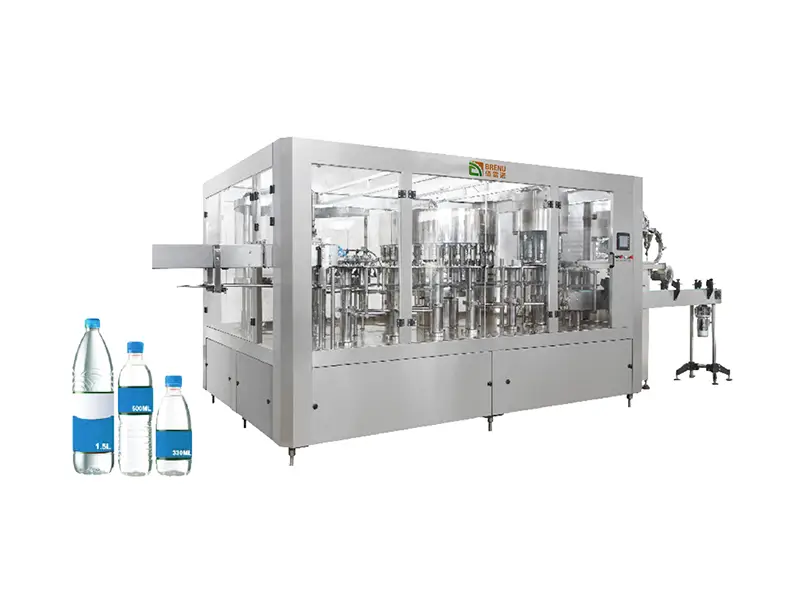
3 in 1 Rotary Filling Machines (Best for 300 ml – 2 L, High-Speed Lines)
For conventional PET bottled water production, a 3-in-1 filling machine combines bottle rinsing, water filling and capping in one rotary monoblock.
It is particularly suitable for standard small and medium bottle production where high throughput and continuous operation are important.
A typical application range may include:
- 300 ml
- 500 ml
- 600 ml
- 1 L
- 1.5 L
- Up to approximately 2 L depending on machine configuration
The 500 ml–1.5 L range is especially common for rotary bottled water production.
For a manufacturer producing thousands or tens of thousands of bottles per hour, integrating rinsing, filling and capping into one machine reduces bottle transfers between separate processing stages and makes the overall line more compact.
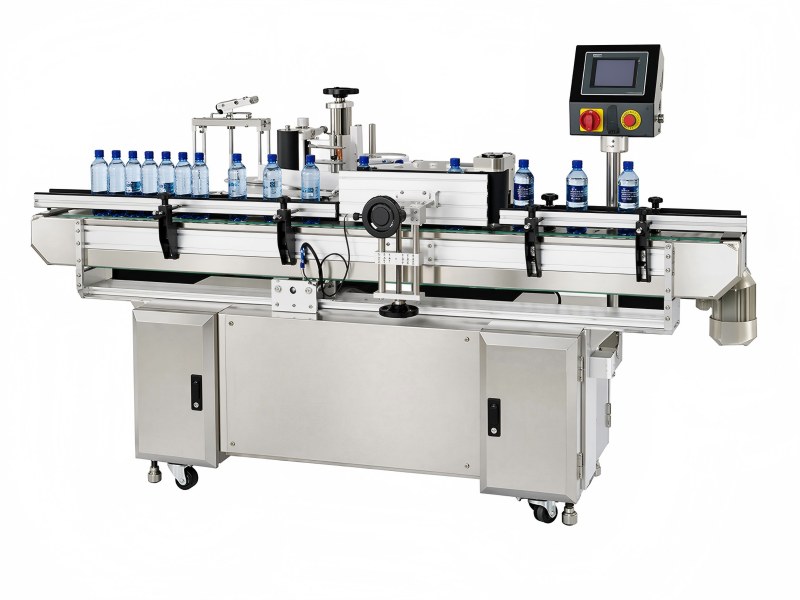
Linear Filling Machines (Best for 500 ml – 5 L and Flexible Sizes)
Linear filling systems provide greater flexibility for manufacturers whose production includes larger containers or frequently changing bottle formats.
They can be suitable for:
- 500 ml–1.5 L
- 2 L
- 3 L
- 5 L
- Custom container formats
Compared with a rotary high-speed line, a linear system normally focuses more on flexibility than maximum bottles-per-hour output.
This makes it useful for smaller plants or businesses producing multiple products in relatively short production runs.
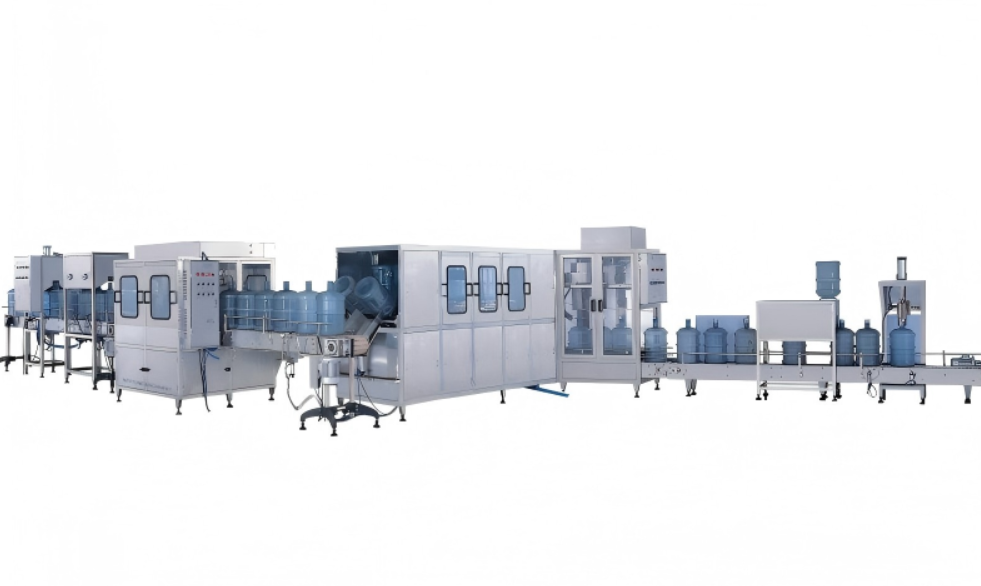
Large-Container Filling Systems (Best for 5 L – 20 L+)
Once bottle capacity increases toward 10 L, 18.9 L or 20 L, container handling changes substantially.
These bottles are heavier and are often reused, which creates additional washing and sanitizing processes.
Dedicated equipment is therefore normally used for:
- Container washing
- Internal cleaning
- Sanitizing
- Filling
- Capping
- Heavy-container conveying
Trying to process these containers on a standard 500 ml PET bottling line is generally not practical.
How Bottle Size Impacts Production Cost
When planning a bottled water production line, bottle size is not just a marketing decision—it directly affects your cost structure across materials, operations, logistics, and overall profitability. Instead of breaking this into too many sections, let’s focus on the core cost drivers influenced by bottle capacity.
Packaging Material Cost (Most Direct Impact)
Bottle size significantly affects how much packaging material you use—and more importantly, how efficient that usage is.
Small bottles (200 ml – 350 ml):
- Require less plastic per unit, but more plastic per liter of water
- Higher cost-to-volume ratio
- More caps and labels per liter
Medium bottles (500 ml – 1.5 L):
- Best balance between material usage and product volume
- Widely optimized in the industry → lowest cost per unit efficiency
Large bottles (2 L – 5 L):
- Use more plastic per bottle but less per liter
- Require thicker walls → slightly higher raw material cost per unit
Bulk containers (18.9 L / 5-gallon):
- Highest efficiency per liter
- Often reusable → dramatically reduces long-term packaging cost
Production Efficiency and Machine Cost
Bottle size directly affects how efficiently your filling line operates.
Small bottles:
- Higher output (more bottles per hour)
- But more handling steps (capping, labeling, conveying)
- Increased wear on components
Large bottles:
- Slower filling speeds
- Heavier loads → more mechanical stress
- May require different machines or configurations
Multiple sizes on one line:
- Frequent changeovers increase downtime
- Labor and adjustment costs rise
Transportation and Logistics Cost
Bottle size has a major impact on how efficiently you can store and transport products.
Small bottles:
- More units per shipment
- Higher handling and packaging complexity
- More cartons, shrink wrap, and palletization
Medium bottles:
- Balanced pallet efficiency
- Easier stacking and transport
Large bottles:
- Fewer units per pallet
- Heavier loads → higher transportation cost per unit
- But lower cost per liter
Storage and Warehouse Cost
Bottle size determines how efficiently you use storage space.
Small bottles:
- Require more warehouse space for the same volume of water
- Higher inventory management complexity
Large bottles:
- More space-efficient per liter
- Easier inventory tracking
Regulatory and Labeling Considerations
When selecting bottled water sizes for your production line, regulatory and labeling requirements are just as important as technical and market considerations.
Although regulations vary by country, most regions share a set of core labeling requirements:
- Net Content Declaration
Clearly state the volume (e.g., 500 ml, 16.9 fl oz) - Product Name
Example: “Drinking Water,” “Mineral Water,” or “Purified Water” - Manufacturer/Distributor Information
Company name, address, and contact details - Country of Origin
Especially important for exports - Batch/Lot Number
For traceability in case of recalls - Production Date & Expiry Date
Shelf life varies by packaging type - Ingredients / Mineral Composition(if applicable)
Required for mineral or enhanced water
Regional Regulatory Differences
Below is a comparison of labeling requirements across major markets:
| Region | Measurement Units | Key Requirements | Special Notes |
| United States | fl oz + ml | FDA compliance, nutrition info (if added ingredients) | Dual units often required |
| European Union | ml / L | EFSA standards, strict mineral labeling | Must follow EU food labeling law |
| China | ml / L | GB standards, Chinese language required | Label registration often needed |
| Japan | ml / L | Food Sanitation Act compliance | Precise labeling rules |
| Middle East | ml / L | Halal certification (in some countries) | Arabic labeling required |
| Australia | ml / L | FSANZ regulations | Clear volume declaration mandatory |
Selecting the right bottled water size is a multi-dimensional decision that involves market demand, production capability, cost efficiency, and regulatory compliance. A reliable filling machine manufacturer can help optimize equipment compatibility. There is no one-size-fits-all solution—successful producers often offer a range of bottle sizes for different use cases and customer segments.