
The bottled water industry continues to expand globally due to increasing concerns over drinking water quality, urbanization, and rising health awareness. Establishing a bottled water plant is not only a profitable venture but also a strategic investment in a fast-growing market.
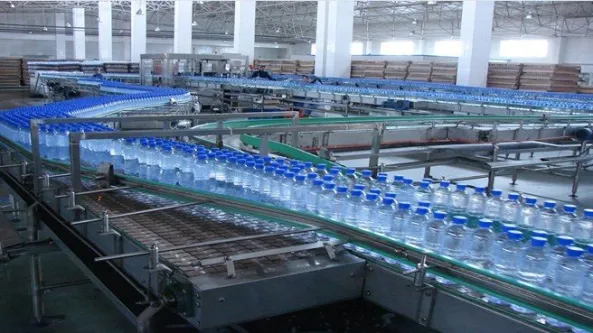
Benefits of Establishing a Bottled Water Plant
Starting a bottled water production business offers several advantages:
Growing Market Demand
The global demand for safe drinking water is rising rapidly due to pollution and limited access to clean water. Bottled water has become a staple product in everyday consumption.
High Profit Margins
Water is a low-cost raw material, but bottled water can be sold at a significant markup due to branding, packaging, and convenience.
Scalable Business Model
A bottled water plant can start small and expand gradually by increasing production capacity and automation levels.
Diverse Product Opportunities
Manufacturers can diversify into:
- Mineral water
- Alkaline water
- Flavored water
- Sparkling water
Low Raw Material Risk
Unlike food processing industries, bottled water production has fewer supply chain risks since the primary input is water.
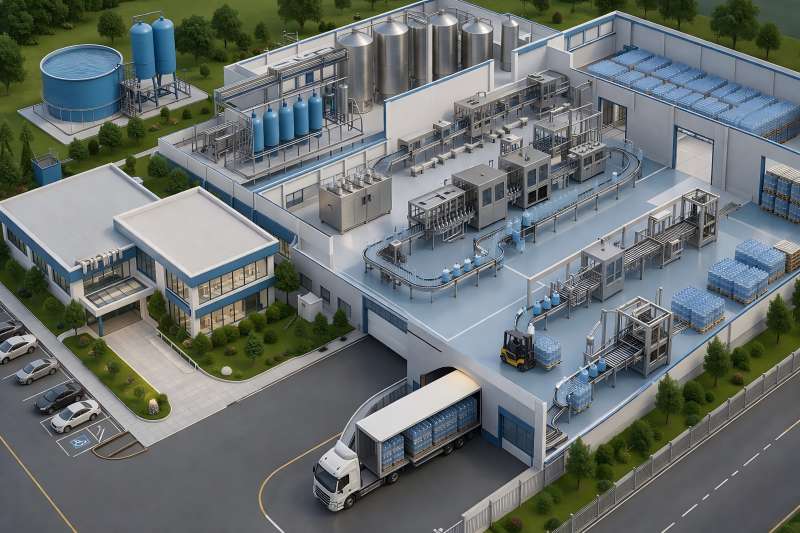
Bottled Water Plant Key Factors
Using Mexico as an example, establishing a bottled water plant requires significant upfront investment, but strong demand for safe drinking water offers high long-term returns if key cost and operational factors are carefully evaluated.
Location and Land
Selecting the right location is critical. The plant should be situated close to a reliable water source, such as groundwater wells or municipal supply, while also considering proximity to major transportation routes and urban markets. Access to highways and logistics networks reduces distribution costs.
Adhering to local zoning regulations and securing land-use permits is crucial. Industrial zones in states like Nuevo León, Jalisco, and Estado de México often provide better infrastructure and incentives.
Plant Size and Production Capacity
The planned production capacity determines the scale of machinery, infrastructure, and total investment. The facility size should match local demand and anticipated future expansion. For example:
- Small-scale: local distribution
- Medium-scale: regional supply
- Large-scale: nationwide or export markets
Overestimating capacity can lead to underutilized assets, while underestimating may limit growth opportunities.
Infrastructure and Utilities
Consistent utilities are vital for uninterrupted bottled water production, requiring reliable access to:
- Electricity (for machinery and automation systems)
- Water supply (raw water source)
- Wastewater treatment systems
Mexico’s industrial parks often offer ready-to-use infrastructure, which can significantly reduce setup time and cost. Sustainability measures like water recycling are increasingly promoted.
Machinery and Technology
The choice of equipment directly impacts both initial investment and long-term efficiency. A typical bottled water production line includes:
- Water treatment system (RO, UV, ozone)
- Bottle blowing machine
- Filling and capping machine
- Labeling and packaging systems
Investing in modern, energy-efficient equipment improves productivity and reduces operational costs. Automation level should be selected based on budget and production goals.
Raw Material Supply
Stable access to raw materials is crucial for uninterrupted production. These include:
- PET preforms (for bottle production)
- Caps and labels
- Packaging materials (shrink film, cartons)
Mexico has a well-developed plastics and packaging industry, which helps ensure consistent supply and competitive pricing.
Skilled Labor
Hiring trained personnel for production, quality control, and maintenance is essential. Mexico offers a strong industrial workforce, particularly in manufacturing hubs. Provide staff training to ensure efficient operations and adherence to hygiene standards.
Regulatory Compliance
Compliance with Mexican regulations is mandatory. Key requirements include:
- Health and sanitation standards (COFEPRIS certification)
- Water extraction permits (CONAGUA)
- Environmental regulations
Adhering to these regulations ensures legal operation and builds consumer trust.
Technology Adoption and Training
Adopting advanced automation and digital monitoring systems improves efficiency and product consistency. Providing continuous training for employees ensures optimal equipment utilization and reduces downtime.
Environmental Responsibility
Sustainability is becoming increasingly important in Mexico. Companies should consider:
- Minimizing plastic consumption
- Adopting recycling and reuse systems
- Utilizing energy-efficient equipment
Sustainable practices help lower environmental impact while strengthening brand reputation and consumer trust.
Market Penetration and Distribution
A strong marketing and distribution strategy is essential for success. Key considerations include:
- Building partnerships with distributors and retailers
- Supplying supermarkets, convenience stores, and restaurants
- Developing brand positioning (premium vs. budget)
Mexico’s large urban population provides strong demand, but competition is also high.
Working Capital Management
Adequate working capital is necessary to sustain daily operations, including:
- Raw material purchases
- Labor costs
- Utility bills
- Logistics expenses
Maintaining healthy cash flow ensures uninterrupted production.
Expert Consultation
Engaging industry experts, engineers, and legal advisors can streamline plant setup and regulatory compliance. Consulting firms can also assist with feasibility studies and equipment selection.
Financing and Incentives
Investors should explore financing options such as:
- Bank loans
- Government-supported industrial programs
- Investment incentives in special economic zones
Mexico offers various incentives for manufacturing and export-oriented businesses: IMMEX project, PROSEC
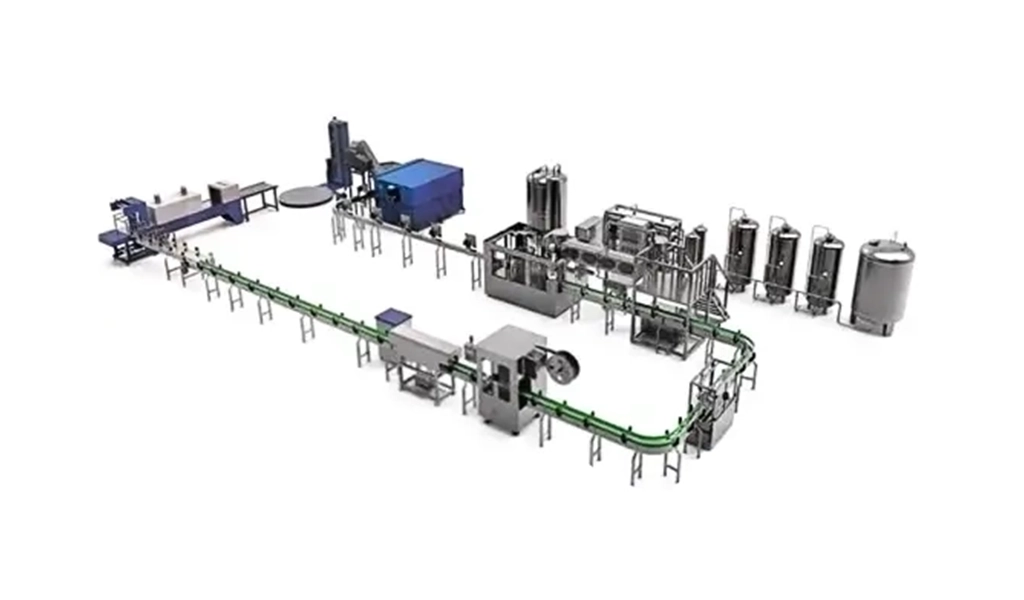
Small Bottled Water Plant Investment (Manual/Linear Line)
A small-scale bottled water plant is ideal for startups and local markets.
Investment Overview
- Total investment: $50,000 – $200,000
- Equipment cost: $30,000 – $175,000
- Capacity: 1,000–2,000 bottles/hour
Equipment List (Linear Production Line)
| Equipment | Function | Estimated Cost (USD) |
| Water Treatment System (RO + UV) | Purify water | $10,000 – $30,000 |
| Bottle Blowing Machine | Produce PET bottles | $8,000 – $20,000 |
| Manual/Small Filling Machine | Fill bottles | $2,000 – $10,000 |
| Capping Machine | Seal bottles | $1,500 – $5,000 |
| Labeling Machine | Apply labels | $2,000 – $6,000 |
| Packaging Machine | Wrap bottles | $3,000 – $10,000 |
| Storage Tanks & Pumps | Water storage | $3,000 – $8,000 |
Other Costs
| Item | Estimated Cost |
| Labor (5–10 workers) | $2,000 – $5,000/month |
| Factory Rent | $1,000 – $3,000/month |
| Utilities | $500 – $2,000/month |
| Licensing & Certification | $2,000 – $5,000 |
Key Features
- Low initial investment
- Manual operations
- Suitable for rural or niche markets
- Slower production speed
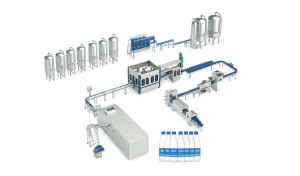
Medium Bottled Water Plant Investment (Semi-Automatic Linear Line)
Medium-sized plants target urban markets and higher production demand.
Investment Overview
- Total investment: $200,000 – $500,000
- Capacity: 3,000–8,000 bottles/hour
Equipment List
| Equipment | Function | Estimated Cost |
| Advanced Water Treatment System | Multi-stage purification | $30,000 – $100,000 |
| Semi-Automatic Bottle Blowing Machine | Bottle production | $20,000 – $50,000 |
| Semi-Automatic Filling Line | Filling & capping | $30,000 – $80,000 |
| Conveyor System | Bottle transport | $10,000 – $30,000 |
| Labeling Machine | Automatic labeling | $10,000 – $25,000 |
| Shrink Wrapping Machine | Packaging | $10,000 – $20,000 |
| Quality Control Equipment | Testing systems | $5,000 – $15,000 |
Other Costs
| Item | Estimated Cost |
| Labor (15–30 workers) | $5,000 – $15,000/month |
| Factory Setup | $50,000 – $150,000 |
| Utilities | $2,000 – $8,000/month |
| Distribution & Logistics | $5,000+ |
Key Features
- Balanced automation and cost
- Higher efficiency than small plants
- Moderate labor dependency
- Suitable for regional distribution
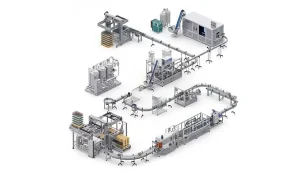
Large Bottled Water Plant Investment (Fully Automatic 3-in-1 Filling System)
Large-scale plants are designed for industrial production and national distribution.
Investment Overview
- Total investment: $500,000 – $1,500,000+
- Equipment alone: $200,000 – $500,000+
- Capacity: 10,000–30,000+ bottles/hour
Equipment List (3-in-1 Monoblock System)
| Equipment | Function | Estimated Cost |
| High-Capacity Water Treatment System | Industrial purification | $100,000 – $300,000 |
| Fully Automatic Bottle Blowing Machine | High-speed bottle production | $80,000 – $200,000 |
| 3-in-1 Monoblock Filling Machine | Rinsing + filling + capping | $100,000 – $300,000 |
| Automated Conveyor System | Fully integrated transport | $30,000 – $80,000 |
| Automatic Labeling Machine | High-speed labeling | $20,000 – $60,000 |
| Automatic Packaging System | Carton/shrink packing | $30,000 – $100,000 |
| Palletizing System | Automated stacking | $50,000 – $150,000 |
Other Costs
| Item | Estimated Cost |
| Labor (20–50 workers) | $10,000 – $30,000/month |
| Factory Construction | $300,000 – $1,000,000 |
| Utilities | $10,000 – $50,000/month |
| Marketing & Distribution | $20,000+ |
Key Features
- Fully automated production
- High efficiency and consistency
- Reduced labor dependency
- Suitable for large-scale brands
ROI of a Bottled Water Plant
To evaluate the profitability of establishing a bottled water plant, it is essential to calculate the Return on Investment (ROI). ROI measures how efficiently your capital investment generates profit by comparing the annual net profit with the total initial investment.
Below is a step-by-step guide to calculating ROI for a bottled water production facility.
Step 1: Collect Key Financial Data
Before calculating ROI, you need to gather the following essential financial parameters:
Total Investment (Initial Capital)
This represents the total cost required to establish the bottled water plant, including:
- Equipment cost (water treatment system, filling line, packaging system, etc.)
- Land and factory construction costs
- Installation and setup expenses
- Working capital (raw materials, labor, utilities, packaging materials, etc.)
Annual Production Capacity
The total number of bottled water units produced per year.
Example:
- 10,000 bottles/day × 300 working days = 3,000,000 bottles/year
Selling Price per Bottle
The market price at which each bottle of water is sold.
Example:
- $0.20 per bottle (varies by region, brand, and bottle size)
Profit Margin
The proportion of earnings remaining after all operating expenses are deducted. Example:
- 20% = 0.2
- 30% = 0.3
Operating Costs
All recurring expenses required to run the plant, including:
- Raw water treatment and chemicals
- Bottle preforms, caps, and labels
- Labor costs
- Electricity and water consumption
- Maintenance and repairs
- Transportation and logistics
Step 2: Calculate Annual Revenue
The formula for annual revenue is:
Annual Revenue = Annual Production × Selling Price per Bottle
Example:
Annual Revenue = 3,000,000 × $0.20 = $600,000
Step 3: Calculate Annual Net Profit
Net profit is the income remaining after expenses, calculated using either method.
Operating Cost Method
Annual Net Profit = Annual Revenue − Operating Costs
Profit Margin Method
Annual Net Profit = Annual Revenue × Profit Margin
Step 4: ROI
ROI reflects the profitability of your investment relative to its cost.
ROI(%)=(Annual Net Profit/Total Investment)×100
Step 5: Calculate Payback Period
The payback period reflects how quickly the initial investment is recovered.
Payback Period (years) = Total Investment ÷ Annual Net Profit
Example Calculation (Bottled Water Plant)
Assume the following scenario:
- Total Investment: $500,000
- Annual Production: 3,000,000 bottles
- Selling Price per Bottle: $0.25
- Profit Margin: 30% (0.3)
- Operating Costs: $525,000
Step 1: Calculate Annual Revenue
Annual Revenue = 3,000,000 × $0.25 = $750,000
Step 2: Compute Annual Net Profit
Using profit margin method:
Annual Net Profit = $750,000 × 0.3 = $225,000
Step 3: Calculate ROI
ROI = ($225,000 ÷ $500,000) × 100 = 45%
Step 4: Calculate Payback Period
Payback Period = $500,000 ÷ $225,000 = 2.22 years
Interpretation
ROI Analysis
An ROI of 45% means that for every $1 invested in the bottled water plant, the business generates $0.45 in annual profit. This indicates a highly attractive investment opportunity, especially in regions with strong demand for bottled drinking water.
Payback Period Analysis
A payback period of approximately 2.2 years suggests that the initial investment can be recovered relatively quickly, making the project financially viable.
Key Factors Affecting ROI
The actual ROI of a bottled water plant depends on several variables:
Production Efficiency
Higher machine efficiency reduces waste and increases output.
Cost Control
Managing packaging costs (bottles, caps, labels) is crucial, as they represent a large portion of total expenses.
Market Pricing Strategy
Premium branding can significantly increase selling price and margins.
Distribution Network
Efficient logistics and strong distribution channels improve sales volume.
Automation Level
Automation minimizes labor requirements while ensuring consistent production quality, ultimately enhancing long-term profitability.
Calculating ROI is essential before investing in a bottled water plant. By analyzing investment cost, production capacity, pricing, and operating expenses, investors can estimate profitability and financial risk.
In most cases:
- Small plants achieve ROI within 1–2 years
- Medium plants within 2–3 years
- Large plants within 3–5 years
With proper planning, cost control, and market positioning, a bottled water plant can deliver stable, long-term returns and strong profitability.