
Yes, one filling machine can handle different carbonated beverages, but it must be a properly designed isobaric filling machine with adjustable pressure, reliable anti-foam filling valves, good cleaning capability, and suitable bottle changeover design. It works best when the beverages share similar carbonation levels, bottle formats, and hygiene requirements.
Different Carbonated Beverages Have Different Filling Challenges
Carbonated beverages may look similar because they all contain dissolved CO₂, but they behave very differently during filling. Carbonated water is usually clean, low-viscosity, and low-foam. A sugar soda may be more sticky and more sensitive to residue buildup. Sparkling juice can create more foam because of acids, flavors, sweeteners, or fruit ingredients. Beer or low-alcohol drinks may need stricter oxygen control and sanitation.
The filling machine must manage several things at the same time:
- Keep CO₂ inside the liquid
- Reduce foam during filling
- Control filling volume accurately
- Protect flavor and appearance
- Prevent contamination
- Support fast container changeover
- Keep the machine easy to clean
From a practical point of view, a filling machine is not judged only by whether it can fill the liquid once. It should be judged by whether it can fill different beverages continuously, cleanly, accurately, and with low product loss.
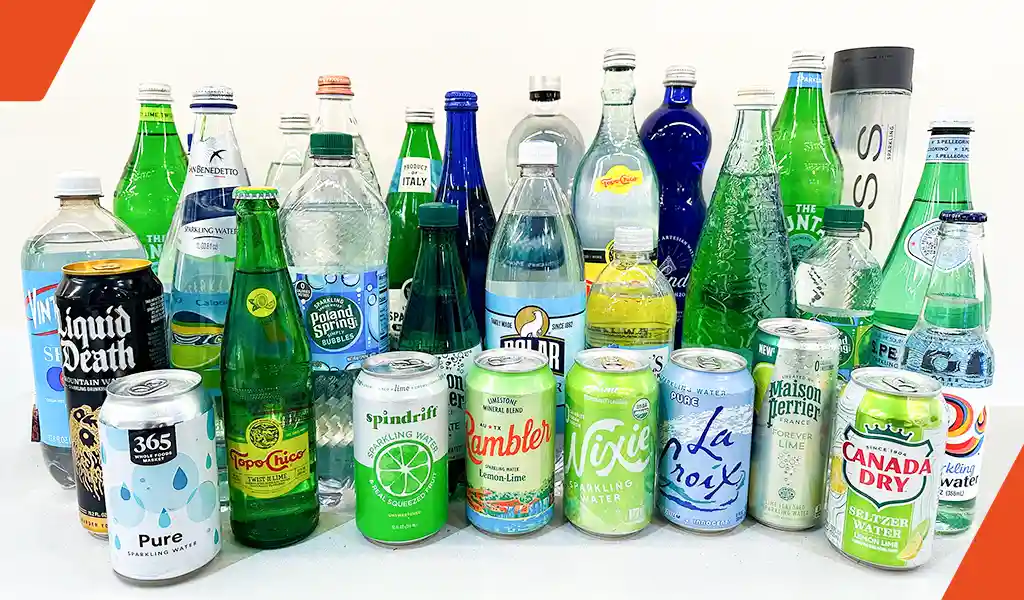
Typical Beverage Differences and Filling Requirements
The table below uses practical estimated ranges to show how different carbonated beverages may affect machine selection. These ranges are for reference, showing why flexible machine design is important.
| Beverage Type | Typical CO₂ Level | Foam Risk | Filling Difficulty | Key Machine Requirement |
| Sparkling water | 3.5–5.5 g/L | Low | Low | Stable pressure and clean filling path |
| Flavored sparkling water | 3.0–5.0 g/L | Low to medium | Medium | Good flavor changeover and CIP cleaning |
| Carbonated soft drink | 4.0–7.0 g/L | Medium | Medium | Accurate pressure balance and anti-foam filling |
| Sparkling juice drink | 3.0–6.0 g/L | Medium to high | Medium to high | Foam control and better cleaning design |
| Energy drink with CO₂ | 3.5–6.5 g/L | Medium | Medium | Corrosion-resistant contact parts and stable dosing |
| Low-alcohol carbonated drink | 3.0–5.5 g/L | Medium to high | High | Better oxygen control and hygiene |
| Beer-style beverage | 4.0–6.0 g/L | High | High | Low oxygen pickup and precise pressure control |
This table shows why one filling machine may handle several beverages in theory, but the actual result depends on the machine configuration.
Isobaric Filling Is Usually the Better Choice
For carbonated beverages, isobaric filling is usually more suitable than gravity filling. Isobaric filling, also called counter-pressure filling, balances the pressure between the bottle and the product tank before filling. This helps keep CO₂ dissolved in the liquid and reduces foam.
In my opinion, if a factory plans to produce more than one type of carbonated drink, choosing an isobaric filling machine from the beginning is safer than buying a very basic machine and modifying it later. Carbonated products are sensitive. Once foaming, CO₂ loss, or unstable filling volume becomes a daily problem, the cost of downtime and rejected bottles can be higher than the original machine price difference.
A flexible isobaric filler should have:
- Adjustable filling pressure
- Stable CO₂ pressurization
- Anti-foam filling valves
- Product tank pressure control
- Bottle lifting or sealing structure
- CIP-compatible piping
- Recipe memory for different beverages
- Easy adjustment for bottle height and diameter
One Machine Can Handle Different Drinks, But Not Without Limits
A single filling machine can handle different carbonated beverages when the products are within a similar technical range. For example, carbonated water, lemon soda, cola-style drinks, and flavored sparkling water can often share one machine if the bottle type and production speed are similar.
However, problems appear when the product range becomes too wide. A filler suited for PET sparkling water may not perform well with glass bottled beer. A machine used for clear soda may need extra cleaning support before switching to juice-based carbonated drinks. A line designed for 500ml bottles may need mechanical change parts when switching to 1.5L bottles.
The machine can be flexible, but it cannot ignore physics. CO₂ reacts to pressure, temperature, filling speed, and turbulence. Ingredients also change the filling behavior. More sugar, protein, juice, or flavoring can increase foaming and cleaning difficulty.
Main Factors That Decide Machine Compatibility
1. Carbonation Level
Higher carbonation usually requires better pressure control. If the product has a high CO₂ level, the filling process must avoid sudden pressure drops. This can cause fast foaming, unstable fills, and higher product loss.
A machine with a narrow pressure adjustment range may only work for one type of beverage. A more flexible machine should allow operators to adjust pressure according to each recipe.
2. Product Temperature
Cold beverages hold CO₂ better than warm beverages. In actual production, a few degrees of temperature difference can affect foaming. For example, a soda filled at 4°C is usually easier to control than the same soda filled at 12°C.
For factories producing multiple drinks, the cooling system should be considered together with the filler. A good beverage filling machine cannot fully solve problems caused by poor product temperature control.
3. Foam Behavior
Foam does not only come from CO₂. Sweeteners, acids, proteins, juice extracts, and certain flavors can make foam more difficult to control. Two beverages with the same CO₂ level may behave very differently during filling.
In my view, foam behavior is one of the most underestimated factors when buyers choose a carbonated beverage filling machine. Many buyers only ask about speed, bottle size, and price. They should also ask how the machine handles products that foam easily.
4. Bottle Type and Size
One machine may fill different beverages, but container compatibility is another issue. PET bottles, glass bottles, aluminum cans, and different neck finishes require different handling structures.
If all products use the same bottle shape, changeover is easier. If the factory uses many bottle sizes, the machine should support fast adjustment or modular change parts.
5. Cleaning Requirements
Different carbonated beverages leave different residues. Sparkling water is easy to clean. Sugary soda requires stronger rinsing. Juice-based carbonated drinks may require more careful cleaning because fruit ingredients can leave deposits.
A machine used for multiple flavors should have a well-designed CIP system. Without good cleaning, flavor carryover can happen. For example, a strong citrus flavor may affect the next batch of plain sparkling water.
Estimated Changeover Requirements
For a multi-product filling line, changeover time is a major production cost. Different changeover types are compared in the table below.
| Changeover Type | Example | Estimated Time | Production Impact |
| Recipe change only | Same bottle, different soda flavor | 10–20 minutes | Low |
| Product cleaning change | Cola to sparkling water | 30–60 minutes | Medium |
| Bottle size change | 500ml to 1.5L PET bottle | 30–90 minutes | Medium to high |
| Bottle material change | PET bottle to glass bottle | 1–3 hours | High |
| High hygiene product change | Soda to low-alcohol beverage | 1–2 hours | High |
| Major format change | Bottle to can | Usually not suitable on same filler | Very high |
This is why “one machine for different beverages” should not only be discussed from a technical angle. It should also be discussed from a production management angle. If changeover is too slow, the factory may lose efficiency even if the machine can technically run the product.
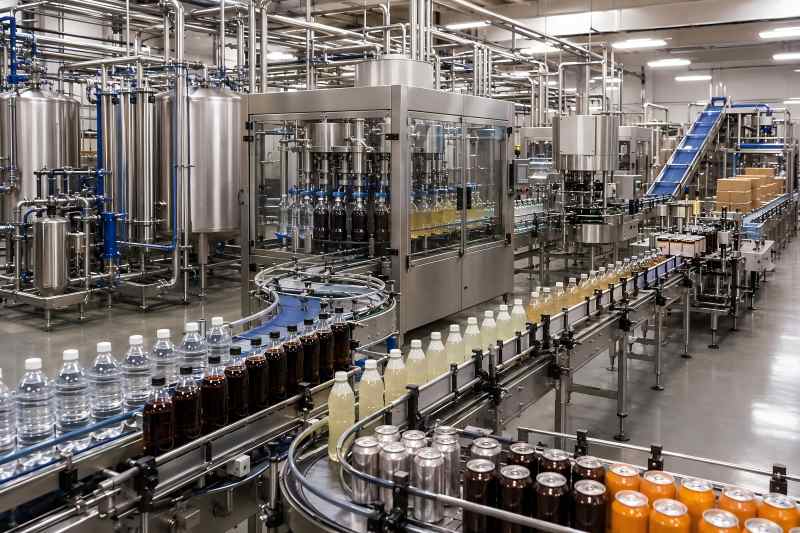
Suggested Machine Configuration for Multi-Beverage Production
A factory that wants to fill several carbonated beverages should avoid an overly simple configuration. The better choice is a flexible machine platform with adjustable and cleanable design.
| Machine Feature | Why It Matters for Different Beverages |
| Adjustable pressure control | Supports different CO₂ levels and reduces foaming |
| Isobaric filling valves | Keeps carbonation stable during filling |
| Recipe control system | Saves parameters for each beverage |
| CIP cleaning system | Reduces flavor carryover and contamination risk |
| Stainless steel contact parts | Improves hygiene and corrosion resistance |
| Anti-foam filling design | Helps with sugary, acidic, or juice-based drinks |
| Quick-change bottle parts | Reduces downtime between bottle formats |
| Accurate filling volume control | Maintains product consistency across SKUs |
| Optional nitrogen or CO₂ purging | Helps reduce oxygen for sensitive drinks |
For a small factory, not every option is necessary. However, pressure control, filling valve quality, and cleaning design should not be compromised. These three areas have the biggest effect on carbonated beverage stability.
Can the Same Machine Fill Both Still and Carbonated Drinks?
Some buyers also ask whether one machine can fill both still water and carbonated beverages. Technically, some machines can be designed to handle both, but this is not always the most efficient choice.
A carbonated drink filler is more complex because it needs pressure control. Still water filling does not require the same pressure balance. If a factory mainly produces carbonated drinks and only occasionally fills still beverages, using the same machine may be acceptable. But if both product categories have high production volume, separate filling lines may be more efficient.
My view is simple: shared machines are useful for flexibility, but dedicated machines are better for long-term high-volume production. A factory should choose based on production planning, not only machine capability.
When One Machine Is a Good Choice
One carbonated beverage filling machine is a good choice when:
- The beverage types have similar CO₂ levels
- The bottles have similar shapes and neck sizes
- The production volume is medium or flexible
- The factory produces several flavors in batches
- Cleaning time can be arranged between products
- The buyer wants to reduce initial investment
- The line uses recipe-based operation
For example, a beverage company producing sparkling water, orange soda, lemon soda, and cola in PET bottles can usually use one well-designed isobaric filling machine. The key is to control temperature, pressure, cleaning, and changeover.
When Separate Machines May Be Better
Separate machines may be better when:
- The products have very different hygiene requirements
- One product is beer or low-alcohol beverage
- Bottle formats are very different
- The factory needs very high output
- Flavor carryover risk is unacceptable
- Cleaning time causes too much production loss
- The product contains pulp, protein, or difficult residues
For example, using the same filler for plain sparkling water and a juice-based carbonated drink may be possible, but frequent switching could increase cleaning time and quality risk. If both products are produced every day at large volume, two dedicated lines may be more practical.
Practical Production Example
Assume a factory wants to produce four carbonated beverages:
| Product | Bottle Size | CO₂ Level | Daily Batch | Suggested Handling |
| Sparkling water | 500ml PET | 5.0 g/L | 20,000 bottles | Standard isobaric filling |
| Lemon soda | 500ml PET | 5.5 g/L | 15,000 bottles | Same settings with slight pressure adjustment |
| Sparkling juice | 500ml PET | 4.5 g/L | 8,000 bottles | Slower filling speed and stronger cleaning |
| Energy drink | 330ml PET | 5.0 g/L | 10,000 bottles | Bottle change parts and recipe setting |
In this case, one flexible filling machine can be reasonable because the products are relatively close. The main challenge is not the filling principle, but changeover and cleaning. If the factory arranges production from lighter flavors to stronger flavors, cleaning pressure can be reduced. For example, sparkling water can be produced before lemon soda, and strongly flavored products can be placed later in the schedule.
My View: Flexibility Should Be Designed, Not Assumed
Many buyers expect one machine to handle many beverages simply because the supplier says it is “suitable for carbonated drinks.” I think this is risky. Flexibility is not a slogan. It must be designed into the machine from the beginning.
A truly flexible carbonated beverage filling machine should be discussed around real product data:
- Beverage formula
- CO₂ level
- Filling temperature
- Bottle type
- Bottle size range
- Required output
- Cleaning method
- Flavor change frequency
- Final shelf-life requirement
Without this information, the answer will be too general. A supplier may say the machine can fill different beverages, but the buyer may later discover that changeover is slow, foam is unstable, or cleaning is not enough.